
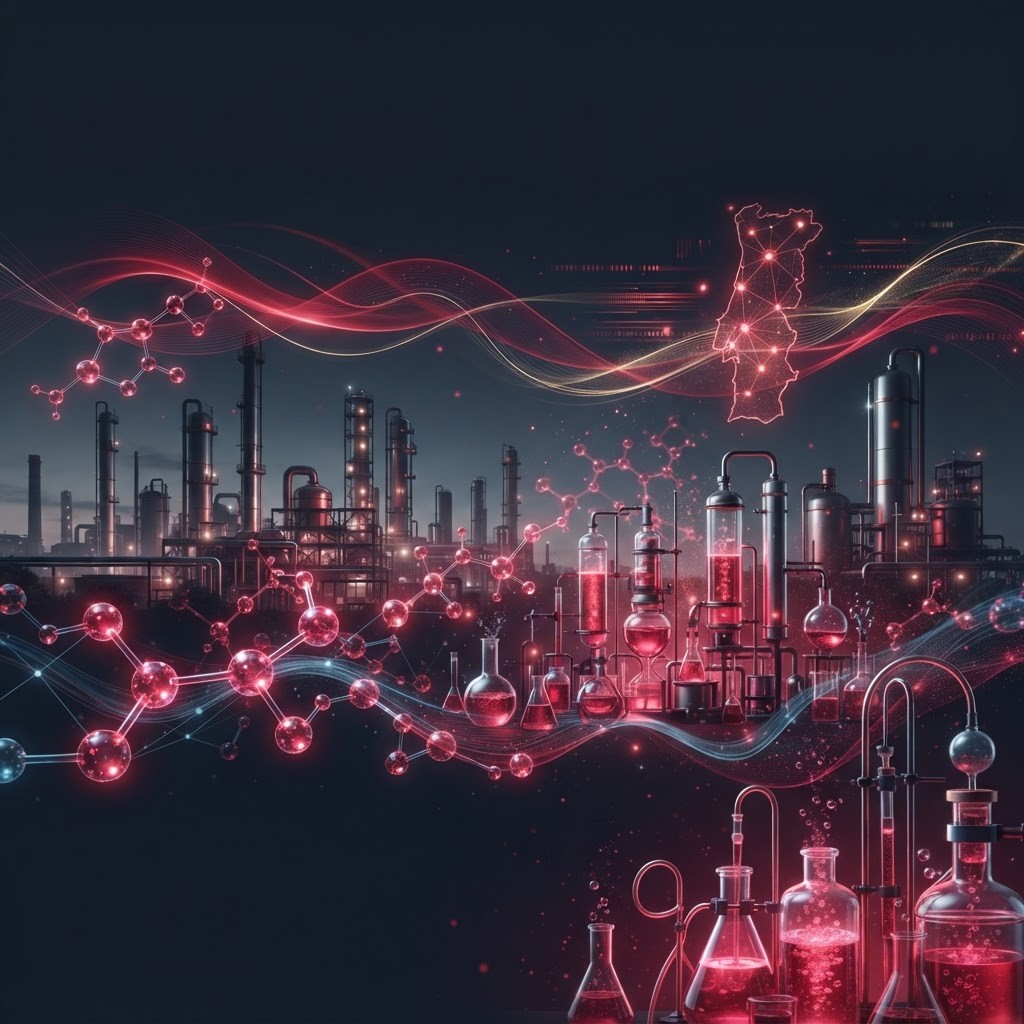
An Industry at the Core of Portugal's Economy
The chemical industry is one of the pillars of Portuguese manufacturing, contributing significantly to exports and employing a highly skilled workforce. Spanning petrochemicals, industrial gases, agrochemicals, resins, coatings and specialty products, the sector supplies raw materials and formulations that ripple through nearly every other industry, from agriculture and construction to pharmaceuticals and consumer goods. Concentrated around the industrial zones of Sines, Estarreja and the Lisbon corridor, Portuguese chemical companies balance large-scale production with a growing appetite for sustainable innovation.
What distinguishes the sector today is its pivot toward the circular economy. Companies are investing in bio-based feedstocks, energy efficiency and emissions reduction, positioning Portugal as a credible player in Europe's green transition while maintaining the reliability that industrial customers demand.
Key Strengths of Portuguese Chemical Producers
Leading chemical companies in Portugal share several strengths: robust process engineering, strict adherence to European safety and environmental regulations, and increasingly sophisticated research capabilities. Many operate integrated sites where by-products of one process feed another, reducing waste and cost. Others have carved out specialist niches, from high-purity industrial gases to advanced coatings, where technical expertise matters more than sheer volume.
The Top 10 Chemical Companies
1. Bondalti. The largest chemical group in Portugal and a leading producer of chlor-alkali and derivative products, Bondalti supplies essential chemicals for water treatment, pulp and paper and countless industrial processes. Its scale and integration make it a cornerstone of the national industry.
2. CUF. With a long industrial heritage, CUF operates across chemistry and related sectors, historically driving much of Estarreja's chemical complex. The name remains associated with deep expertise in aromatic and nitrogen-based chemistry.
3. Repsol Polímeros. Based in Sines, this operation produces polyethylene and polypropylene that feed Portugal's plastics and packaging industries. It represents the petrochemical backbone that supplies downstream manufacturers.
4. Air Liquide Portugal. A key supplier of industrial and medical gases, the company serves healthcare, food, electronics and heavy industry. Its distribution network and gas expertise make it indispensable to many production lines.
5. Dow Portugal. Part of a global materials-science group, Dow's Portuguese presence supports advanced polymers, coatings and specialty solutions, bringing international research strength to local customers.
6. Resiquímica. A respected producer of synthetic resins and emulsions used in paints, adhesives and construction products, Resiquímica is valued for consistent quality and technical support to formulators.
7. Hovione. Bridging chemistry and pharmaceuticals, Hovione is a global leader in active pharmaceutical ingredients and drug-product development. Its advanced chemistry and regulatory excellence make it one of Portugal's proudest science-driven exporters.
8. Fábrica de Tintas 2000 / CIN-linked producers. CIN, the leading paints and coatings group in the Iberian market, anchors a strong coatings-chemistry ecosystem, developing decorative, protective and industrial finishes recognised for durability.
9. Quimitécnica. Specialising in chemicals for water treatment and environmental applications, Quimitécnica supports municipalities and industry with solutions that improve water quality and process safety.
10. Selenis. A polyester and specialty polymer producer, Selenis serves packaging, film and specialty applications worldwide, illustrating Portugal's capacity in advanced polymer chemistry.
Sustainability and the Green Chemistry Shift
The most important trend across the sector is decarbonisation. Companies are electrifying processes, sourcing renewable energy and exploring green hydrogen, particularly around the Sines industrial cluster, which is emerging as a hub for clean-energy projects. Bio-based feedstocks and chemical recycling are moving from pilot projects to commercial reality, allowing producers to reduce reliance on fossil inputs while meeting tightening European regulations.
Digitalisation also plays a growing role. Advanced process control, predictive maintenance and real-time emissions monitoring help plants run more safely and efficiently. These investments not only cut costs but strengthen the sector's social licence to operate in an era of heightened environmental scrutiny.
Serving a Wide Range of Industries
The reach of Portuguese chemical companies is vast. They provide the chlorine and coagulants that keep drinking water safe, the resins behind paints and adhesives, the polymers that become packaging, and the active ingredients that end up in life-saving medicines. This diversity gives the sector resilience: when demand softens in one market, strength in another often compensates.
How to Evaluate a Chemical Supplier
Choosing a chemical partner requires attention to quality certifications, safety record, environmental performance and technical support. Buyers should look for consistent product specifications, reliable logistics and a supplier's willingness to collaborate on formulation challenges. Increasingly, sustainability credentials and traceability of raw materials are becoming decisive factors, especially for customers with their own environmental commitments.
Conclusion
Portugal's chemical industry combines large-scale industrial capability with a rising tide of specialty and green innovation. From Bondalti's foundational chemicals to Hovione's pharmaceutical excellence, the companies highlighted here demonstrate a sector that is both essential to the national economy and increasingly aligned with a sustainable, high-value future.
