
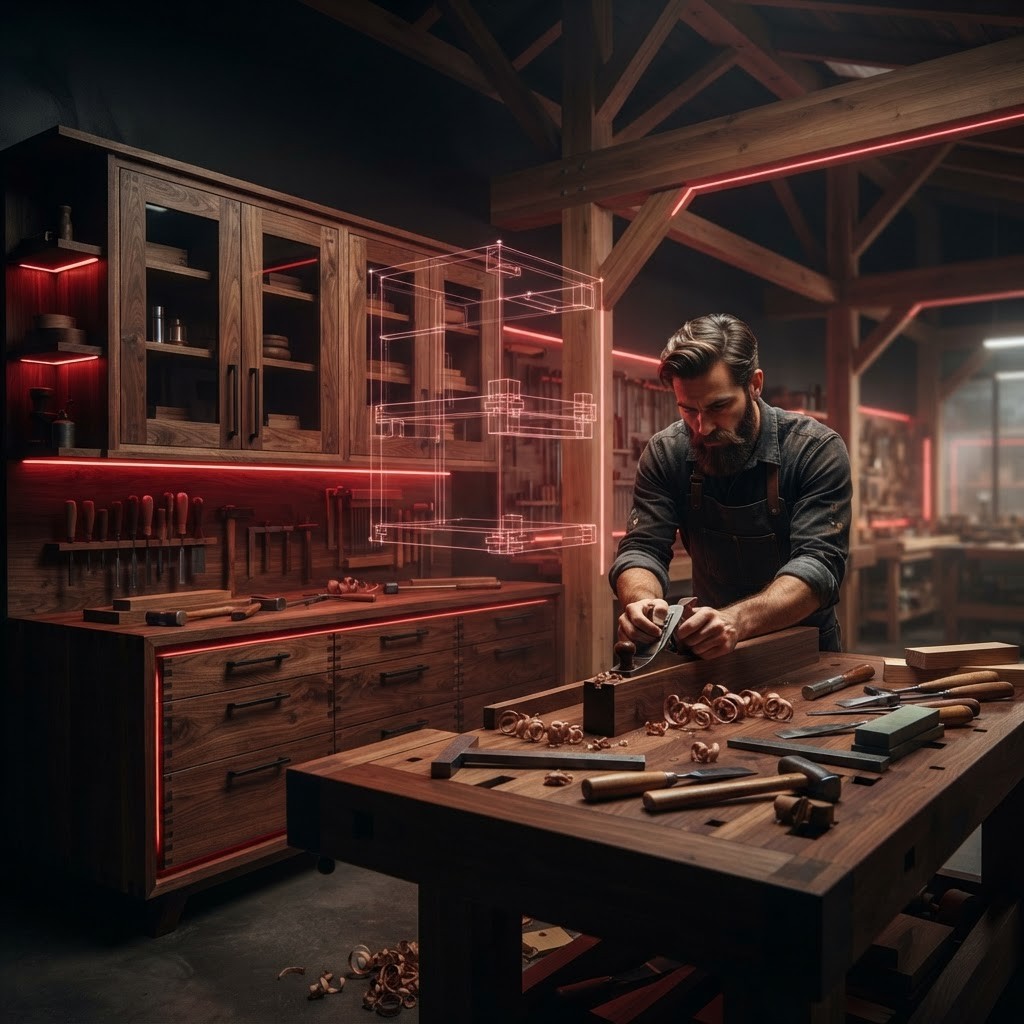
Carpentry and the Pacific Northwest Timber Tradition
Few places in the country have a stronger relationship with wood than Washington. The state timber industry shaped its economy, its architecture and its trades culture, and that legacy is still visible in the quality of carpentry available today. Washington carpenters work with Douglas fir framing, western red cedar siding and decking, hemlock trim, maple and walnut cabinetry, and increasingly with engineered products such as cross-laminated timber and glue-laminated beams produced regionally. Mass timber construction has given the tradition a modern expression, placing exposed structural wood at the center of commercial buildings.
Carpentry spans several distinct specialties. Rough carpentry covers framing, sheathing, structural blocking and the geometry that makes complex roofs and stairs possible. Finish carpentry delivers trim, doors, wainscoting, built-ins, stair rails and the visible details that define a room. Cabinetmaking and millwork operate in a shop environment with fine tolerances. Timber framing and joinery preserve traditional mortise and tenon techniques for barns, pavilions, lodges and architecturally expressive homes. Each requires different tooling, skill and quality control.
Ten Carpentry and Millwork Companies of Note
1. Krekow Jennings
Widely regarded as one of the premier builders in the Pacific Northwest, Krekow Jennings maintains carpentry and fabrication capability that supports extraordinarily demanding architectural detail. Its work on high-end residences and cultural projects showcases joinery and finish quality at the top of the market.
2. Dowbuilt
Dowbuilt grew from a carpentry-first culture and continues to treat craft as a competitive advantage. The company executes complex custom homes and commercial interiors where exposed wood structure, seamless casework and precise reveals leave no room for error.
3. Cascade Joinery
Based in Whatcom County, Cascade Joinery specializes in timber framing and heavy joinery for homes, pavilions and commercial structures. Its expertise in traditional and hybrid timber systems makes it a leading resource for projects centered on exposed structural wood.
4. Canyon Creek Cabinet Company
Manufacturing in Monroe, Canyon Creek is one of Washington largest cabinet producers, serving builders, designers and remodelers throughout the region. The company combines semi-custom flexibility with production consistency and a strong environmental record.
5. Bellmont Cabinets
Bellmont Cabinets, based in Sumner, produces frameless and framed cabinetry for kitchens, baths and commercial interiors. Its reputation rests on finish durability, broad door style selection and reliable lead times that keep construction schedules intact.
6. Precision Cabinets and Trim
This company provides cabinetry along with interior trim and door installation, giving builders a single source for interior finish scopes. That integration reduces coordination gaps between millwork delivery and installation labor.
7. Woodinville Custom Carpentry
Serving the Eastside, this firm focuses on custom built-ins, stair work, paneling and architectural trim for residential clients. It is often engaged on remodels where new millwork must match existing historic profiles.
8. Emerald City Carpentry
Emerald City Carpentry handles framing, decks, interior trim and structural repairs across the Seattle area. Its versatility makes it a practical partner for homeowners tackling a mix of structural and finish work in older houses.
9. Timberline Woodworks
Timberline Woodworks produces custom furniture, cabinetry and architectural woodwork with an emphasis on regional hardwoods and reclaimed materials. Clients seeking distinctive one-of-a-kind pieces frequently turn to shops of this type.
10. Spokane Woodcraft
Serving eastern Washington, Spokane Woodcraft provides cabinetry, millwork and finish carpentry for residential and commercial clients. Its presence supports a market where regional supply and local craftsmanship are especially valued.
Materials and Detailing That Matter in a Wet Climate
Wood performs beautifully in Washington, but only when detailed correctly. Exterior carpentry demands species and treatment appropriate to constant moisture, whether that means naturally durable cedar, thermally modified wood, or properly treated lumber for ground-contact conditions. Decks need correct flashing at ledgers, adequate drainage between boards, and hardware rated for the chemistry of modern treated lumber. Siding should be installed over a drainage plane with furring where rainscreen performance is required.
Inside, moisture management shifts to dimensional stability. Cabinets and trim should be acclimated to interior conditions before installation, and panel construction should allow for seasonal movement so joints do not open or crack. Finish selection affects both appearance and protection; catalyzed conversion varnishes and factory-applied finishes typically outperform site-applied coatings on cabinetry.
Trends in Washington Carpentry
Mass timber has moved from experimental to mainstream, and carpenters with experience erecting cross-laminated timber panels and glue-laminated frames are in high demand. Prefabricated wall panels and factory-built components are expanding as builders seek to shorten weather-exposed framing periods. Reclaimed and salvaged wood remains popular for feature walls, beams and furniture, aligning with regional sustainability values. Meanwhile, integrated design tools allow shops to fabricate directly from digital models, improving accuracy on complex curved and angled work.
Hiring the Right Carpenter
Match the specialist to the task. A skilled framer is not necessarily the right choice for exacting finish work, and a fine cabinetmaker may not be the best fit for structural repairs. Ask to see completed work in person rather than only in photographs, because carpentry quality reveals itself in joints, reveals and transitions that photographs flatter. Confirm Washington contractor registration and insurance, clarify whether shop drawings will be provided, and discuss species, grade, finish and hardware in writing.
For larger scopes, understand who fabricates and who installs, since coordination between shop and site determines final quality. In a state where wood is both heritage and material of choice, hiring carpenters who respect the craft produces results that look better on the day of completion and continue performing for decades.
