
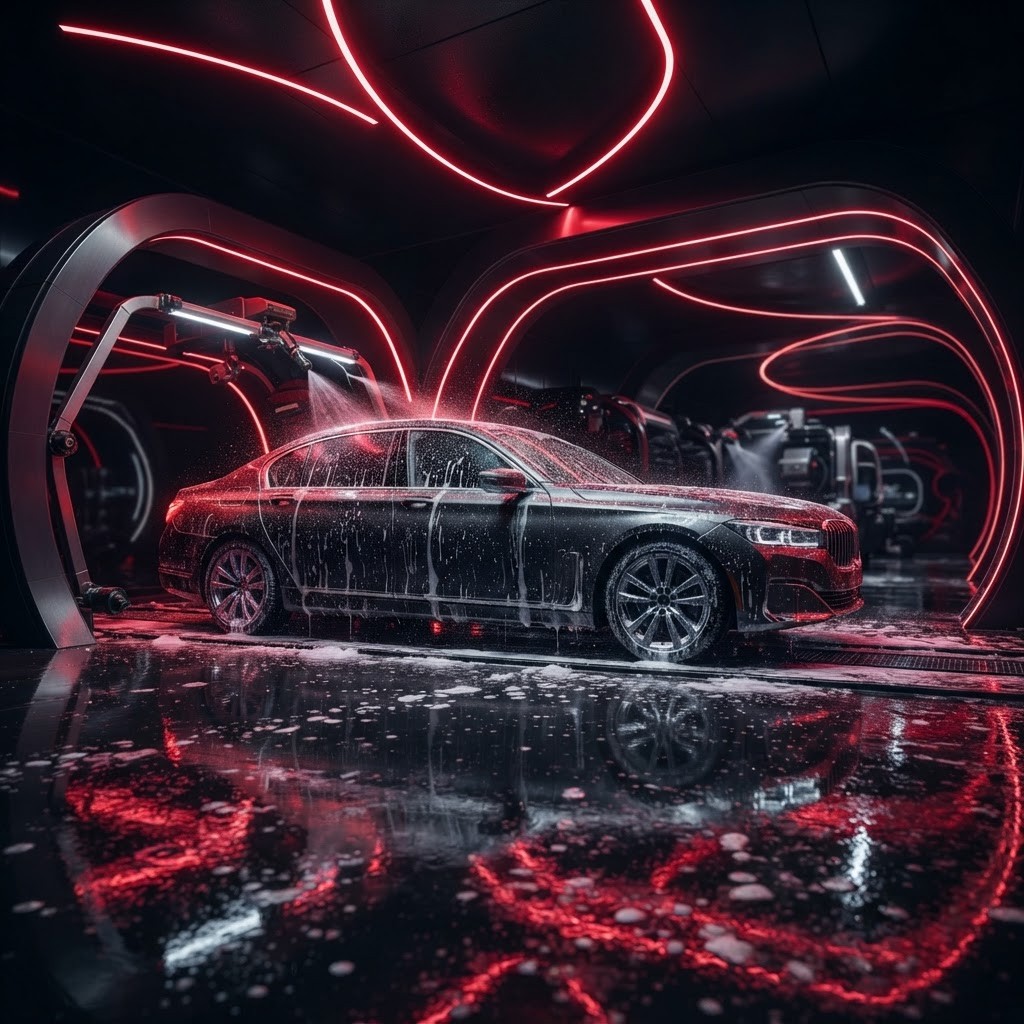
Why Washing Matters More in Detroit
In many cities a car wash is about appearance. In metro Detroit it is about preservation. Michigan applies large volumes of road salt and brine across a long winter, and chloride residue accelerates corrosion on brake lines, fuel lines, exhaust systems, subframes, and rocker panels. Add industrial particulate, spring pollen, summer insect residue, and construction dust from constant road work, and the case for a consistent washing routine becomes a financial one. Preventing rust perforation is far cheaper than repairing it.
The metro market offers a wide range of options, each suited to different vehicles, budgets, and expectations.
1. Express Tunnel Washes
Express tunnels dominate the volume market. A vehicle is guided through a conveyor while soft-cloth or foam applicators, high-pressure jets, and blowers complete the cycle in a few minutes. Modern tunnels use closed-loop water reclamation, pH-balanced detergents, and spot-free rinse systems. The main advantage is speed and cost, particularly through unlimited monthly memberships that make frequent winter washing economical. Look for tunnels that advertise soft-touch or hybrid equipment and well-maintained applicators, since worn cloth is the primary cause of swirl marks.
2. Touchless Automatic Washes
Touchless systems clean using high-pressure water and stronger chemistry with no physical contact. They are the safest automated option for vehicles with delicate paint, aftermarket wraps, ceramic coatings, or aging clear coat. The tradeoff is reduced effectiveness on heavy road film, which sometimes requires a second pass. For drivers whose main concern is avoiding micro-scratching, touchless is usually the right default.
3. Full-Service Wash and Interior Cleaning
Full-service operations combine an exterior wash with vacuuming, window cleaning, dashboard wipe-down, and door jamb detailing. Staff typically hand-prep wheels and lower panels before the vehicle enters the tunnel, which meaningfully improves results on winter-grimed vehicles. This category suits families, rideshare drivers, and anyone whose interior takes daily abuse.
4. Hand Wash Facilities
Hand washing remains the gold standard for finish quality. Skilled operators use the two-bucket method, grit guards, dedicated wheel tools, and separate microfiber towels for panels and glass. For dark-colored vehicles, where swirl marks are highly visible, the difference is obvious. Hand wash facilities also catch details automation misses, including exhaust tips, fuel doors, badge recesses, and window seals.
5. Mobile Detailing Services
Mobile detailers travel to homes, offices, and apartment complexes with self-contained water and power. The convenience is significant for commuters and for residents of buildings without wash facilities. Service tiers usually range from a maintenance wash to multi-stage paint correction. Verify that a mobile operator carries insurance and uses water reclamation practices appropriate for the location.
6. Ceramic Coating and Paint Protection Studios
Ceramic coating studios apply semi-permanent silica-based layers that bond to clear coat, creating a slick, hydrophobic surface. Benefits include easier cleaning, improved gloss, resistance to chemical etching from road salt and bird droppings, and reduced water spotting. Proper application requires decontamination, machine polishing, and controlled curing, so professional installation matters. For Michigan winters, a quality coating substantially reduces the effort required to keep salt film from bonding to paint.
7. Paint Protection Film Installers
Paint protection film is a clear urethane layer applied to high-impact areas such as the front bumper, hood leading edge, mirrors, and rocker panels. Michigan's gravel shoulders and winter road treatments make stone chipping common, and film is the only solution that physically blocks impact damage. Skilled installers use computer-cut patterns and wrap edges where possible for an invisible finish.
8. Undercarriage and Salt Removal Specialists
Undercarriage washing deserves its own category in this climate. High-pressure underbody sprayers flush chloride from frame rails, suspension components, and brake line routing. Some operators also offer annual rust-inhibiting undercoating with lanolin or wax-based products that creep into seams. For any vehicle expected to stay in service beyond eight years, this is one of the highest-return maintenance services available locally.
9. Self-Service Wash Bays
Coin and card-operated bays give drivers control over pressure, soap, and rinse timing at low cost. They are especially useful for targeted winter work, allowing a driver to spend most of the cycle flushing wheel wells and the underbody. Self-service bays are also popular for cleaning trailers, truck beds, motorcycles, and equipment that would not fit a conveyor.
10. Fleet and Commercial Washing Providers
Commercial providers service delivery vans, service trucks, buses, and dealership inventory on scheduled contracts. Presentation directly affects brand perception for service businesses, and these providers handle volume on-site during off hours. Many offer specialized services such as graphics-safe washing for wrapped vehicles and engine bay degreasing for work trucks.
Building a Seasonal Wash Routine
Through winter, aim for a wash roughly every one to two weeks whenever temperatures rise above freezing, prioritizing underbody flushing. Avoid washing immediately before a hard freeze without drying door seals and locks. In spring, perform a thorough decontamination wash with an iron remover and clay treatment to lift embedded brake dust and industrial fallout before applying protection.
Summer brings insect residue and tree sap, both of which etch clear coat if left in sun. A quick detailer spray and microfiber towel handles these between washes. In autumn, apply a durable sealant or refresh a ceramic coating so the finish enters winter with maximum protection.
What Separates a Good Operator
Equipment maintenance is the clearest signal. Clean, undamaged applicators, functioning dryers, and orderly vacuum stations reflect operational discipline. Water quality matters too, since reverse-osmosis final rinse prevents mineral spotting. Ask what chemistry an operator uses; strong acidic wheel cleaners can damage polished or coated wheels, and harsh degreasers strip existing wax and sealant.
For detailing work, ask to see examples of paint correction under proper lighting, and confirm whether a quoted ceramic coating includes decontamination and polishing. A coating applied over swirled paint locks the defects in place.
Cost Considerations
Unlimited monthly memberships usually pay for themselves at two washes per month, which most Michigan drivers exceed in winter. Hand washing costs more per visit but preserves resale value on premium vehicles. Ceramic coating and paint protection film are capital investments that make sense on newer vehicles kept several years, and both reduce ongoing washing effort.
Final Thoughts
In Detroit, washing is corrosion control disguised as vanity. The most effective strategy combines frequent, affordable winter washes with strong underbody flushing, a spring decontamination, and a durable protective layer applied each autumn. Choose touchless or hand washing for vehicles where finish quality matters most, use express memberships for volume, and treat undercarriage service as a scheduled maintenance item rather than an upsell.
