
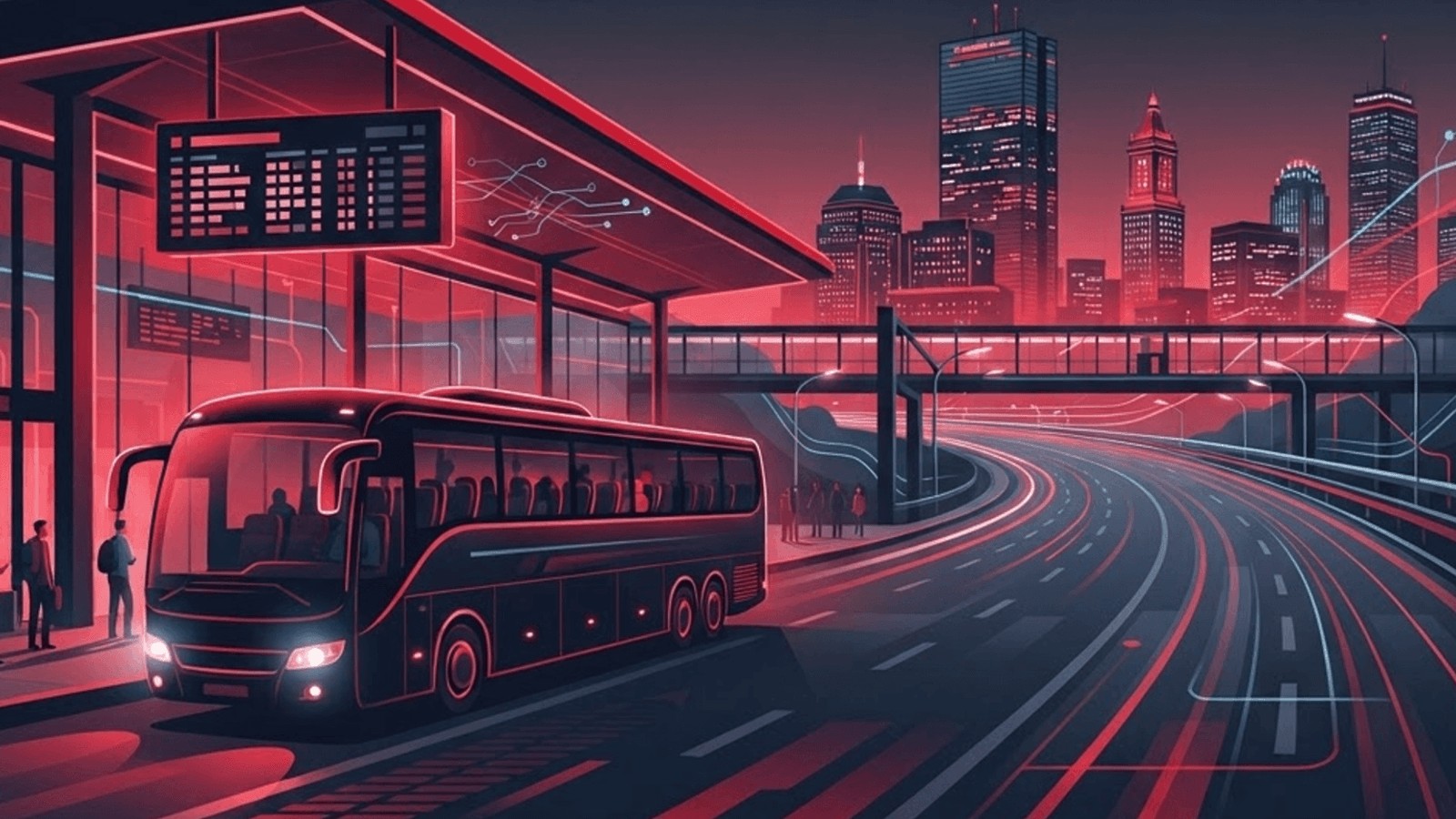
Boston's Intercity Bus Market
Boston occupies a central position in the busiest intercity bus corridor in the United States. The route between Boston and New York alone supports dozens of daily departures across multiple competing operators, with fares that frequently undercut rail by a wide margin. Add regular service to Providence, Hartford, Philadelphia, Washington, Portland, Montreal, and the Cape and Islands, and the result is a market where bus travel is a genuinely practical mainstream option rather than a last resort.
Most departures concentrate at South Station Bus Terminal, an enclosed multi-level facility directly connected to the rail station and the subway network. That integration is a significant advantage, allowing passengers to transfer between bus, commuter rail, intercity rail, and subway under one roof. A smaller number of operators use curbside stops in Chinatown, Back Bay, or near university campuses, which can be convenient but offer no shelter or waiting facilities.
Peter Pan Bus Lines
Peter Pan is a New England institution, family-founded and operating throughout the region for close to a century. Its network is the most comprehensive in southern New England, serving dozens of cities across Massachusetts, Connecticut, Rhode Island, New York, and beyond. Coaches include reclining seats, restrooms, Wi-Fi, and power outlets. Its strength is route depth into smaller cities that competitors skip, along with a well-established reputation for schedule reliability. Passengers travelling to Springfield, Worcester, Hartford, or Amherst find the best frequency here.
Greyhound Lines
Greyhound remains the most recognisable name in American intercity bus travel and continues to serve Boston from South Station. Its principal advantage is national reach: through connecting service, a Boston passenger can reach destinations across virtually the entire continental United States on a single itinerary. Modern coaches include Wi-Fi, power outlets, and extra legroom on many services. For long-distance travel where flying is not affordable, Greyhound's network remains unmatched in coverage.
FlixBus
FlixBus expanded into North America from Europe and brought an aggressive pricing model with it. Operating a distinctive green livery, it offers very low advance fares on major corridors including Boston to New York, Philadelphia, and Washington, with amenities including Wi-Fi, power sockets, and generous seat pitch on newer coaches. Booking is app-first with digital ticketing. The model relies on early booking for the lowest fares, with prices rising as departures fill.
OurBus
OurBus operates a technology-driven model that pairs its own scheduling and booking platform with licensed motorcoach operators. Routes focus on corridors with demonstrable demand, including Boston to New York and connections to university towns across the Northeast. Passengers report comfortable coaches, reliable Wi-Fi, and responsive customer service. Its willingness to add or adjust routes based on rider demand distinguishes it from legacy operators with fixed networks.
Concord Coach Lines
Concord Coach Lines serves the corridor north of Boston, connecting the city and Logan Airport with New Hampshire and Maine destinations including Manchester, Concord, Portsmouth, Portland, and coastal towns further north. It has cultivated a reputation for comfort and punctuality that many regular riders consider the best in New England, with generous legroom, complimentary refreshments on some services, and courteous drivers. Its direct airport service is particularly valuable, eliminating the need to transfer through downtown Boston.
Dartmouth Coach
Dartmouth Coach operates premium service between Boston, Logan Airport, and the Upper Valley region of New Hampshire and Vermont, including Hanover and Lebanon. Coaches feature leather seating, extra legroom, complimentary snacks and water, and quiet-car conventions that make working en route practical. Fares sit above budget operators, but riders travelling to Dartmouth College or the surrounding area consistently rate the experience as closer to premium rail than to standard bus travel.
C&J Bus Lines
C&J connects Boston and Logan Airport with the New Hampshire seacoast and southern Maine, serving Portsmouth, Dover, and Newburyport. It has built its brand on cleanliness, on-time performance, and well-maintained terminals with free parking, which makes it popular with airport-bound travellers from the region. Coaches include Wi-Fi, power outlets, and reserved seating on some services. For commuters and airport passengers north of Boston, it is often the most efficient option available.
Plymouth and Brockton Street Railway
Despite its historic name, Plymouth and Brockton operates buses rather than rail, serving the South Shore and Cape Cod from Boston and Logan Airport. Destinations include Plymouth, Barnstable, Hyannis, and connections onward to the islands. During summer months, when Cape Cod highway traffic becomes severe and parking near ferry terminals grows scarce and costly, this service is a genuinely superior alternative to driving. Advance booking is recommended for peak weekends.
Bolt Bus, Megabus, and the Curbside Model
The curbside express category transformed American bus travel by combining online-only booking, extremely low lead-in fares, and street-level boarding without terminal overheads. Megabus continues to operate on major Northeast corridors, offering double-deck coaches where upper-deck front seats provide panoramic views. Fares are lowest well in advance and rise steeply near departure. Passengers should note that curbside stops mean waiting outdoors, which is a real consideration in a Boston winter.
Chinatown Bus Operators
Boston's Chinatown was the origin of the modern low-cost intercity bus model in the United States, with operators historically running frequent low-fare service to New York's Chinatown. Several carriers continue in this segment, offering very competitive pricing and frequent departures. Service standards vary considerably across operators, so travellers should check recent reviews and confirm the specific carrier's safety record rather than treating the category as uniform.
Charter and Group Coach Services
Beyond scheduled service, Greater Boston supports a substantial charter market serving schools, universities, corporate events, weddings, and conventions. Providers offer motorcoaches, minibuses, and school bus fleets with licensed drivers, and the better operators handle route planning, permits, and parking logistics. Organisations booking charters should verify federal safety ratings, insurance coverage, driver hours compliance, and vehicle age before committing.
Booking Strategy and Practical Advice
Bus pricing in this market is strongly demand-based, so booking two to four weeks ahead typically secures the lowest fares on competitive corridors. Compare total journey time rather than headline duration, since traffic entering New York and Boston can add substantially during peaks. Choose terminal departures over curbside stops in winter. Verify baggage allowances, which differ across operators, particularly for skis, bicycles, and oversized items. For airport connections, confirm whether the service stops at Logan directly or requires a transfer downtown.
Trends in the Market
Fleet modernisation has raised baseline comfort expectations, with Wi-Fi, power outlets, and reserved seating becoming standard rather than premium features. App-based booking and digital ticketing are now near-universal. Environmental positioning has grown more prominent, since motorcoach travel produces substantially lower emissions per passenger mile than driving or flying, and several operators have begun trialling electric coaches on shorter regional routes.
Final Thoughts
Boston's bus market offers something rare in American intercity travel: real competition producing low fares and high frequency without sacrificing comfort. Budget corridor operators handle the New York and Washington runs efficiently, regional premium carriers serve northern New England exceptionally well, and specialised operators unlock Cape Cod without the traffic. Match the operator to the corridor, book early, and prefer South Station when weather is a factor.
