
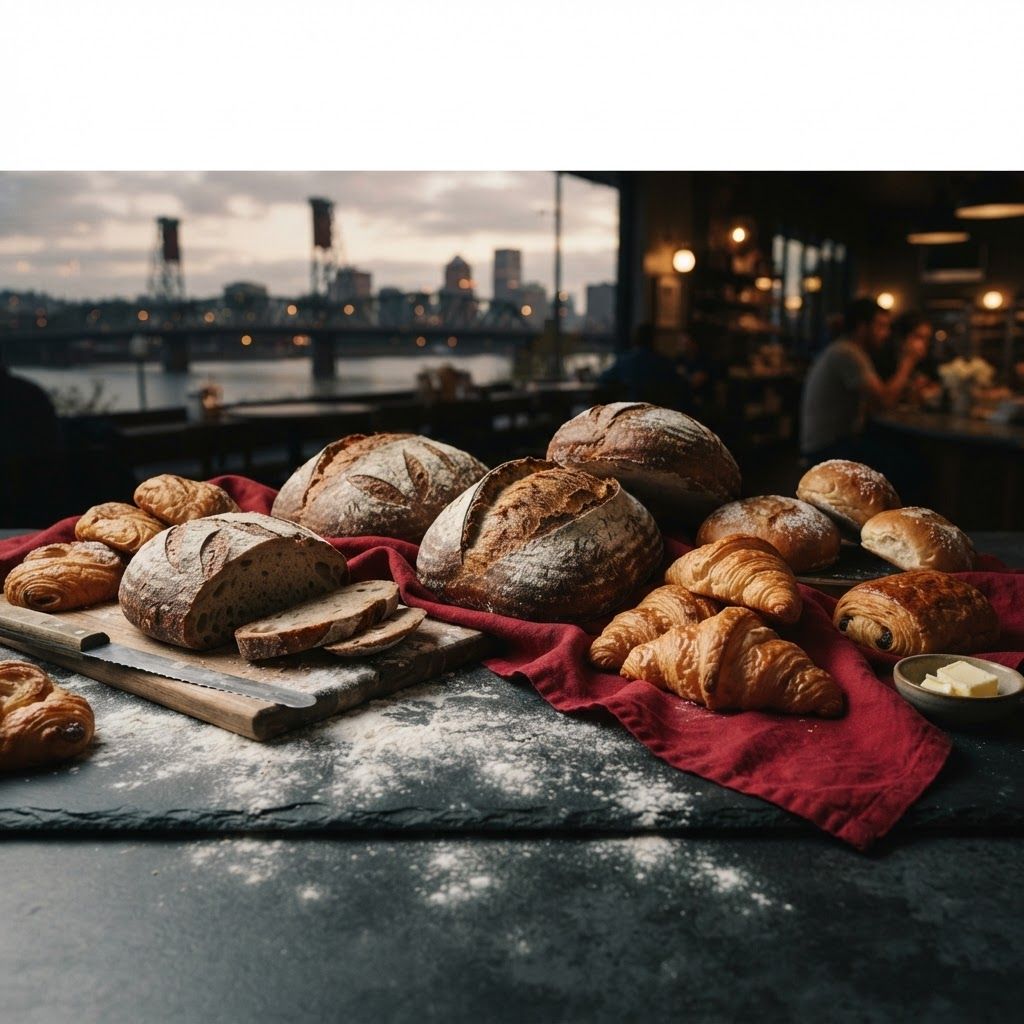
Why Portland Became a Great Baking City
Portland's bakery scene rests on advantages that are easy to overlook. The Pacific Northwest is a serious grain-growing region, and Oregon and Washington mills supply bakers with fresh-milled wheat, rye, barley, and heritage varieties that were nearly lost to industrial agriculture. A number of local bakeries buy directly from farms in the Willamette Valley and the Columbia Basin, which gives their bread a flavor profile you cannot replicate with commodity flour.
The climate helps too. Portland's cool, damp weather is unusually forgiving for long fermentation, allowing bakers to develop flavor slowly without fighting heat. Combine that with a customer base willing to pay for quality and to queue on a Saturday morning, and the conditions favor small producers who make a limited number of things extremely well.
There is also a cultural factor. Portland's food economy has long rewarded specialists over generalists. Rather than a single bakery attempting everything, the city supports a bread bakery next to a pastry shop next to a doughnut specialist, each with its own following. That fragmentation raises the ceiling for everyone.
What Sets Portland Bakeries Apart
Three technical commitments show up repeatedly among the city's best. The first is natural leavening. Wild yeast starters, maintained for years, give loaves their acidity, keeping quality, and open crumb. The second is whole grain integration, where bakers blend high-extraction and freshly milled flours into doughs rather than reserving them for a token seeded loaf. The third is butter quality, which is why Portland's croissants and morning buns compete credibly with those in much larger cities.
Seasonality is the fourth signature. Berry season on the fruit tarts, stone fruit in late summer, apples and pears in the fall, and citrus in winter all show up on Portland pastry cases. Menus rotate because the produce rotates, and that rhythm is part of what regulars come for.
The Top 10 Bakeries in Portland
1. Ken's Artisan Bakery. Ken Forkish's bakery is the reference point for Portland bread. Naturally leavened country loaves, baguettes with a shattering crust, and one of the best croissant programs in the country made it a national name and an influence on bakers far beyond Oregon. The morning pastry case moves quickly, and for good reason.
2. Tabor Bread. Tabor Bread mills its own grain in-house and bakes in a wood-fired oven, a combination that produces bread with pronounced whole-grain depth. The Southeast Portland bakery is a favorite among customers who want loaves that taste of the wheat itself rather than just of fermentation.
3. Grand Central Bakery. One of the region's most established bakeries, Grand Central built its reputation on consistent naturally leavened bread, hearty sandwiches, and jammers, its signature scone-like pastry. With multiple neighborhood locations, it is the bakery many Portlanders rely on for everyday bread rather than special occasions.
4. Nuvrei. Nuvrei specializes in French-style pastry and macarons alongside a strong viennoiserie program. Its laminated doughs are precise, its cakes are technically polished, and the Pearl District cafe has become a standard stop for people who care about pastry as a discipline.
5. Lauretta Jean's. Pie is the focus here, and the bakery has become the city's benchmark for it. All-butter crusts, generous seasonal fillings, and hand-crimped edges are the draw, whether it is marionberry in July or pecan in December. Biscuits and breakfast service round out the offering.
6. Bakeshop. Kim Boyce's Northeast Portland bakery is known for whole-grain baking that treats flour as an ingredient with character rather than a neutral base. Rye, spelt, oat, and barley appear across scones, cookies, and pastries, and the results are distinctive enough that the bakery has a devoted following.
7. Roman Candle Baking Co. Roman Candle produces excellent hearth bread along with pan pizza and a pastry program that leans playful. Its cafe format made it a neighborhood anchor on Division Street, and its bread appears on menus at restaurants around the city.
8. Little T Baker. Little T's baguettes and ciabatta have long been supplied to Portland restaurants, and its retail case offers a tight lineup of well-executed pastries. The bakery is a good example of Portland's wholesale-plus-retail model, where restaurant standards set the bar for what walks out the front door.
9. Dos Hermanos Bakery. Dos Hermanos built its reputation on naturally leavened loaves sold at farmers markets before expanding its footprint. The bakery has a strong following among customers who want serious sourdough with pronounced tang and a chewy, well-developed crumb.
10. Voodoo Doughnut and Blue Star Donuts. No honest accounting of Portland baking can skip the city's doughnut rivalry. Voodoo made Portland doughnuts internationally famous with irreverent flavors and late-night lines, while Blue Star took the opposite approach with brioche dough, small-batch production, and refined fillings. Together they represent two legitimate philosophies of the same craft.
How to Approach the Scene
Timing matters more than at most food businesses. Bread comes out of the oven on a schedule, croissants are best within a few hours, and popular items sell out well before closing. Arriving in the first two hours of service gives the widest selection, and calling ahead for whole cakes, pies, or large orders is standard practice, particularly around holidays when pie and celebration cake demand spikes sharply.
For visitors, the most rewarding approach is neighborhood-based rather than list-based. Portland's bakeries are spread across the east side and inner northwest, and pairing one bakery with a nearby coffee roaster makes for a better morning than driving across town to check off names.
The Outlook
Costs have risen for Portland bakeries, from butter and flour to rent and labor, and several have responded by narrowing menus and focusing on wholesale accounts. Even so, the city's appetite for well-made bread has not diminished. Local grain partnerships continue to expand, gluten-conscious and vegan options have improved substantially, and a new generation of bakers trained in these kitchens is opening its own shops, which is the clearest sign that Portland's baking culture remains healthy.
