
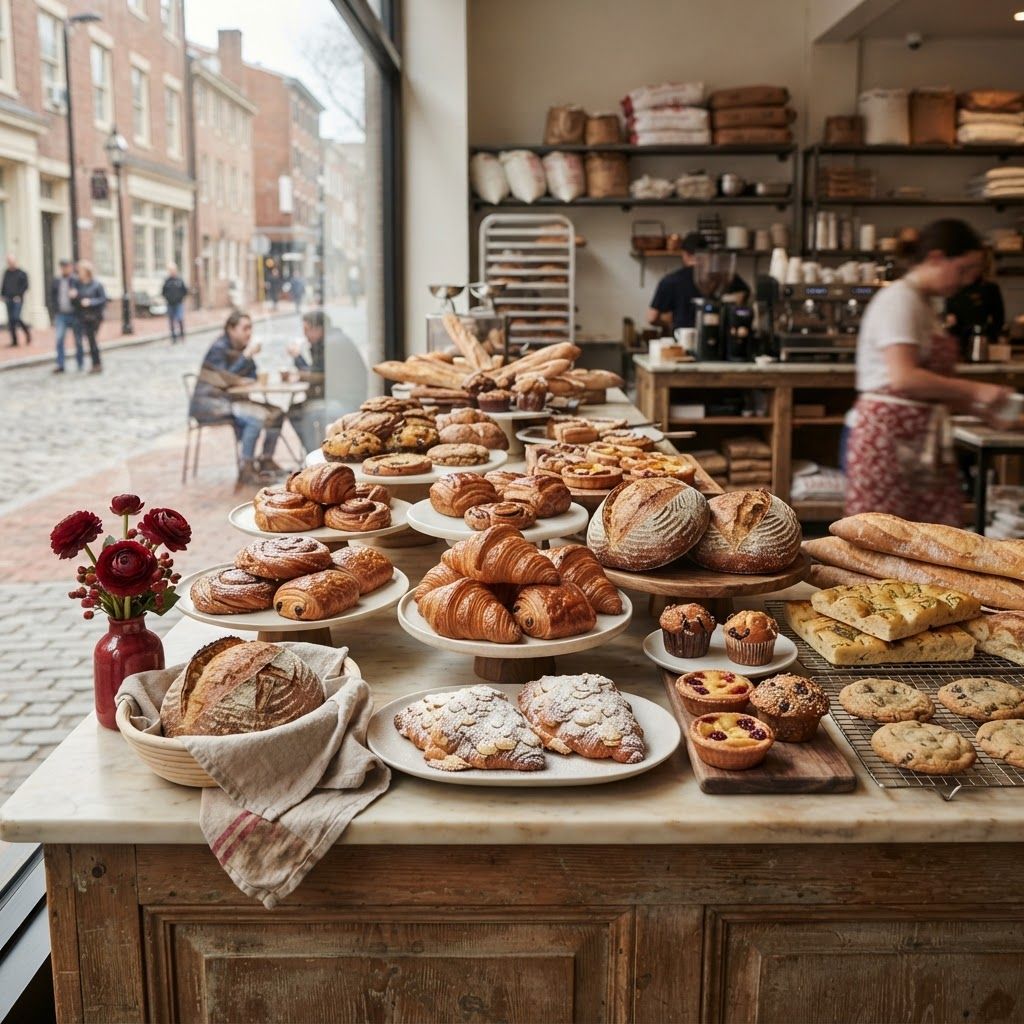
Why Philadelphia Is a Great Bakery City
Philadelphia’s baking culture reflects the city itself: deeply traditional, proudly neighborhood-based, and increasingly inventive. Italian Market bread ovens, Jewish baking traditions, Pennsylvania grain, French pastry technique, and contemporary flavor ideas all contribute to the local scene. A worthwhile bakery is defined not only by popularity but also by consistency, ingredient quality, fermentation, texture, and a clear point of view. These ten bakeries offer different experiences, from everyday sandwich rolls to carefully laminated pastries.
1. Isgro Pastries
Isgro Pastries is a South Philadelphia institution celebrated for Italian desserts. Cannoli filled to preserve their crisp shells, ricotta cookies, pignoli, sfogliatelle, and celebration cakes are among the enduring favorites. Its longevity and family-bakery atmosphere make it particularly meaningful in a city where food traditions connect generations. Visitors seeking classic Italian-American pastry will find a broad selection and a strong sense of place. Holiday periods can be busy, which is itself evidence of the bakery’s loyal following.
2. Sarcone’s Bakery
Sarcone’s is synonymous with the crusty, seeded Italian loaves that help define Philadelphia sandwiches. The bakery’s bread balances a substantial crust with an airy, chewy interior capable of holding meats, cheeses, roasted vegetables, or sharp provolone without collapsing. Its importance extends beyond retail customers because local restaurants and sandwich shops have long relied on its products. Sarcone’s demonstrates how excellent bread can become part of a city’s culinary infrastructure rather than simply an individual menu item.
3. Metropolitan Bakery
Metropolitan Bakery helped advance Philadelphia’s artisan-bread movement. Its naturally leavened loaves, granola, cookies, and seasonal baked goods emphasize good ingredients and careful technique. The bakery has maintained a recognizable identity while serving both neighborhood customers and hospitality businesses. Rustic breads offer complex flavor from fermentation, while sweeter items remain balanced rather than excessive. Metropolitan is a dependable choice for shoppers who want a versatile loaf, breakfast pastry, or thoughtfully made pantry staple.
4. Essen Bakery
Essen Bakery draws on Jewish baking traditions while incorporating a contemporary baker’s perspective. Its chocolate babka is particularly well known, with rich layers and a tender crumb. Challah, rugelach, cookies, and seasonal specialties round out the selection. Essen’s appeal comes from respecting familiar forms while paying close attention to texture and ingredient quality. It is an excellent stop for visitors exploring East Passyunk and for residents looking for baked goods that feel both nostalgic and fresh.
5. Machine Shop Boulangerie
Machine Shop Boulangerie is admired for French-inspired bread and pastry. Baguettes, croissants, country loaves, and seasonal viennoiserie showcase fermentation and lamination skills. The bakery’s products are visually refined, but flavor and structure remain central. A properly made croissant should be crisp outside, honeycombed inside, and distinctly buttery without feeling heavy; Machine Shop has earned attention for meeting that standard. Its setting within Philadelphia’s artisan food community also makes it a destination for serious bread enthusiasts.
6. Mighty Bread Company
Mighty Bread Company combines neighborhood hospitality with naturally leavened bread, pastries, sandwiches, and pizza-oriented offerings. The bakery’s sourdough loaves develop flavor over time and work equally well at the table or as the base for a substantial meal. Customers appreciate its community-minded feel and approachable menu. Mighty Bread illustrates a modern bakery model in which bread production, prepared food, and local gathering space reinforce one another.
7. Lost Bread Co.
Lost Bread Co. became known for inventive use of regional grains and a willingness to rethink familiar bakery items. Its breads and pastries often highlight milling, fermentation, and unexpected texture. The bakery’s famous pretzel shortbread captures Philadelphia identity without merely reproducing a conventional soft pretzel. Lost Bread appeals to curious eaters who want craftsmanship and experimentation in equal measure. Its work also supports broader interest in grain sourcing and the agricultural systems behind a loaf.
8. K’Far
K’Far offers Israeli-inspired baking and café food, including Jerusalem bagels, borekas, babka, and pastries flavored with ingredients such as sesame, pistachio, and warm spices. The bakery expands the city’s breakfast vocabulary beyond conventional American and French options. Its long, oval Jerusalem bagel has a lighter texture than the dense bagel many Philadelphians know, making it suitable for dips and savory fillings. K’Far stands out through distinctive flavors and an energetic all-day café format.
9. The Kettle Black
The Kettle Black is a compact Northern Liberties bakery known for sourdough bread and bagels. Small-batch production and naturally leavened dough give its products notable chew, crust, and fermentation character. The limited scale can make popular items feel special and encourages customers to arrive with a plan. For bread lovers, the bakery offers an example of how a focused neighborhood operation can build a strong reputation through precision and consistency rather than an enormous menu.
10. Termini Brothers
Termini Brothers is another essential name in Philadelphia’s Italian pastry tradition. With an ornate retail presence and generations of history, it is known for cannoli, cakes, cookies, torrone, and other celebratory sweets. The bakery’s theatrical old-world atmosphere adds to the experience, but the enduring recipes remain the foundation. Termini Brothers is especially appealing when assembling a varied pastry box for a gathering or introducing visitors to the city’s Italian-American food heritage.
Planning a Philadelphia Bakery Tour
Because Philadelphia is a neighborhood city, bakery exploration is best organized geographically. Pair South Philadelphia institutions with the Italian Market or East Passyunk, and combine Center City pastry stops with nearby cultural attractions. Visit early for the widest selection, especially on weekends, and consider how soon each item will be eaten. Crusty bread is best the day it is baked, while cookies and some cakes travel well. Most importantly, order the specialty that expresses each bakery’s identity rather than expecting every shop to excel at the same style.
