
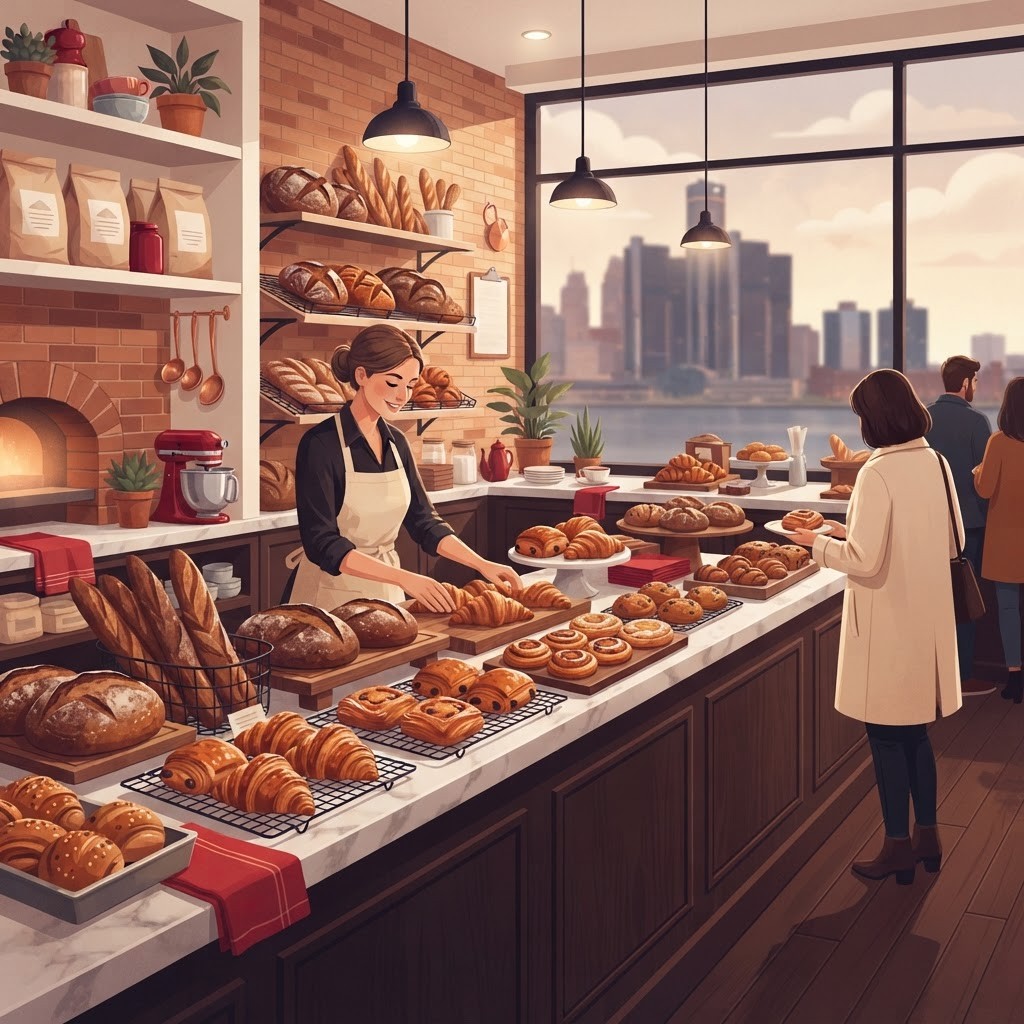
A City Built on Bread and Pastry
Detroit's baking tradition is inseparable from its immigration history. Polish, Hungarian, German, Italian, Greek, Lebanese, and Mexican communities each brought recipes that took root in specific neighborhoods and never left. Hamtramck became synonymous with paczki. Southwest Detroit filled with panaderias producing conchas and pan dulce before dawn. Greektown and the eastern market corridors developed their own pastry vocabularies. The result is a bakery landscape with genuine depth rather than a single dominant style.
Layered over that heritage is a newer generation of bakers focused on long-fermented sourdough, laminated pastry, and single-origin chocolate. These shops brought different priorities, including flour sourcing from regional mills, transparent pricing, and menus that change with the growing season. Together the old and new form one of the more interesting baking cities in the Midwest.
What Defines a Great Bakery
Quality shows up in details that are easy to verify. Bread should have an open, irregular crumb and a crust with real color, evidence of proper fermentation and a hot oven rather than shortcuts. Laminated pastries should shatter when pressed and reveal distinct layers, which only careful butter handling and temperature control produce. Fillings should taste like their ingredients, not like sugar. A bakery that sells out by early afternoon is usually baking to demand rather than holding inventory, and that discipline is a good sign.
Service matters too. The best bakeries can explain what is in a loaf, when it was baked, and how to store it. Many now publish baking schedules so customers know when specific items emerge, and offer preorder systems for holidays when demand overwhelms capacity.
The Top 10 Bakeries in Detroit
1. Avalon International Breads helped define modern Detroit baking with organic sourdough loaves, hearty scones, and a community-focused business model. Its Cass Corridor operation became a neighborhood anchor and a training ground for many local bakers.
2. New Palace Bakery in Hamtramck is a paczki institution. Its Polish repertoire extends to babka, kolaczki, and rye breads, and its holiday production runs are legendary among longtime residents.
3. New Martha Washington Bakery serves the same Hamtramck tradition with a strong reputation for cakes, filled donuts, and cookie trays that appear at family celebrations across the metro area.
4. Sister Pie operates in West Village with a seasonal, scratch-baked approach built around Michigan produce and thoughtful sourcing. Its salted maple and rhubarb-streusel pies have national reputations, and its hospitality practices are widely admired.
5. Astoria Pastry Shop in Greektown offers a glass-case display of Greek and European pastries, including baklava, tortes, and elaborate cakes, and remains a downtown standby for celebration desserts.
6. La Gloria Bakery in Mexicantown produces classic pan dulce, conchas, and tres leches cakes with early morning baking that fills the block with aroma. Its value pricing keeps it a daily habit for the neighborhood.
7. Ackroyd's Scottish Bakery specializes in meat pies, sausage rolls, shortbread, and other British Isles staples, a distinctive niche that has earned it a devoted regional following.
8. Detroit Institute of Bagels in Corktown hand-rolls and kettle-boils bagels before baking, producing a chewy interior and blistered crust that satisfies serious bagel critics, alongside creative sandwich builds.
9. Cannelle Detroit focuses on French patisserie technique, offering croissants, kouign-amann, and precise tarts that demonstrate what disciplined lamination and pastry cream work can achieve.
10. Coriander Kitchen and Farm connects baking to agriculture, using produce from its own farm in wood-fired breads, savory pastries, and seasonal sweets, an approach that has made it a favorite among locals who value provenance.
Trends in Detroit Baking
Sourdough remains dominant, but the conversation has moved to flour. More bakeries now buy from Michigan mills and name specific grain varieties, which changes flavor noticeably and supports regional agriculture. Whole grain percentages are climbing as bakers learn to manage the hydration and fermentation challenges those flours introduce.
Allergen-aware baking has also expanded meaningfully. Gluten-free and vegan options that once tasted like compromises now appear as intentional recipes, and several Detroit bakeries maintain separate preparation areas to reduce cross-contact risk. Buyers with serious allergies should still ask directly about handling procedures.
Operationally, bakeries have embraced preorder and subscription models. Weekly bread shares and holiday preorder windows smooth production, reduce waste, and let small shops plan labor around predictable volume, a meaningful advantage in a business with thin margins.
How to Get the Most From a Bakery Visit
Go early. The best selection exists within the first two hours of opening, and popular items rarely last until closing. Ask what came out of the oven most recently rather than ordering by habit. Buy bread the day you plan to eat it, and store loaves cut-side down in paper rather than plastic to preserve crust texture. For freezing, slice first and wrap tightly so you can toast individual pieces without thawing the whole loaf.
For celebrations, order custom cakes and large trays at least a week ahead, and longer around Easter, Fat Tuesday, and December holidays when Detroit bakeries operate at maximum capacity.
Final Thoughts
Detroit rewards bakery exploration because each neighborhood offers something genuinely different. The ten shops above span Polish tradition, Mexican pan dulce, French technique, Scottish savories, and modern seasonal baking, which together tell the story of the city better than any single style could.
