
Louisville's Automotive Manufacturing Legacy
Kentucky ranks among the top vehicle-producing states in the nation, and Louisville is central to that standing. The city hosts major vehicle assembly operations along with an extensive network of tier one and tier two suppliers producing everything from stamped body panels and axles to seating, electronics, and interior components. Automotive manufacturing directly employs tens of thousands of workers in the metro area and supports many more through the supplier base and logistics operations.
The industry's presence here is not historical accident. Louisville offers highway and rail access, river freight capability, a major air cargo hub, and a workforce with generations of manufacturing experience. Just-in-time production requires suppliers within tight delivery windows of assembly plants, and that geographic requirement has clustered the industry densely across Kentucky and southern Indiana.
Major Automotive Manufacturers and Suppliers
Ford Motor Company operates two Louisville facilities that anchor the entire regional automotive economy. The Louisville Assembly Plant and Kentucky Truck Plant together produce some of the company's highest-volume and most profitable vehicles, including sport utility vehicles and heavy-duty pickups. Kentucky Truck Plant in particular is among the most significant single manufacturing operations in the state, and its production schedule ripples through hundreds of supplier facilities.
Toyota Motor Manufacturing Kentucky in nearby Georgetown is North America's largest Toyota plant, and while located outside Jefferson County, its supplier network extends deeply into the Louisville area. The company's production system and supplier development practices have influenced manufacturing standards across the entire state.
General Electric Appliances and adjacent large-scale manufacturers share the region's industrial labor pool and supplier base with automotive operations, and cross-industry supplier relationships in stamping, molding, and controls are common in the Louisville market.
American Axle and Manufacturing supplies driveline and drivetrain components to vehicle assemblers, and operations serving the Kentucky market provide axles and related systems for truck and SUV platforms built regionally.
Dana Incorporated produces axles, driveshafts, and sealing and thermal management products for light and commercial vehicles, and the company's regional footprint supports the heavy-duty truck production concentrated in Louisville.
Adient manufactures automotive seating systems, and seating suppliers must locate near assembly plants because finished seats are bulky and delivered in precise build sequence. Its regional operations exemplify just-in-time supply.
Hitachi Astemo supplies electronic control units, brake systems, and powertrain electronics from Kentucky facilities, representing the growing electronics content in modern vehicles.
ZF Group provides driveline, chassis technology, and advanced driver assistance components, and its regional presence connects Louisville assembly operations to global automotive engineering.
Akebono Brake Corporation has substantial Kentucky operations manufacturing brake friction materials and assemblies, supplying vehicle manufacturers across North America from a base within the state's automotive corridor.
Faurecia and comparable interior systems suppliers operate facilities producing instrument panels, door panels, and interior modules for regional assembly plants, adding another layer to the dense supplier ecosystem surrounding Louisville.
Electrification and the Kentucky Transition
The shift toward electric vehicles represents the most consequential change in automotive manufacturing since the introduction of the assembly line, and Kentucky has positioned itself aggressively. Substantial battery manufacturing investment has been announced and developed in the state, and Louisville-area assembly operations are progressively incorporating electrified variants and supporting technologies.
The transition creates both opportunity and disruption for suppliers. Electric powertrains eliminate demand for some traditional components while creating entirely new categories in battery systems, thermal management, power electronics, and high-voltage wiring. Suppliers with engineering capability to reposition are capturing growth, while those tied exclusively to internal combustion components face difficult strategic choices.
Workforce development has become a central concern. Battery and electronics manufacturing requires different skill profiles than mechanical assembly, and Kentucky's community colleges and technical programs have expanded training in electrical systems, controls, and automation maintenance in response.
Automation, Quality, and Supply Chain
Automotive manufacturing operates at a level of process discipline unusual in other industries. Statistical process control, production part approval processes, and rigorous traceability are baseline expectations rather than differentiators. Suppliers seeking entry into the Louisville automotive supply base must demonstrate certified quality systems and the documentation infrastructure to support recall traceability.
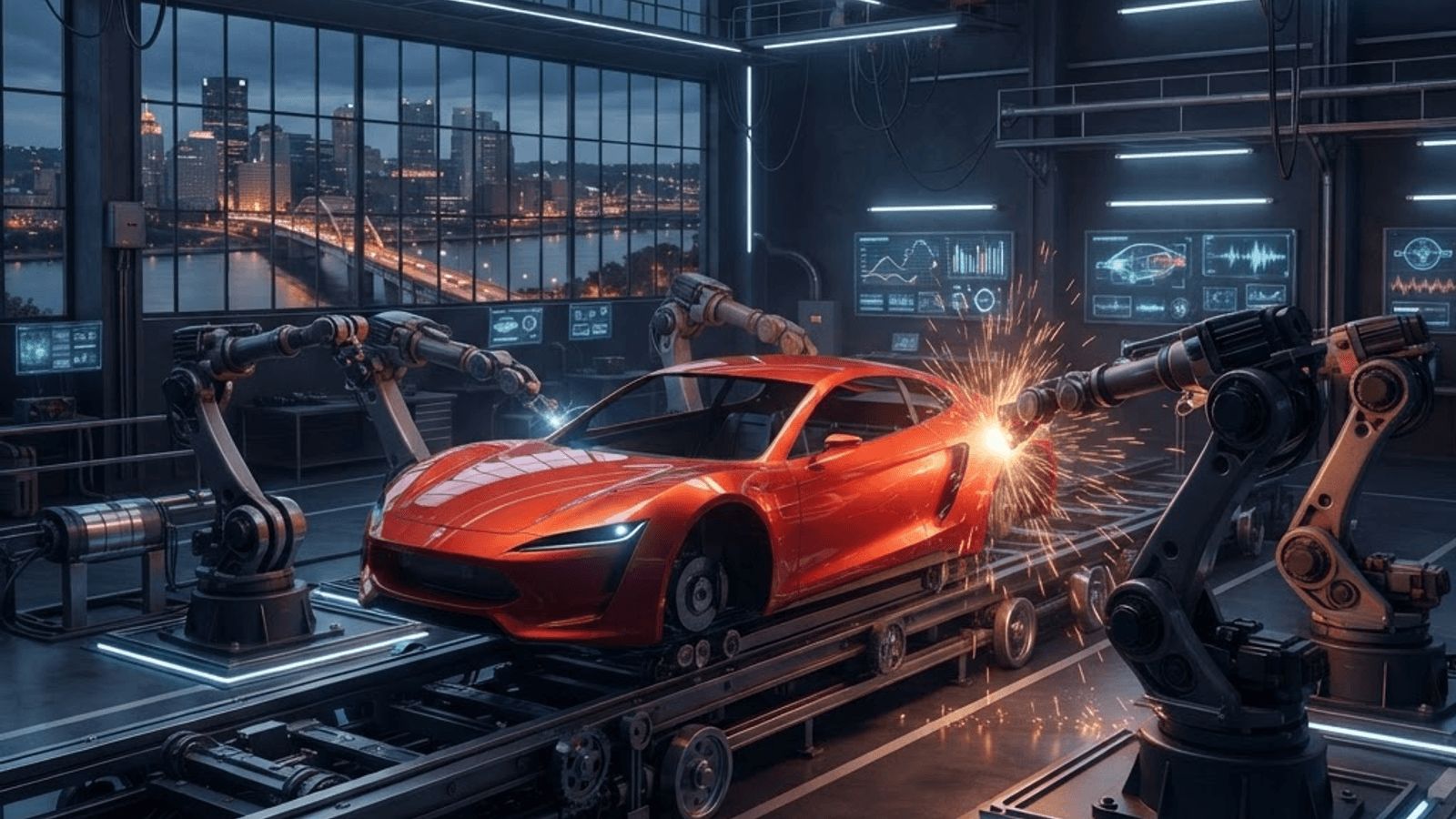
Automation continues to advance, particularly in welding, painting, material handling, and inspection. Collaborative robots have expanded automation into operations previously requiring human dexterity, and vision-based inspection has improved defect detection while reducing inspection labor.
Supply chain strategy has shifted meaningfully since recent disruptions. Manufacturers have accepted higher inventory carrying costs in exchange for resilience, dual-sourced critical components, and increased visibility into tier two and tier three suppliers. Regional sourcing has gained favor precisely because shorter supply lines are easier to manage under stress.
Working with Automotive Manufacturers
Companies seeking to supply the Louisville automotive sector should understand that qualification is a long process. Assemblers and tier one suppliers evaluate financial stability, capacity, quality systems, engineering support, and launch capability before awarding business. Preparing thorough documentation and demonstrating relevant program experience is essential.
For businesses purchasing from automotive-grade manufacturers in other contexts, the sector's process rigor is an asset. Suppliers accustomed to automotive quality requirements typically deliver superior consistency to industrial and commercial customers as well.
Final Thoughts
Louisville's automotive manufacturing sector is among the strongest in the United States, built on major assembly operations and a deep, capable supplier network. The companies above represent assembly, driveline, seating, braking, electronics, and interior systems. As electrification progresses, the region's combination of manufacturing capability, logistics access, and workforce depth positions it to remain central to American vehicle production.
