
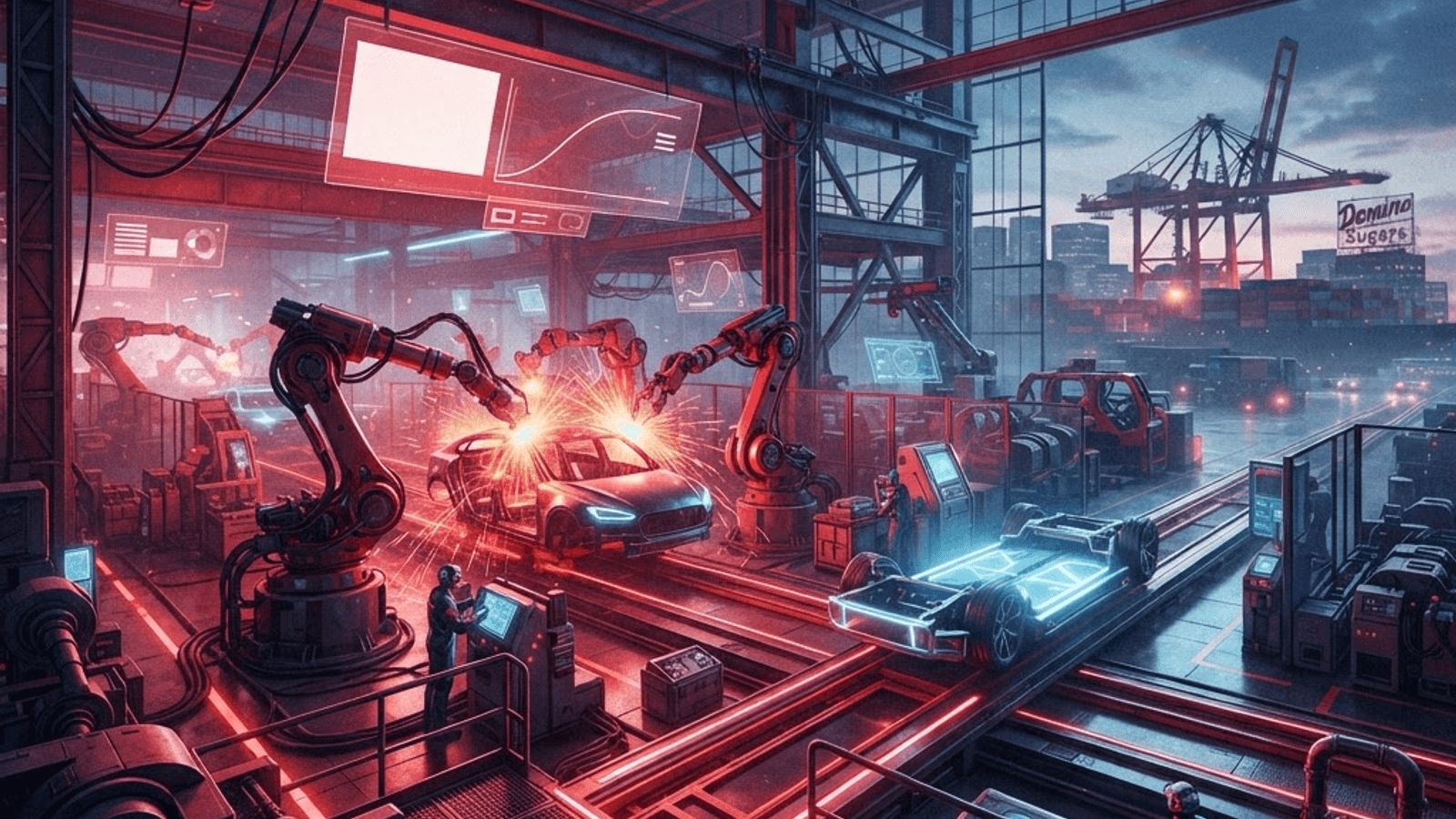
Baltimore's Place in the Automotive Economy
Baltimore's automotive identity has shifted rather than faded. The city once hosted major vehicle assembly, and while final assembly largely moved on, the region retained something arguably more durable: one of the nation's leading roll-on roll-off ports for vehicle imports and exports, a dense network of component and aftermarket manufacturers, and a thriving commercial vehicle upfitting industry serving fleets across the Mid-Atlantic.
The Port of Baltimore consistently ranks among the top American ports for automobiles and light trucks, handling hundreds of thousands of units annually. That volume supports processing facilities, accessory installation operations, quality inspection services, and logistics providers, all of which are manufacturing-adjacent employers requiring skilled technicians and industrial space.
Segments of the Local Automotive Industry
Buyers and job seekers should understand the distinct segments. Component manufacturers produce parts, assemblies, and materials supplied to vehicle makers or the aftermarket. Upfitters and specialty vehicle builders modify chassis into work trucks, ambulances, utility vehicles, and mobile units. Vehicle processors prepare imported vehicles for delivery, installing accessories and performing quality remediation. Remanufacturers rebuild engines, transmissions, and electrical components. Aftermarket accessory producers make performance, protection, and utility products.
Each segment operates on different economics. Component supply is driven by long-term contracts and rigorous quality standards. Upfitting is project-based and highly customized. Processing is volume and throughput oriented. Remanufacturing is core-supply and cost driven.
The Top Automotive Manufacturers Serving Baltimore
Volvo Group and Mack Trucks operations maintain a meaningful commercial vehicle presence in Maryland, supporting heavy truck distribution, parts, and service infrastructure. For fleet operators, the differentiator is factory-backed support depth and access to genuine components with documented specifications.
Marada Industries represents metal stamping and structural component manufacturing for the automotive supply chain in the Maryland region. Its strengths lie in press capacity, welding automation, and the dimensional consistency that vehicle assembly demands.
Baltimore Truck Body Works builds and installs service bodies, dump bodies, and utility configurations on commercial chassis. Contractors and municipal fleets value its ability to spec a vehicle for a specific trade and deliver it road-ready with all required lighting and safety equipment.
Chesapeake Vehicle Upfitters focuses on fleet upfitting including shelving, partitions, telematics installation, and electrical accessories for vans and light trucks. Its differentiator is standardization: producing identical builds across a fleet so technicians and drivers encounter consistent layouts.
Patapsco Remanufacturing rebuilds drivetrain and electrical components, extending service life and offering cost advantages over new replacement. Reputable remanufacturers distinguish themselves through documented testing and warranty terms comparable to new parts.
Harbor Automotive Components supplies rubber, plastic, and sealing components used in vehicle assembly and aftermarket repair. Material expertise and tooling capability define competitiveness here.
Sparrows Point Metal Forming leverages the region's steel heritage to produce formed and fabricated metal parts for transportation applications, appealing to buyers who need domestic material traceability.
Bmore Electric Vehicle Works serves the growing electrification niche, converting and outfitting commercial vehicles with electric drivetrains and charging infrastructure. Fleet operators piloting electrification value partners who understand both vehicles and the electrical work at the depot.
Federal Hill Performance Manufacturing produces aftermarket performance and protection accessories, from suspension components to skid plates and racks. Enthusiast and commercial customers appreciate short lead times and the ability to customize fitment.
Locust Point Vehicle Processing operates in the port-adjacent processing segment, performing accessory installation, protective removal, inspection, and preparation on imported vehicles. Throughput discipline and damage-free handling rates are the measures of quality in this business.
Trends Reshaping Automotive Manufacturing Locally
Electrification is the dominant force. Commercial fleets in Baltimore face both regulatory pressure and genuine operating cost incentives to electrify last-mile delivery and municipal vehicles. This creates demand for upfitters who understand high-voltage systems, thermal management, and depot charging design, capabilities that traditional body shops are racing to acquire.
Advanced driver assistance systems are the second trend. Cameras, radar units, and sensors must be calibrated after any body modification or glass replacement, which has turned calibration into a required manufacturing step rather than an optional service. Shops with proper targets and equipment now hold a competitive advantage.
Supply chain regionalization is the third. After years of disruption, manufacturers are dual-sourcing and shortening supply lines, which benefits component producers located near assembly and distribution points. Baltimore's port and highway access make it a logical node in that reconfiguration.
Choosing the Right Automotive Partner
For fleets, prioritize upfitters who will build and document a pilot vehicle before committing to a full order. Standardized builds reduce training cost and maintenance complexity far more than small per-unit savings. Confirm that modifications preserve chassis warranty and comply with federal safety standards, and get that in writing.
For component buyers, evaluate quality system certification, process capability data, and tooling ownership terms. Understand who owns the tools you pay for, because that determines your flexibility later. For remanufactured parts, compare warranty length and testing protocols rather than price alone.
Across all segments, visit the facility. Automotive work is physical, and floor organization, weld quality, paint finish, and inspection rigor are visible to anyone willing to look.
Final Thoughts
Baltimore's automotive manufacturers occupy a practical, specialized position in the industry: components, upfitting, remanufacturing, and port processing rather than mass assembly. That specialization is well suited to current market conditions, where fleets need customization, electrification support, and regional responsiveness. For any organization operating vehicles in the Mid-Atlantic, the local supplier base is deeper and more capable than its low profile suggests.
