
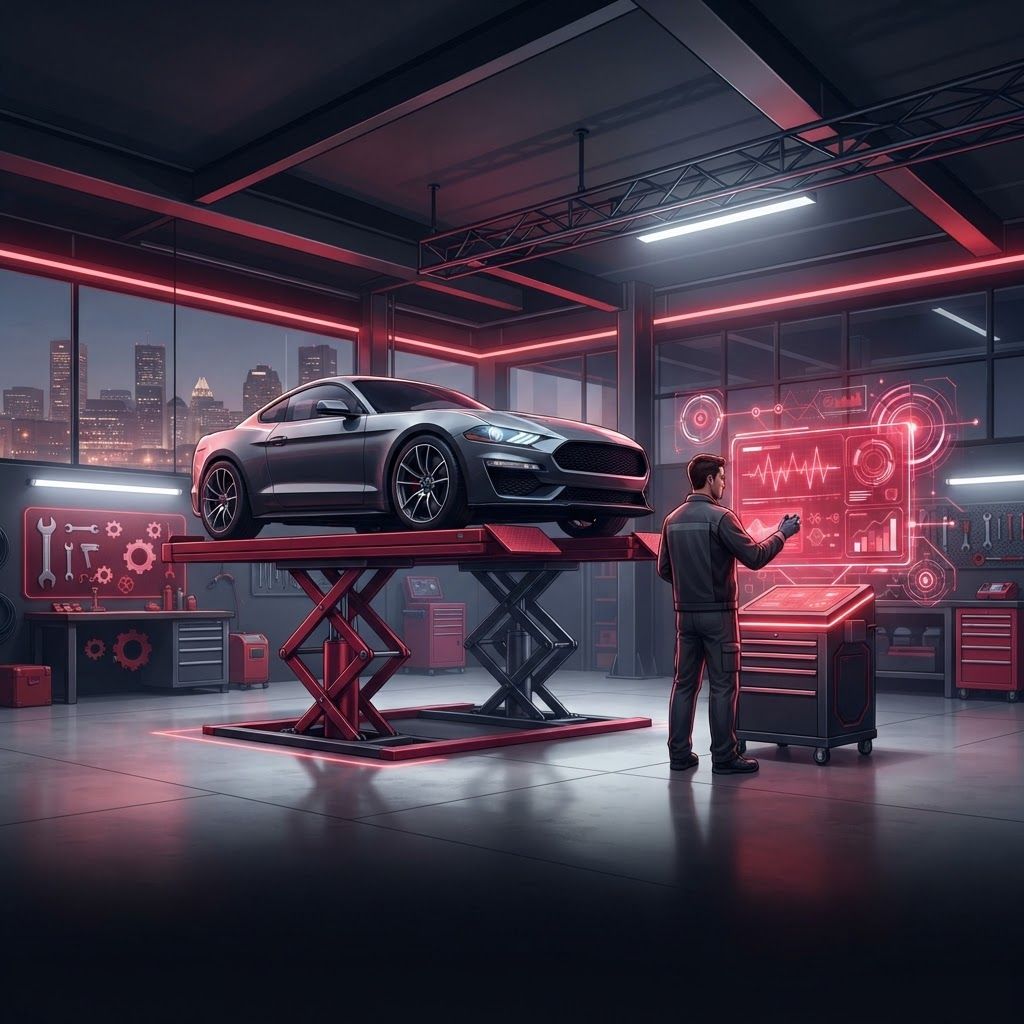
What Baltimore Driving Does to Vehicles
Vehicles in Baltimore endure a demanding environment. Winter de-icing chemicals accelerate corrosion on brake lines, exhaust components, and suspension hardware. Uneven city pavement and potholes damage wheels, tires, struts, and alignment. Stop-and-go traffic on the beltway and downtown streets increases brake wear and heat cycling on transmissions and cooling systems.
Those patterns mean local repair demand skews toward suspension work, brake service, alignment, rust-related component replacement, and cooling system maintenance. A shop familiar with these regional failure patterns diagnoses faster and often catches problems earlier than one guessing from symptoms alone.
Dealership Service Departments
Franchise dealership service centers hold brand-specific training, factory diagnostic tools, and access to technical service bulletins and recall work. For vehicles under warranty, software-dependent problems, or complex electrical faults, this is frequently the fastest route to a correct repair. Labor rates run higher, but for certain jobs the specialization saves money overall by avoiding repeat diagnosis.
ASE-Certified Independent Repair Shops
Independent shops staffed by ASE-certified technicians form the backbone of Baltimore's repair market. They handle most brands, typically charge lower labor rates than dealerships, and often offer more direct communication with the technician performing the work. Certification, current equipment, and a written warranty on parts and labor are the markers of a strong independent.
AAA Approved Auto Repair Facilities
Shops in the AAA approved network undergo inspection covering technician credentials, equipment, customer satisfaction, and complaint resolution. That third-party vetting provides useful assurance for drivers new to the area. Members typically receive warranty coverage backed by the association, adding recourse if a repair fails prematurely.
European Vehicle Specialists
Baltimore has several independent shops focused on German and other European vehicles, with the scan tools, software, and specialty tooling those platforms require. Owners of premium European cars frequently find these shops more cost-effective than dealerships while retaining proper diagnostic capability. Familiarity with common model-specific failures shortens troubleshooting time substantially.
Japanese and Korean Vehicle Specialists
Shops concentrating on Japanese and Korean brands serve the large regional population of these vehicles. Their experience with hybrid systems, continuously variable transmissions, and specific timing and cooling designs is valuable. Because parts sourcing is well established, turnaround is usually quick and pricing predictable.
Midas
Midas provides brakes, exhaust, suspension, tires, and general maintenance across multiple area locations with standardized pricing and nationwide warranty support. Convenience and consistency are its main advantages, particularly for routine wear items. Drivers should still request itemized estimates and decline unrelated upsells.
Meineke
Meineke offers similar broad service coverage including oil changes, brake work, exhaust repair, and diagnostics, with franchise locations across the metropolitan area. Quality varies by individual franchise, so local reviews matter more than the brand name. Coupons and scheduled maintenance packages can reduce routine service cost meaningfully.
Firestone Complete Auto Care
Firestone combines tire sales with mechanical repair including alignment, brakes, batteries, and suspension. Given how hard Baltimore roads are on tires and alignment, having both handled in one visit is practical. Nationwide warranty coverage is useful for drivers who travel frequently.
Mobile Mechanic Services
Mobile mechanics perform diagnostics, batteries, brakes, starters, and many other repairs at a home or workplace, which suits residents without off-street parking flexibility or time for a shop visit. Pricing is often competitive because overhead is lower. Complex work requiring lifts or specialty equipment still belongs in a shop.
Community College Automotive Programs
Automotive technology programs at area community colleges sometimes perform supervised service work at reduced cost while training students. Instructors oversee repairs, and the work is thorough because it is being taught and evaluated. Turnaround is slower, making this a good option for non-urgent maintenance.
How to Choose a Repair Shop and Avoid Overpaying
Always request a written estimate that separates parts, labor hours, and diagnostic fees, and ask whether parts are original equipment, aftermarket, or remanufactured. That distinction affects both price and longevity, and reputable shops explain the tradeoff without pressure.
Ask for evidence on major repairs. A trustworthy technician will show the worn component, the leak, or the diagnostic trouble code data. For expensive engine, transmission, or suspension work, a second opinion is reasonable and rarely resented by a confident shop.
Finally, invest in preventive maintenance suited to local conditions: regular undercarriage washing in winter, alignment checks after pothole impacts, brake fluid service, and cooling system inspection. Building a relationship with one competent Baltimore shop over time produces better vehicle reliability and lower lifetime cost than chasing the cheapest quote for each individual repair.
Warranty, Records, and Resale Value
Independent shops can legally perform scheduled maintenance without voiding a manufacturer warranty, provided the correct specifications and fluids are used and documentation is retained. Keeping every invoice, noting mileage, and preserving parts receipts protects warranty claims and supports resale value later, since a documented service history is one of the strongest signals a private buyer can see.
Timing also affects cost. Addressing a small coolant leak, a slightly noisy wheel bearing, or an early brake pulsation is far cheaper than repairing the cascade of damage that follows neglect. Baltimore drivers who schedule seasonal inspections before winter and after the worst pothole months typically catch these issues while they are still inexpensive, and they avoid the roadside failures that turn a modest repair into a towing and rental expense.
