
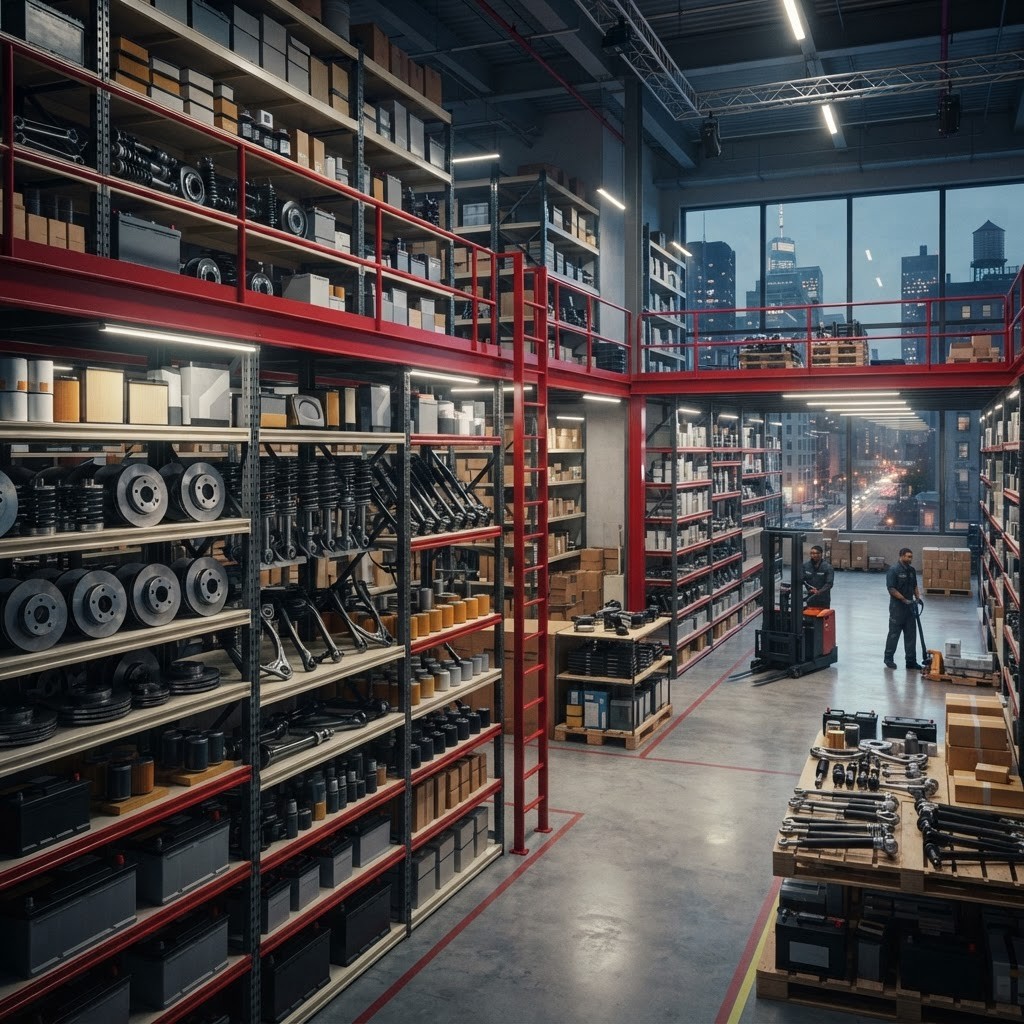
What New York Auto Professionals Need from a Wholesaler
New York vehicles face dense stop-and-go traffic, winter road treatment, potholes, commercial duty cycles, and strict inspection requirements. Repair facilities cannot afford to keep every component on the shelf, so they depend on nearby wholesalers for rapid, accurate delivery. Catalog quality, warranty processing, technical support, and consistent product grades often matter more than a small difference in unit cost.
The distributors below serve New York through local stores, regional warehouses, or dedicated professional programs. They range from broadline networks to specialists in collision and original-equipment parts.
1. Parts Authority
Parts Authority began in New York and has grown into one of the country's largest automotive and truck parts distributors. It supplies repair shops, fleets, dealers, and retailers with undercar, engine management, filtration, electrical, cooling, and maintenance products. Dense local coverage and multiple daily deliveries are major strengths for metropolitan shops working to complete repairs the same day.
2. Arch Auto Parts
Arch Auto Parts is a New York-area distributor known for serving professional installers with a broad range of replacement parts. Its neighborhood presence and familiarity with the city's vehicle mix support fast counter service and delivery. Independent specialists can be particularly helpful when a catalog presents multiple fitment choices.
3. NAPA Auto Parts
NAPA's distribution network serves New York repair businesses, fleets, municipalities, and consumers. Its catalog includes mechanical, electrical, collision, tools, shop supplies, and heavy-duty products. Professional programs, national warranties, and inventory depth make NAPA a practical choice for operations with varied vehicle populations.
4. Worldpac
Worldpac specializes in original-equipment and high-quality replacement parts for imported vehicles. New York's large population of European and Asian vehicles makes its catalog especially relevant. Technical training and detailed electronic cataloging help independent repair shops handle complex makes while selecting components that meet customer expectations.
5. IMC
IMC distributes import vehicle parts to professional customers and is known for original-equipment and premium aftermarket brands. Coverage across European and Asian applications supports specialty garages and general repair shops. Reliable identification by vehicle details is important because midyear production changes can create subtle fitment differences.
6. LKQ Corporation
LKQ serves New York collision and mechanical repair markets with aftermarket, recycled, remanufactured, and specialty parts. Its breadth is especially valuable in body repair, where a single job may require sheet metal, lighting, cooling components, wheels, and reclaimed original-equipment pieces. Distribution scale helps source alternatives when new parts are constrained.
7. Empire Auto Parts
Empire Auto Parts is a major Northeast distributor focused on collision replacement parts. Body shops use its inventory of lamps, bumpers, hoods, fenders, grilles, mirrors, and related components. Fast damage-free delivery and responsive claims handling are essential in this category because large painted parts are vulnerable during transport.
8. Fisher Auto Parts
Fisher Auto Parts serves professional installers with broad mechanical coverage, tools, chemicals, and shop supplies. Its regional distribution model and installer programs support independent garages. Training and business resources can add value beyond the invoice, particularly for shops adopting new diagnostic and service categories.
9. Genuine Parts Company
Through its NAPA and industrial distribution operations, Genuine Parts Company provides extensive supply capabilities relevant to New York fleets and repair organizations. National account consistency is useful for businesses operating vehicles across multiple locations. Standardized products and centralized reporting can simplify maintenance control.
10. Transtar Industries
Transtar specializes in transmission and driveline products, including rebuild kits, hard parts, torque converters, fluids, and complete units. Specialist wholesalers remain important because complex drivetrain repairs require accurate technical identification and access to components not typically stocked by general parts stores.
Comparing Auto Parts Suppliers
Professional buyers should assess catalog accuracy, brand tiers, fill rate, delivery frequency, cores, labor claims, and warranty turnaround. Ask whether the quoted component is original equipment, premium aftermarket, economy, remanufactured, or recycled. The least expensive option is not always suitable for a high-labor repair, fleet vehicle, or safety-critical system.
Track supplier performance with data: wrong-part rate, returns, average delivery time, warranty incidence, and gross profit by category. Shops should also consider availability of related hardware. Receiving a brake rotor without the correct sensor or a body panel without clips can still stall the job.
Changes in the New York Parts Market
Electric vehicles are shifting demand toward thermal management, suspension, tires, electronics, and specialized safety equipment, while conventional vehicles will require service for many years. Advanced driver-assistance systems make part quality and post-repair calibration increasingly important. Fleets are also using telematics to anticipate maintenance. The strongest New York wholesalers are investing in better catalog data, rapid local logistics, and technical training. For repair professionals, a balanced supplier network usually works best: one dependable broadline partner, supported by specialists for imports, collision, driveline, and hard-to-find applications.
Before committing to a supplier, request current terms, representative samples, lead-time expectations, and references from comparable New York customers. A small trial order can reveal communication quality, packing standards, documentation accuracy, and delivery reliability before the relationship expands into a critical long-term purchasing program.
