
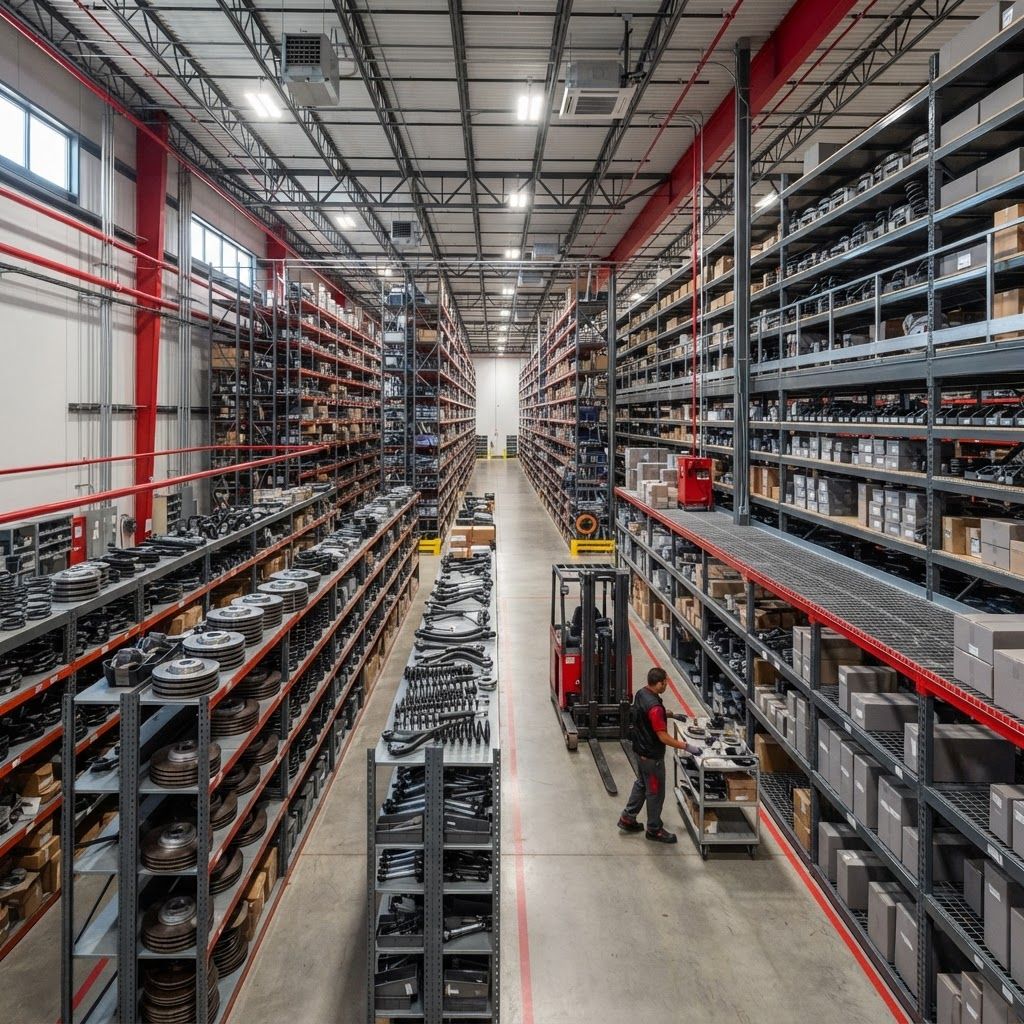
Fort Worth’s Automotive Parts Market
Fort Worth drivers cover long distances, while the city’s construction, logistics, municipal, and service fleets operate under demanding conditions. Repair businesses therefore need parts suppliers that combine availability with fitment accuracy, warranty support, and fast delivery. The market includes national networks, heavy-duty specialists, dealership channels, and local warehouse distributors. Buyers should confirm commercial account terms, delivery zones, brand lines, and return policies because each location may differ.
1. NAPA Auto Parts
NAPA serves professional repair shops and fleets with mechanical, electrical, maintenance, paint, and shop-supply categories. Its broad network and commercial programs make it a practical primary source for everyday repairs. Fort Worth shops should evaluate local stocking depth and delivery frequency, not just national catalog size. A strong branch relationship can help resolve catalog ambiguities and source unusual components faster.
2. O’Reilly Auto Parts Professional
O’Reilly’s professional service supports shops with broad parts coverage and frequent local delivery. The network is useful for common domestic and import applications, maintenance products, tools, and shop supplies. Speed is a major advantage, but accuracy remains essential. Providing the complete vehicle identification number, production date, engine, drivetrain, and option details reduces wrong-part delays.
3. AutoZone Pro
AutoZone Pro combines extensive retail locations with commercial ordering and delivery capabilities. Independent technicians can use it for repair parts, batteries, accessories, fluids, and diagnostic-related products. Digital catalog access may streamline routine ordering. Shops should still document preferred brands and quality tiers so service advisors and technicians make consistent choices across similar repairs.
4. Advance Professional
Advance Professional serves commercial customers through a broad aftermarket portfolio and associated distribution capabilities. Product coverage and shop solutions can support independent repair facilities. Buyers should compare labor-claim policies, warranty administration, delivery cutoffs, and the availability of premium versus economy lines. A slightly higher-quality component can protect shop reputation when labor to replace it is substantial.
5. XL Parts
Texas-based XL Parts focuses on professional automotive distribution. Its warehouse and delivery model is built around repair-shop demand, making local inventory and knowledgeable counter support key differentiators. Fort Worth shops may value access to multiple recognized aftermarket brands. Track fill rate and returns by supplier to determine whether apparent price savings survive lost bay time and repeat deliveries.
6. Parts Warehouse
Parts Warehouse serves automotive customers with replacement components across common repair categories. A regional or local warehouse source can be valuable when national chains do not stock a specific fitment nearby. Buyers should verify manufacturer, warranty, and whether a component is new, remanufactured, or rebuilt. Core charges and return packaging require careful internal controls.
7. FleetPride
FleetPride specializes in heavy-duty truck and trailer parts, service, and fleet needs. Fort Worth’s logistics and construction sectors make this expertise particularly relevant. Heavy-duty buyers require brake, suspension, drivetrain, filtration, lighting, and trailer components that match demanding duty cycles. Fleet managers should standardize common parts and schedule preventive replenishment to reduce roadside events.
8. TruckPro
TruckPro is another major heavy-duty aftermarket distributor serving commercial trucks and trailers. Its product knowledge can assist fleets, owner-operators, and repair facilities with application-specific parts. In this market, vehicle configuration and axle or component identification often matter more than model year alone. Bring serial numbers, measurements, and component tags when possible to improve accuracy.
9. Genuine Parts Through Local Dealership Groups
Fort Worth dealership parts departments provide original-equipment components for their represented manufacturers. Genuine parts are particularly valuable for warranty work, software-linked modules, collision repairs, and applications where supersessions are complex. Pricing may differ from aftermarket channels, but precise catalog access and manufacturer updates can reduce uncertainty. Commercial buyers should ask about wholesale tiers, delivery, and return restrictions on electronic items.
10. LKQ
LKQ supplies collision, recycled, remanufactured, and mechanical parts across a wide distribution network. Body shops and repair facilities may use it for alternative replacement parts and assemblies that help manage repair economics. Condition descriptions, grade, mileage, inclusions, and warranty terms should be reviewed closely for recycled components. Collision buyers must also verify certification and insurer requirements.
How to Choose an Auto Parts Distributor
Measure total service performance: correct-part rate, fill rate, delivery time, warranty handling, catalog support, and returns. A wrong component can stop a technician, occupy a bay, and delay a customer, making accuracy more valuable than a small discount. Establish receiving procedures for damage and compare labels to the purchase order before parts reach the technician.
Fort Worth fleets and shops are also preparing for advanced driver-assistance systems, hybrid vehicles, electrification, and increasingly software-dependent repairs. Suppliers need training and catalog data that keep pace. Maintain more than one approved source for mission-critical categories, but consolidate enough volume to earn responsive service. The best wholesaler functions as an operational partner—communicating shortages, offering credible alternatives, and standing behind the components it sells.
