
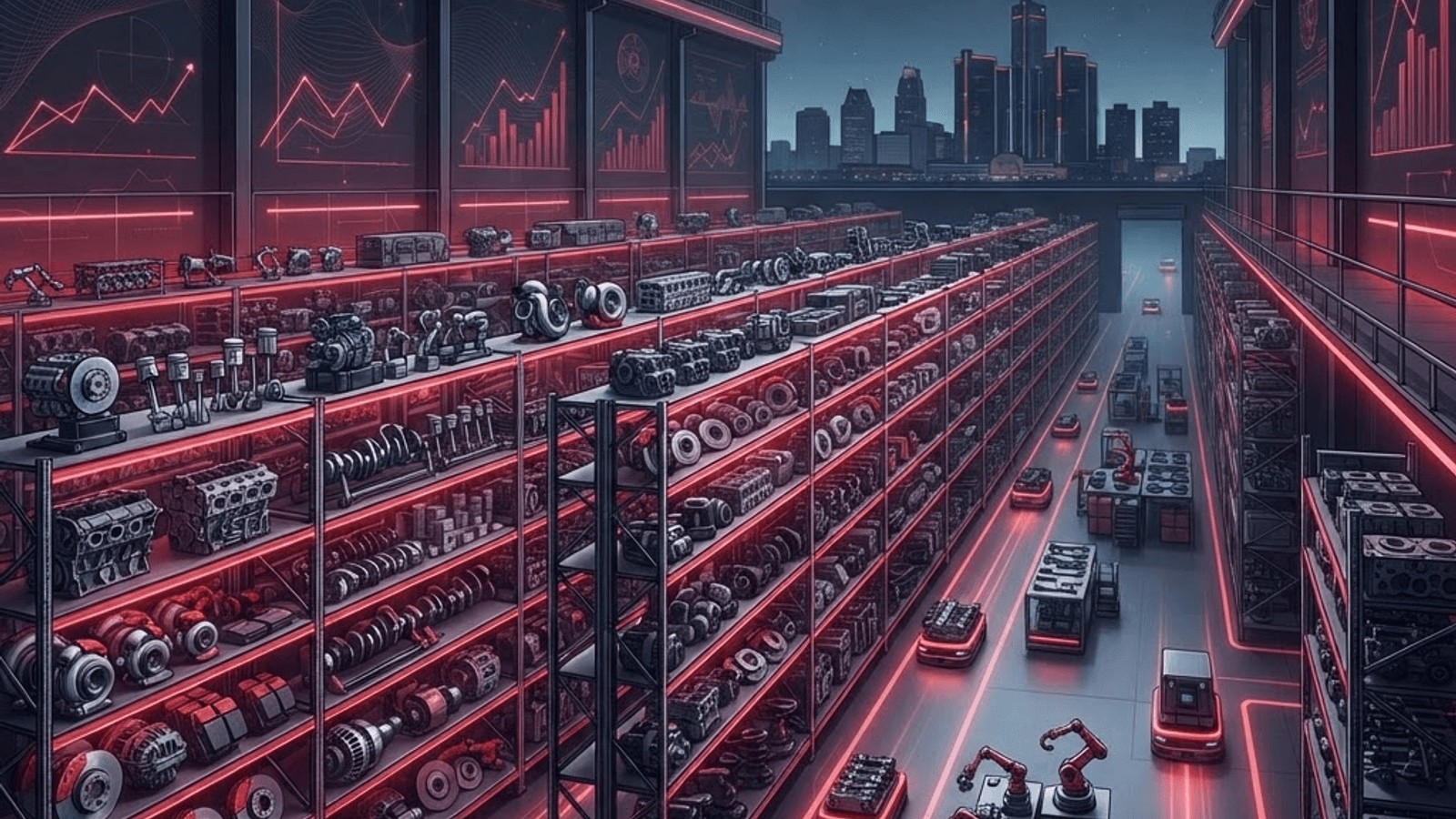
Why Detroit Is Still the Center of Auto Parts Distribution
No city in North America carries the automotive legacy that Detroit does. More than a century after the first moving assembly lines transformed Michigan into an industrial powerhouse, the region continues to host a remarkably dense network of assembly plants, Tier 1 and Tier 2 suppliers, tooling shops, collision centers and independent garages. That density creates something unusual: an auto parts wholesale market that is deep, fiercely competitive and unusually sophisticated. A shop owner in Corktown or a fleet manager in Dearborn can often source a hard-to-find component the same day, simply because the inventory already sits somewhere within a thirty-mile radius.
Wholesalers occupy the critical middle of that chain. They buy in volume from original equipment manufacturers and aftermarket producers, hold regional inventory, and then break it down into the quantities that repair shops, dealerships, municipal fleets and retailers actually need. The best of them do far more than move boxes. They advise on part interchangeability, manage warranty claims, run same-day delivery routes, and help smaller shops compete with dealership service departments.
What Separates a Great Wholesaler From an Average One
Experienced buyers in the Detroit market tend to evaluate suppliers on a handful of practical criteria. Fill rate is the first: how often does the wholesaler have the part in stock on the first request? A distributor with a ninety-five percent first-pick rate saves a technician hours of downtime. Delivery frequency matters just as much, and in the metro area multiple daily runs are the expectation rather than a premium service.
Beyond logistics, buyers look at catalog breadth across domestic, European and Asian nameplates, the quality tiers offered, the clarity of return and core-charge policies, and the technical knowledge of the counter staff. Increasingly, digital capability is decisive. Online ordering portals with VIN-based lookup, live inventory visibility and integration into shop management software have shifted from novelty to necessity.
Ten Auto Parts Wholesalers Worth Knowing in Detroit
Genuine Parts Company (NAPA Auto Parts distribution network) anchors the region with one of the broadest aftermarket catalogs available. Its distribution model combines large regional warehouses with local branches, giving Detroit shops access to hundreds of thousands of line items and a well-regarded nationwide warranty program that reassures customers who travel.
LKQ Corporation is one of the most influential names in alternative and recycled parts. For collision repair operations working within insurance guidelines, LKQ's supply of quality recycled OEM assemblies, remanufactured engines and aftermarket collision panels can dramatically reduce claim costs while keeping repair quality high.
Advance Auto Parts Professional serves the commercial side of the business with a dedicated professional program. Its strength lies in blending retail-level convenience with wholesale pricing, technical training resources and diagnostic support that independent shops value.
O'Reilly Auto Parts Professional has built a reputation on service intensity. Frequent delivery, strong hard-parts availability and a culture of counter expertise make it a common second-source supplier for shops that cannot afford to wait on a back order.
AutoZone Commercial leverages one of the densest store footprints in the country. For fleets and garages spread across the metro region, that proximity translates into rapid access to maintenance-cycle items such as filters, brakes, batteries and fluids.
Fisher Auto Parts operates as an independently minded distributor with a strong professional installer focus. Buyers frequently cite consistent inventory discipline and long-tenured staff who understand application nuances on older platforms.
Motion & Flow Control Products and similar industrial-automotive hybrids serve the segment where vehicle maintenance meets industrial equipment, supplying hydraulic lines, fittings, seals and power transmission components used heavily by heavy-duty fleets around the Detroit industrial corridor.
Uni-Select and its Bumper to Bumper program partners supply a network of independent jobbers throughout Michigan. The model gives locally owned stores access to national purchasing power, which helps them hold competitive pricing on both maintenance and undercar parts.
Crown Auto Parts and other established regional jobbers represent the traditional backbone of the Detroit market. Family operated for decades in many cases, these businesses win loyalty through relationships, flexible credit terms and a willingness to hunt down unusual components.
Detroit Axle has grown into a nationally recognized name from a Michigan base, specializing in complete undercar assemblies such as axles, hubs, control arms and brake kits. Its bundled kit strategy appeals to shops that prefer to replace related components in a single job.
Industry Trends Reshaping Wholesale Auto Parts
Several forces are actively reshaping this market. The rising average age of vehicles on American roads has expanded demand for repair parts on platforms well past warranty, which favors distributors with deep legacy coverage. At the same time, electrification is introducing entirely new categories: high-voltage cabling, thermal management components, battery service tooling and specialized diagnostic equipment. Wholesalers investing early in electric vehicle inventory and technician training are positioning themselves for the next decade.
Supply chain resilience has also become a competitive differentiator. After several years of global disruption, buyers now reward suppliers that carry deeper safety stock, maintain multiple sourcing options and communicate honestly about lead times. Data is the third major shift. Predictive inventory models built on regional repair patterns allow the strongest distributors to stock what Detroit shops will actually need next quarter rather than what they needed last year.
How to Choose the Right Partner for Your Shop
The most effective approach is rarely to select one supplier. Successful Detroit shops typically build a primary relationship with a broad-line distributor, then add a specialist for collision, a recycled-parts source for insurance work, and a heavy-duty supplier if they service commercial vehicles. Before committing, request a trial period and track real metrics: first-pick fill rate, delivery punctuality, return processing speed and billing accuracy.
Ask direct questions about warranty administration, since a generous policy on paper means little if claims take weeks to resolve. Evaluate the digital ordering experience with your own technicians rather than in a sales demonstration. Finally, weigh the value of local knowledge. In a market as specialized as Detroit, a counter professional who instantly recognizes an application quirk on a twelve-year-old platform can be worth more than a marginal discount.
The Outlook for Detroit's Wholesale Market
Detroit's auto parts wholesalers are adapting to a vehicle fleet that is simultaneously older, more electrified and more software dependent than ever before. The distributors that thrive will pair traditional strengths, meaning inventory depth, fast delivery and human expertise, with modern capability in data, e-commerce and emerging drivetrain technologies. For shops, fleets and retailers across the metro area, that combination means the region's greatest historical advantage, its unmatched automotive density, continues to pay practical dividends every working day.
