
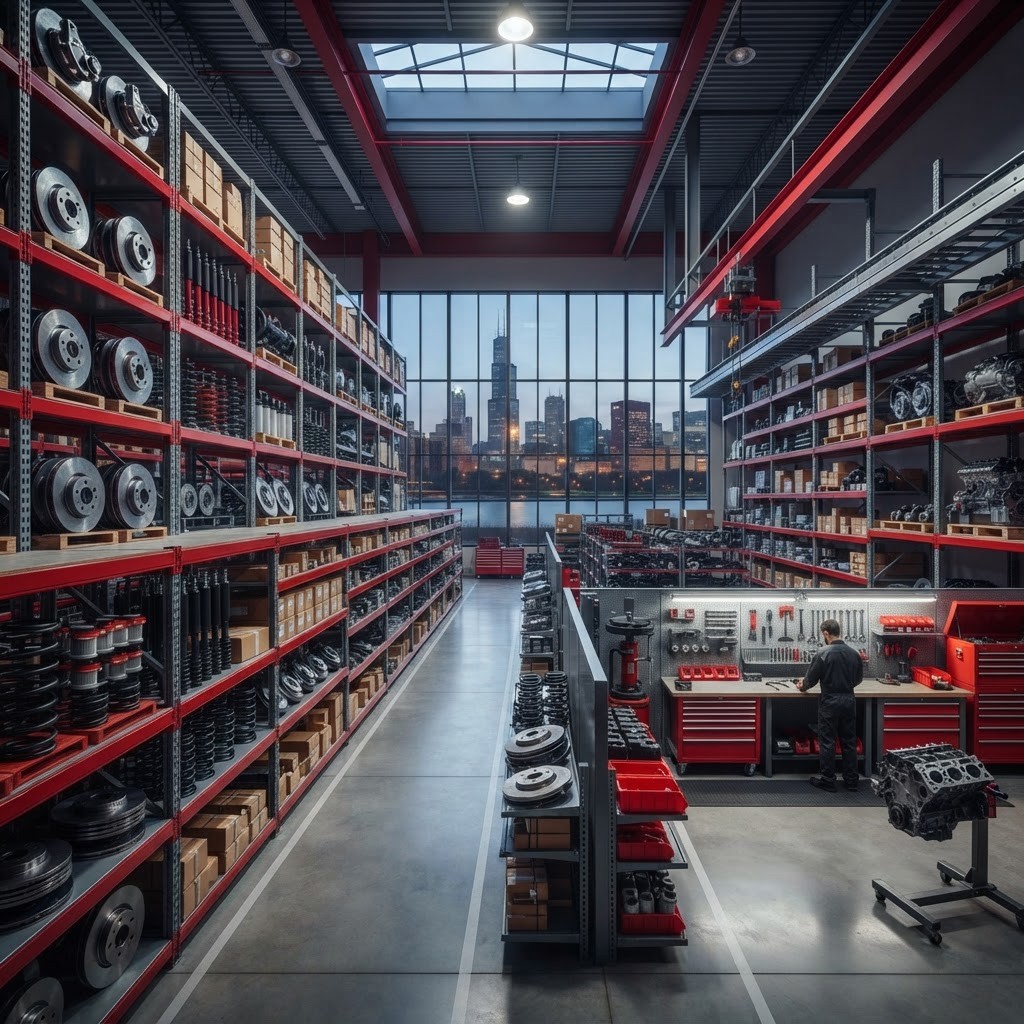
Chicago’s Auto Parts Distribution Landscape
Chicago is a major automotive service market shaped by dense traffic, commercial fleets, road salt, temperature extremes, and a vast regional highway network. These conditions create steady demand for brakes, steering and suspension parts, batteries, filters, cooling components, collision parts, and heavy-duty products. For professional buyers, the correct part delivered quickly is usually more valuable than a marginally cheaper component that causes a stalled service bay.
Compare catalog accuracy, delivery frequency, warranty labor policies, core returns, brand authorization, technical support, and electronic ordering. Shops should also distinguish economy, original-equipment-equivalent, and premium lines so estimates match each vehicle’s use and customer expectations.
1. NAPA Auto Parts
NAPA maintains a substantial Chicago-area presence and serves repair professionals, fleets, and retail customers. Its broad coverage, established distribution system, tools, shop supplies, and professional programs make it a dependable general source. Local inventory and frequent delivery can reduce bay downtime.
2. Parts Authority
Parts Authority is a major aftermarket distributor serving professional installers with extensive import and domestic coverage. The company is known for carrying numerous recognized brands across mechanical, electrical, undercar, and maintenance categories. Its distribution model suits shops that need multiple daily deliveries and wide application coverage.
3. LKQ Corporation
Chicago-based LKQ is a leading source for alternative collision parts, recycled original-equipment components, remanufactured products, and specialty automotive supplies. Collision centers value broad body-part coverage and logistics, while mechanical shops can use recycled assemblies for cost-sensitive repairs when appropriate.
4. Auto-Wares Group
Auto-Wares distributes automotive parts across the Midwest through affiliated stores and professional service programs. Its regional focus, training resources, and broad aftermarket inventory are useful to independent repair facilities. Buyers should confirm local route coverage and available brands.
5. Fisher Auto Parts
Fisher Auto Parts supports professional shops with hard parts, maintenance products, tools, equipment, and service programs. The company’s longstanding distribution experience and installer focus can help businesses standardize purchasing while retaining access to recognized aftermarket lines.
6. Factory Motor Parts
Factory Motor Parts specializes in original-equipment and premium aftermarket products for professional customers. It is particularly relevant for shops and fleets prioritizing dependable batteries, maintenance products, and application-specific components. Consistent quality can reduce comebacks and warranty administration.
7. Keystone Automotive Industries
Keystone Automotive Industries, part of LKQ, is prominent in aftermarket collision replacement parts. Body shops depend on sources that can deliver sheet metal, lighting, cooling components, and related items with accurate fitment and efficient damage resolution. Certification and insurer acceptance should be reviewed for each part category.
8. Transtar Industries
Transtar is a specialized distributor of transmission and driveline products. It serves rebuilders and repair shops needing overhaul kits, hard parts, torque converters, fluids, and technical knowledge. Specialized depth is valuable because transmission work requires precise identification and compatible components.
9. FleetPride
FleetPride serves heavy-duty truck and trailer operators with parts, service, and fleet-focused expertise. Chicago’s freight economy makes access to brakes, suspension, wheel-end, electrical, and trailer components especially important. Commercial buyers should evaluate emergency availability and route support.
10. Genuine Parts Company Distribution Network
Genuine Parts Company’s distribution capabilities support extensive automotive inventory and professional programs through the NAPA system. For multi-location operators, network scale can improve purchasing consistency, reporting, and cross-market availability while local stores retain practical fulfillment roles.
Choosing for Quality and Speed
Begin by measuring fill rate, delivery accuracy, effective net cost, return speed, and warranty outcomes rather than relying on advertised discounts. An incorrect sensor or damaged body panel can erase savings through technician time and delayed completion. Integrate preferred suppliers with shop-management systems where possible, but maintain a qualified secondary source for urgent or backordered parts.
Chicago fleets should prioritize corrosion-resistant components and severe-service maintenance schedules. Repair shops should document customer authorization when offering multiple quality tiers and avoid unknown safety-critical parts. The best wholesaler becomes a working partner: accurate cataloging, knowledgeable counter staff, predictable deliveries, fair warranty handling, and transparent product provenance all contribute to safer repairs and stronger shop profitability.
