
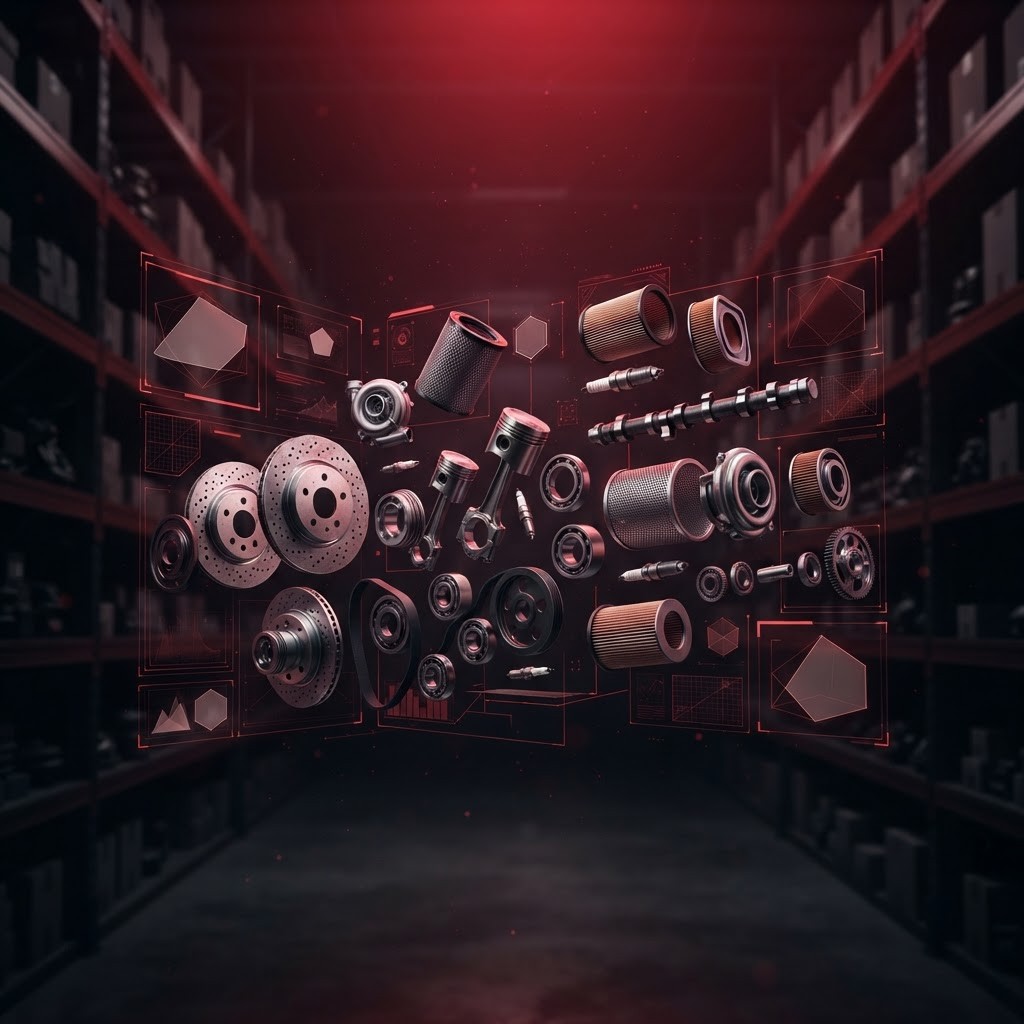
The Heart of the Automotive Supply Chain
No city in North America has a denser automotive supply ecosystem than Detroit. The region hosts global tier-one manufacturers, regional wholesale distributors, national retail chains, specialty performance suppliers, and one of the most active used-parts markets anywhere. For a local driver, that density translates into real advantages: shorter lead times, more competitive pricing, and access to components that would be back-ordered for weeks in other markets.
Understanding how the supply layers fit together helps buyers land on the right source for each job.
1. National Retail Parts Chains
AutoZone, O'Reilly Auto Parts, Advance Auto Parts, and NAPA Auto Parts form the retail foundation. Their strength is immediate availability of maintenance items, filters, brake components, batteries, belts, sensors, and fluids, backed by same-day hub transfers. Most locations also provide free battery and charging system testing, code reading, and loaner tool programs. NAPA in particular carries a professional-grade catalog that many independent shops rely on for daily orders.
2. Regional Wholesale Distributors
Behind the retail counter sits a wholesale tier that supplies repair shops with multiple deliveries per day. These distributors carry deeper inventory in application-specific parts, including hard-to-find suspension bushings, wheel bearings, cooling components, and drivetrain parts. Pricing is structured for trade accounts, but many will sell to the public. For a shop, delivery frequency and fill rate matter more than sticker price, because a part that arrives at ten in the morning keeps a bay productive.
3. Dealership Parts Counters
Domestic and import dealership parts departments are the source of record for genuine components. When fitment is critical, when a part is safety related, or when electronics require factory programming, original equipment parts eliminate guesswork. Detroit's dealer density means many original equipment components are on the shelf locally rather than shipping from a regional warehouse. Dealer counters are also the best source for exploded diagrams and part number verification.
4. Tier-One Manufacturers and Their Aftermarket Brands
The region's engineering economy is built on tier-one suppliers whose components appear on vehicles worldwide. Companies including BorgWarner, Lear, Adient, American Axle and Manufacturing, and Dana have deep Michigan roots, and many original equipment components sold through the aftermarket originate from the same production lines. Buying a part from the company that supplied the factory often delivers original equipment quality at aftermarket pricing, which is one of the most reliable value plays available.
5. Salvage Yards and Used Parts Networks
Detroit's salvage sector is exceptionally strong. Self-service and full-service yards supply body panels, interior trim, glass, mirrors, seats, engines, transmissions, and rare trim pieces that are no longer manufactured. Modern yards inventory parts in searchable databases with vehicle identification data, and many offer limited warranties on drivetrain components. For older vehicles and cosmetic repairs, used parts frequently cut costs by half or more without meaningful quality loss.
6. Remanufactured and Rebuilt Component Suppliers
Remanufacturing specialists supply alternators, starters, steering racks, brake calipers, air conditioning compressors, and complete engines and transmissions. A properly remanufactured unit is disassembled, cleaned, machined, and rebuilt with new wear components to original specification. For high-cost assemblies, this route often provides warranty coverage comparable to new at a substantially lower price. Core exchange programs also reduce waste, which appeals to fleet buyers with sustainability targets.
7. Performance and Racing Parts Suppliers
Given the region's motorsport culture, performance suppliers are abundant. These businesses stock forced induction kits, camshafts, cylinder heads, coilover suspension, big brake kits, exhaust systems, and engine management hardware. Many employ staff who race personally and can advise on realistic power targets, supporting modifications, and drivetrain limits. Their technical guidance is often the difference between a reliable build and an expensive failure.
8. Heavy-Duty and Commercial Vehicle Parts Suppliers
Detroit's freight, construction, and municipal fleets require suppliers focused on medium and heavy-duty trucks. These distributors handle air brake components, diesel fuel systems, aftertreatment parts, heavy suspension, and hydraulic assemblies. Because commercial downtime is expensive, these suppliers compete primarily on same-day availability and technical support rather than price alone.
9. Specialty and Classic Restoration Parts Suppliers
Restoration suppliers serve the enormous local classic car community, particularly owners of vintage American muscle. They provide reproduction sheet metal, correct-date-coded trim, weatherstripping, upholstery kits, wiring harnesses, and period-correct hardware. Accuracy is the product here, and reputable suppliers document originality tolerances so a restoration can be judged competitively.
10. Online Marketplaces and Direct-Ship Distributors
Online suppliers extend selection beyond any physical shelf, which matters for discontinued or low-volume parts. The tradeoff is fitment risk and return friction. The most effective strategy is to verify part numbers against a dealership diagram before ordering, and to reserve online purchasing for non-urgent items where a delivery delay is acceptable.
How to Judge Parts Quality
Parts are commonly sold in tiers. Original equipment components match factory specification exactly. Original equipment supplier parts come from the same manufacturer without the vehicle brand's packaging and are usually the best value. Premium aftermarket parts sometimes improve on original designs, particularly where a factory component had a known weakness. Economy aftermarket parts reduce cost by using lighter materials and looser tolerances, which is acceptable for a vehicle nearing end of life but risky for safety systems.
Focus quality spending where failure is expensive or dangerous. Brake friction, hydraulic components, steering linkages, wheel bearings, timing components, and cooling system parts justify premium selection. Cosmetic trim, interior clips, and low-stress brackets rarely do.
Avoiding Fitment Mistakes
Vehicle identification number decoding is the single most effective safeguard. Mid-year production changes, trim-specific brake sizes, and optional equipment packages all affect fitment. Confirm engine code, transmission code, drive configuration, and build date. When ordering suspension or brake parts, verify whether the vehicle has a heavy-duty or towing package, since those often use different components on otherwise identical models.
Trends Shaping Parts Supply
Electrification is reshaping demand. Battery electric vehicles eliminate many traditional maintenance parts while creating new demand for thermal management components, high-voltage connectors, and specialized service tooling. At the same time, advanced driver assistance systems mean that replacing a windshield, bumper cover, or mirror can require sensor recalibration, adding a service step to what used to be a simple parts swap. Suppliers that provide calibration guidance alongside components are gaining an advantage.
Final Thoughts
Detroit's parts market gives buyers unusual leverage. Use retail chains for immediate maintenance needs, wholesale distributors and original equipment supplier brands for value on critical components, dealership counters for verification and electronics, salvage yards for cosmetic and discontinued parts, and specialists for performance or restoration work. Verify part numbers before purchase, match quality tier to the criticality of the component, and keep receipts and warranty documentation organized. In the city that built the modern automobile, the right part is almost always available nearby.
