
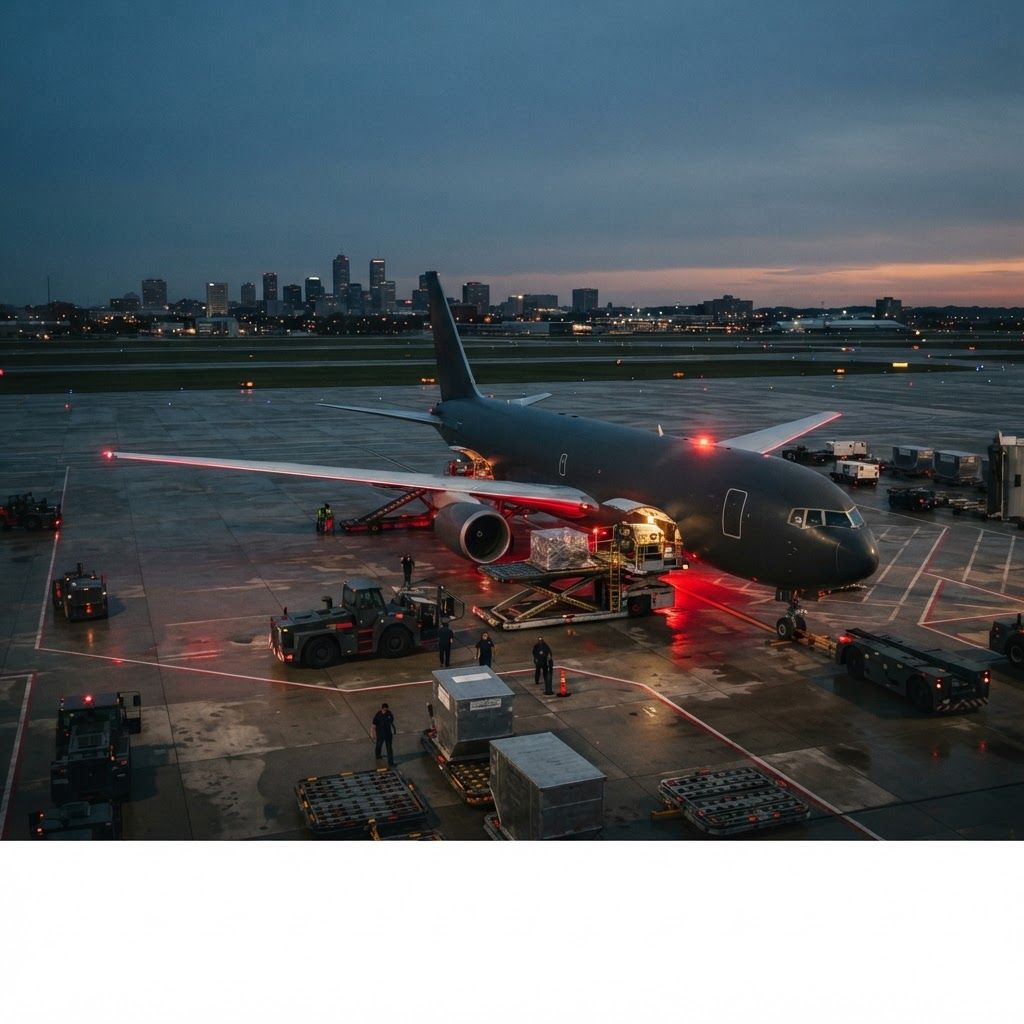
A Leading Air Cargo Gateway
Indianapolis International Airport consistently ranks among the top cargo airports in the United States, a distinction driven largely by the massive FedEx operation based there. This position gives local businesses direct access to rapid air freight services that can move goods across the country or around the world in a matter of hours. For industries where speed is critical, this capability is a decisive advantage.
The concentration of air cargo activity has created a specialized ecosystem of carriers, freight forwarders, and ground handlers who work in concert to keep shipments moving. This infrastructure supports everything from overnight parcels to high-value and time-sensitive freight that cannot afford delays.
Why Air Cargo Matters
Air cargo is the mode of choice when time is the top priority. Pharmaceuticals, medical devices, electronics, automotive components, and perishable goods often depend on air freight to reach their destinations quickly and in perfect condition. For Indianapolis, which hosts a strong life sciences and manufacturing base, reliable air cargo service is essential to keeping supply chains competitive.
The ability to reach global markets rapidly also benefits exporters. Local manufacturers can fulfill international orders with confidence, knowing that the airport's cargo capacity and connections can support their growth ambitions.
Major Air Cargo Operators
FedEx dominates the local air cargo scene, operating one of its largest hubs at the Indianapolis airport and providing extensive express and overnight capabilities. UPS also maintains air freight operations that complement its ground network, offering businesses flexible options for expedited shipments.
International integrators such as DHL provide global reach for cross-border shipments, while dedicated air freight forwarders coordinate space on scheduled and charter flights for specialized cargo. Ground handling and logistics firms round out the ecosystem, ensuring that freight transitions smoothly between aircraft and trucks.
Specialized Services and Capabilities
The best air cargo companies offer more than just transportation. Temperature-controlled handling protects pharmaceuticals and perishables, while dedicated security and chain-of-custody protocols safeguard high-value goods. Charter services provide capacity for oversized or urgent shipments that scheduled flights cannot accommodate.
Customs brokerage and documentation support are also vital for international shipments. Experienced providers help exporters navigate regulatory requirements, minimizing the risk of costly delays at borders.
Technology and Efficiency
Air cargo relies heavily on precise coordination, and technology plays a central role. Real-time tracking, automated booking systems, and data-driven capacity planning help carriers maximize efficiency and keep clients informed. These tools reduce uncertainty and allow businesses to plan their operations around dependable delivery windows.
The Future of Air Cargo in Indianapolis
Continued growth in e-commerce and global trade is expected to keep air cargo demand strong. Investments in airport infrastructure, automation, and sustainable aviation practices will further enhance the region's competitive position. As supply chains prioritize speed and resilience, Indianapolis is well placed to remain a premier air cargo gateway.
Selecting an Air Cargo Provider
Businesses choosing an air cargo partner should evaluate network reach, handling expertise, reliability, and the ability to manage specialized cargo. With its world-class airport and deep pool of experienced operators, Indianapolis offers exceptional options for companies that need to move goods quickly and dependably by air.
Ten Air Cargo Providers to Explore
Companies with capabilities relevant to Indianapolis air freight include FedEx Express, UPS Air Cargo, DHL Global Forwarding, Kuehne+Nagel, DB Schenker, DSV, Expeditors, CEVA Logistics, Nippon Express, and SEKO Logistics. Integrators such as FedEx and UPS control extensive aircraft and ground networks, while forwarding specialists arrange capacity, consolidation, customs support, and door-to-door coordination across multiple carriers. DHL combines express and forwarding strengths. The appropriate provider depends on destination, urgency, commodity, shipment size, and whether a customer needs airport-to-airport service or complete pickup and delivery.
Preparing Freight for Flight
Air freight rewards careful preparation. Accurate dimensions determine chargeable weight, while sturdy, lightweight packaging protects goods without unnecessarily increasing cost. Shippers should identify dangerous goods, batteries, temperature requirements, and export controls early because these factors affect acceptance and routing. Commercial invoices, packing lists, and customs classifications must be complete and consistent for international movements.
When requesting quotes, compare scheduled departure, cutoff time, routing, total transit, included services, and recovery plans—not simply the price per kilogram. Ask how tracking milestones are generated and who owns exception management outside business hours. Sensitive healthcare or high-value shipments may require validated packaging, active monitoring, secure storage, or documented chain of custody. A post-shipment review of transit, condition, cost, and communication helps Indianapolis businesses refine future routing and identify the provider best suited to each service level.
Shippers should also decide when air is truly justified. A hybrid plan may send the urgent portion by air while replenishment travels by truck, rail, or ocean, protecting production without paying premium rates for the entire order. Consolidating compatible shipments can improve economics, provided the added waiting time is acceptable. Indianapolis's strong road connections make these multimodal handoffs practical and help extend the airport's reach across the Midwest.
