
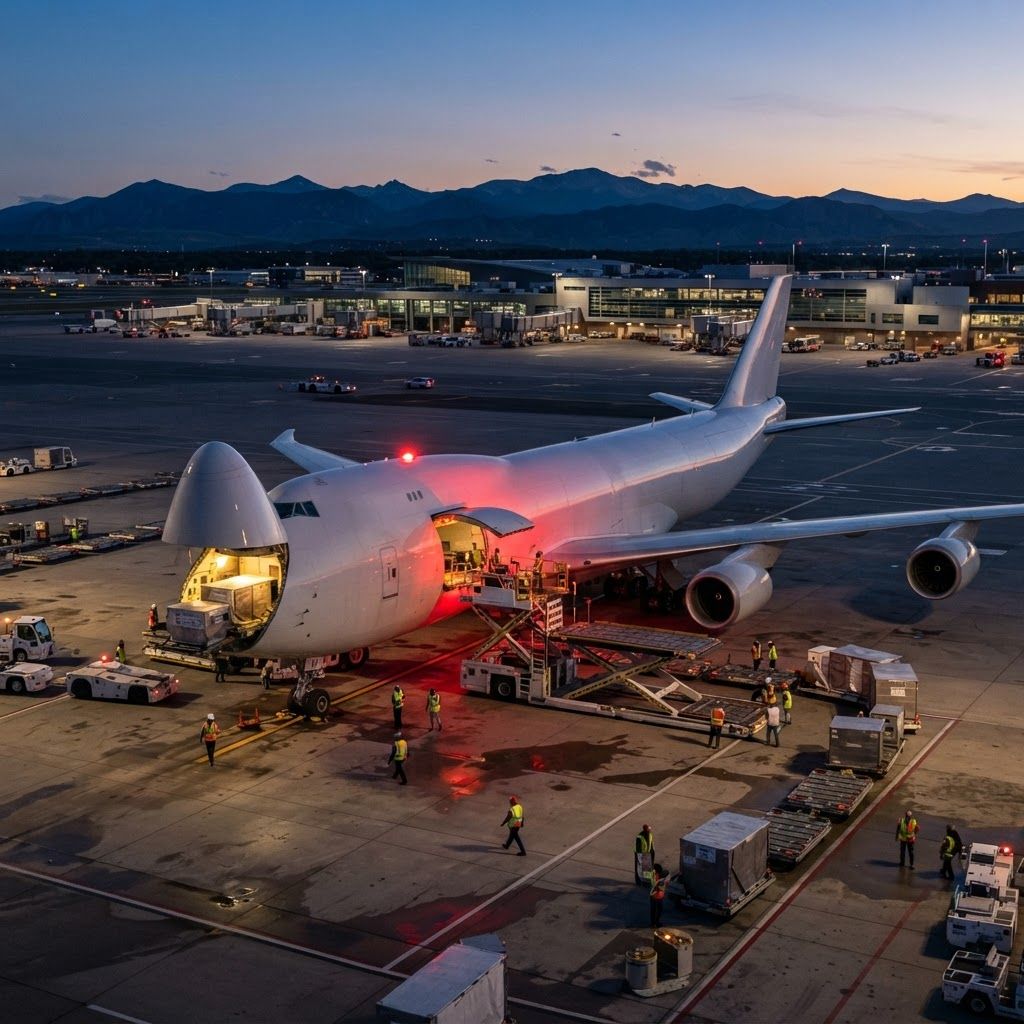
Denver International Airport: A Cargo Powerhouse
Denver International Airport (DEN) stands among the largest airports in the world by land area, and its expansive cargo facilities have made it a cornerstone of air freight in the Rocky Mountain West. The airport's central location allows carriers to reach both coasts efficiently, while its modern infrastructure supports everything from perishable goods to oversized industrial equipment. This combination has attracted a diverse roster of air cargo companies to the Denver market.
Air cargo plays a critical role for industries that depend on speed, including pharmaceuticals, electronics, aerospace components, and fresh produce. As global supply chains grow more time-sensitive, Denver's air freight providers have expanded their capabilities to meet demanding delivery schedules while maintaining strict handling standards.
Top Air Cargo Providers in the Region
FedEx Express operates a significant air cargo presence at DEN, offering overnight and time-definite services supported by one of the largest freighter fleets in the world. UPS Airlines complements this with dedicated air freight lanes and seamless integration into its ground network, giving shippers end-to-end visibility. DHL Aviation brings deep international expertise, connecting Denver businesses to global markets with strong customs and compliance support.
Passenger carriers also contribute substantial belly cargo capacity. United Airlines, which operates a major hub at DEN, provides extensive domestic and international cargo services, while Southwest Cargo offers rapid regional shipping ideal for time-critical shipments. Lufthansa Cargo and other international freight partners extend Denver's reach into Europe and Asia through connecting gateways.
Specialized Freight Forwarders and Handlers
Beyond the airlines themselves, freight forwarders and ground handlers are essential to a smooth air cargo operation. Companies such as Rocky Mountain Air Freight and Mile High Cargo Solutions specialize in coordinating complex shipments, managing documentation, and ensuring goods transition seamlessly between air and ground transport. These forwarders offer valuable expertise in navigating regulations for hazardous materials, temperature-controlled cargo, and high-value items.
Denver's air cargo sector also includes providers focused on cold-chain logistics, a growing niche driven by the pharmaceutical and food industries. Maintaining precise temperature control from tarmac to warehouse requires specialized equipment and rigorous protocols, and the region's leading handlers have invested heavily in this capability.
Benefits of Air Cargo for Denver Businesses
The primary advantage of air cargo is speed. For businesses that cannot afford delays, air freight offers unmatched transit times and reliability. It is particularly valuable for high-value or perishable goods where the cost of shipping is justified by the need for rapid, secure delivery. Air cargo also provides broad geographic reach, connecting Colorado enterprises to national and international customers within hours rather than days.
Security is another key benefit. Air cargo shipments are subject to stringent screening and handling procedures, reducing the risk of damage or loss. Combined with sophisticated tracking systems, this gives shippers confidence that their goods will arrive safely and on schedule.
Trends Driving the Air Cargo Market
The air cargo industry in Denver is being shaped by several emerging trends. Demand for expedited e-commerce fulfillment has increased pressure on carriers to deliver faster and more transparently. At the same time, investments in digital booking platforms and real-time tracking are improving efficiency and customer experience. Sustainability initiatives, including more fuel-efficient aircraft and carbon-offset programs, are also gaining traction as the industry addresses its environmental footprint.
For companies that require rapid, dependable movement of goods, Denver's air cargo providers offer a compelling mix of speed, reach, and specialized expertise. By selecting a partner aligned with their specific cargo needs, businesses in the Mile High City can keep their supply chains agile and competitive.
