
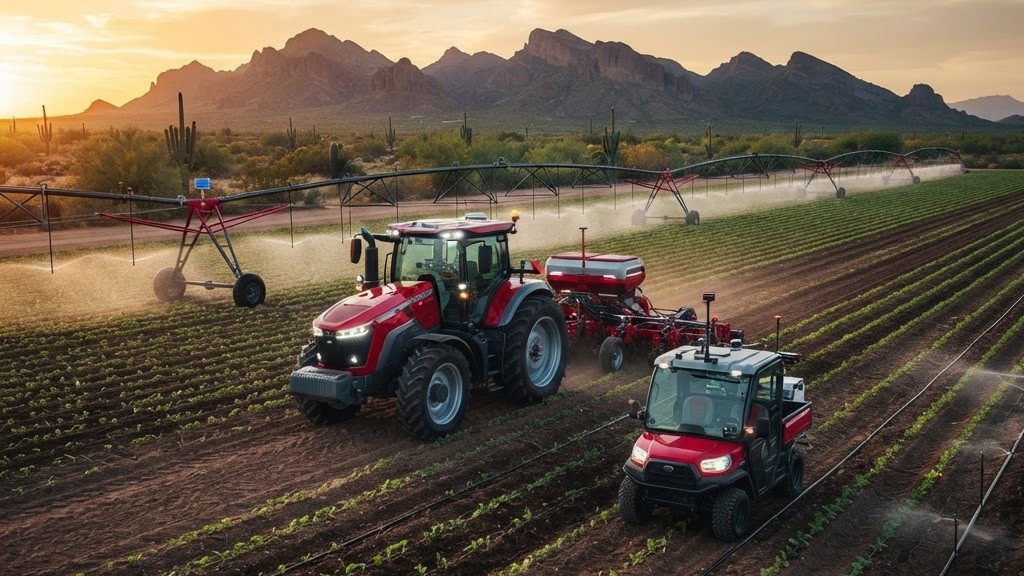
Selecting Farm Equipment for Central Arizona
Agricultural machines in the Phoenix region face dust, intense ultraviolet exposure, high ambient temperatures, hard soils, and demanding irrigation schedules. The right brand depends on acreage, crops, implement needs, operator skill, transport limits, and access to service. A machine with impressive specifications can still be a poor investment if parts are slow to arrive or technicians are unavailable during harvest. These established brands are commonly considered by Arizona operators through regional dealer and rental networks.
1. John Deere
John Deere offers tractors, loaders, hay tools, planting equipment, utility vehicles, and precision-agriculture systems. Its broad ecosystem is a major advantage for farms that want compatible machines and digital tools. Strong resale recognition also matters, although buyers should compare dealer service capacity and technology subscription costs alongside the initial price.
2. Case IH
Case IH is known for high-horsepower tractors, harvesting systems, tillage tools, and precision technology. Commercial growers often value its productivity focus and operator-oriented cab designs. In Arizona, buyers should configure cooling, filtration, tires, and hydraulic capacity for local conditions rather than selecting a machine from horsepower alone.
3. New Holland Agriculture
New Holland produces tractors, balers, hay equipment, skid steers, and harvesting machinery across a wide size range. Its hay and forage heritage is relevant to Arizona livestock and feed operations. Equipment versatility can benefit mixed farms that need one power unit to handle several implements throughout the season.
4. Kubota
Kubota is especially popular for compact and utility tractors, mowers, loaders, and small construction equipment. The brand fits market gardens, horse properties, landscapers, and smaller acreage around metro Phoenix. Maneuverability and straightforward implement changes can matter more than maximum horsepower where access is tight and tasks vary daily.
5. Massey Ferguson
Massey Ferguson offers practical tractors, hay tools, and agricultural equipment for operations of different sizes. The brand is often considered for value and familiar mechanical layouts. Prospective owners should assess local parts stocking, warranty support, hydraulic flow, lift capacity, and compatibility with implements already on the property.
6. Bobcat
Bobcat is widely recognized for skid-steer and compact track loaders, compact tractors, telehandlers, and versatile attachments. These machines are useful for material handling, grading, livestock chores, and property maintenance. In desert dust, routine air-filter inspection and cooling-system cleaning are particularly important for dependable performance.
7. Caterpillar
Caterpillar equipment is prominent in earthmoving, site preparation, and heavy material handling. Farms developing roads, canals, pads, or drainage may rely on Cat loaders, dozers, excavators, and compact machines. The brand's dealer and parts infrastructure is a key differentiator when downtime carries a high operational cost.
8. Mahindra
Mahindra's tractor lineup is often evaluated by acreage owners and small farms seeking sturdy utility capabilities. Buyers should compare machine weight, loader performance, ergonomics, emissions systems, and included features rather than focusing on advertised horsepower. A proper demonstration with the intended implement is one of the best evaluation tools.
9. CLAAS
CLAAS specializes in advanced harvesting and forage equipment, including combines, forage harvesters, and high-capacity hay tools. Its technology is most relevant to larger or specialized operations where throughput and crop quality justify sophisticated machinery. Trained operators and responsive technical support are essential for realizing that productivity.
10. Vermeer
Vermeer is well known for balers, forage tools, brush chippers, trenchers, and specialty equipment. Arizona operators may appreciate machines that serve both agricultural and land-management tasks. Attachment availability and dealer expertise can make specialized equipment more useful across multiple seasons and revenue streams.
Ownership Costs Beyond the Sticker Price
Calculate total cost using financing, insurance, fuel, scheduled service, wear parts, transportation, storage, operator training, depreciation, and expected resale value. Ask dealers for maintenance intervals and parts prices before purchasing. Phoenix heat makes battery condition, coolant, hoses, belts, seals, air conditioning, and tire protection especially important. Telematics can help monitor hours and faults, but operators should understand data access and ongoing fees.
Renting can be sensible for occasional trenching, heavy earthmoving, or one-time land preparation. Used equipment may provide excellent value when accompanied by service records and a professional inspection. Whichever brand is chosen, the best result comes from matching the machine to actual work, building a preventive-maintenance routine, and forming a dependable relationship with a nearby service provider.
