
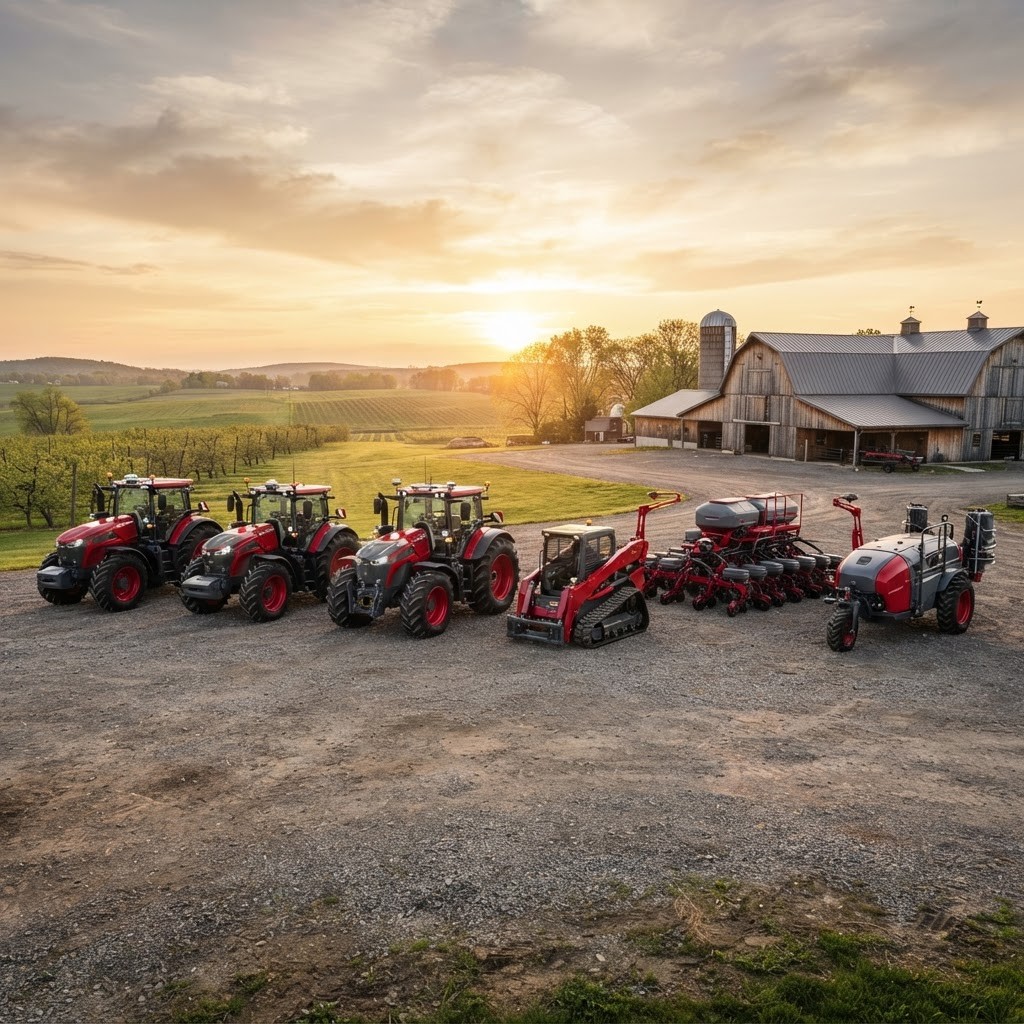
Choosing Farm Equipment for New York Conditions
New York agriculture ranges from dairy and broad-acre crops to orchards, vineyards, vegetables, maple operations, and compact urban farms. Equipment must fit both the enterprise and the terrain. Horsepower alone does not determine value; maneuverability, implement compatibility, operator comfort, service response, and resale demand can matter more over a machine’s lifetime. These ten brands have strong recognition and product lines relevant to New York producers.
1. John Deere
John Deere offers tractors, combines, hay tools, planters, sprayers, utility vehicles, and precision technology. Its broad ecosystem is attractive to farms that want connected equipment and a familiar dealer network. Parts availability and resale value are often important strengths. Buyers should compare technology subscriptions, repair access, and the actual dealer support available in their county rather than relying only on brand reputation.
2. Case IH
Case IH is prominent in row-crop tractors, harvesting, tillage, planting, and application equipment. Its machines suit larger grain and forage operations that prioritize productivity and integrated guidance. New York buyers should assess field size, transport width, soil conditions, and whether machine capacity can be used efficiently. Oversized equipment may increase compaction and ownership cost without saving meaningful time on smaller fields.
3. New Holland
New Holland has particular relevance in hay and forage, dairy, tractors, skid steers, and harvesting equipment. The brand’s heritage and varied power range fit many New York farms. Dairy and livestock operators often value dependable baling and forage quality. Evaluate pickup performance, crop-flow design, maintenance access, and local technician experience when comparing models.
4. Kubota
Kubota is well known for compact and utility tractors, mowers, excavators, loaders, and utility vehicles. Its maneuverable machines work well for orchards, vineyards, horse farms, municipalities, and diversified acreages. Buyers appreciate easy operation and a wide attachment ecosystem. Lift capacity, hydraulic flow, stability, and implement weight should be checked carefully for the intended tasks.
5. Massey Ferguson
Massey Ferguson provides tractors and hay equipment across practical horsepower classes. The brand often appeals to value-conscious farms seeking straightforward capability. Its utility tractors can support livestock, mowing, material handling, and field work. Total value depends heavily on nearby dealer inventory and service competence, so prospective owners should investigate parts turnaround and mobile repair coverage.
6. Fendt
Fendt is positioned toward premium, technology-rich tractors and harvesting systems. Continuously variable transmissions, operator comfort, and efficient power delivery are notable attributes. Larger New York farms and custom operators may benefit from productivity features across long working days. Buyers should calculate utilization carefully, because premium equipment delivers the best return when its capacity and technology are used consistently.
7. CLAAS
CLAAS is respected for forage harvesters, combines, hay tools, and tractors. Dairy regions value equipment that can harvest high-quality feed within short weather windows. Capacity, chop quality, and service response are central to this segment. Custom harvesters should also consider road transport, header changes, wear-part cost, and telematics support when evaluating a machine.
8. Bobcat
Bobcat built its reputation on compact loaders and now offers compact tractors, excavators, utility vehicles, and attachments. These machines are useful around barns, nurseries, landscape operations, and confined farmyards. Attachment versatility can keep a power unit productive throughout the year. Confirm rated operating capacity, auxiliary hydraulic requirements, tire or track choice, and visibility for the work environment.
9. Mahindra
Mahindra is a recognized option in compact and utility tractors. Its machines are often considered by small farms, property owners, and livestock operations seeking robust features at a competitive price. Specifications should be compared on an equal basis, including machine weight, loader capacity, hydraulic output, warranty terms, and dealer proximity. A compelling purchase price cannot compensate for weak local support.
10. Yanmar
Yanmar offers compact tractors, utility vehicles, and diesel-powered equipment suited to specialty farms and smaller properties. The company’s engine expertise supports a reputation for efficient compact power. New York orchard, vineyard, and vegetable operators may value narrow dimensions and maneuverability. Buyers should test ergonomics and confirm that attachments match crop spacing and terrain.
How to Compare Equipment Beyond the Brochure
Start with a task list and realistic annual hours. Demonstrate the machine with the actual implement whenever possible. Check hydraulic connections, cab access, visibility, turning radius, transport height, and cold-weather starting. Obtain written estimates for routine service, common wear parts, insurance, financing, and technology fees. Used equipment may offer excellent value if maintenance records and inspection results are strong.
Technology and Ownership Trends
Precision guidance, variable-rate application, machine telematics, electrification, and automation are expanding, but technology should solve a defined problem. Smaller New York farms may gain more from a versatile loader or improved harvest attachment than an advanced data platform. Dealer quality remains one of the best predictors of ownership satisfaction. The best brand is ultimately the one that fits the farm’s scale, has capable support nearby, and performs reliably during the narrow windows when the work must get done.
