
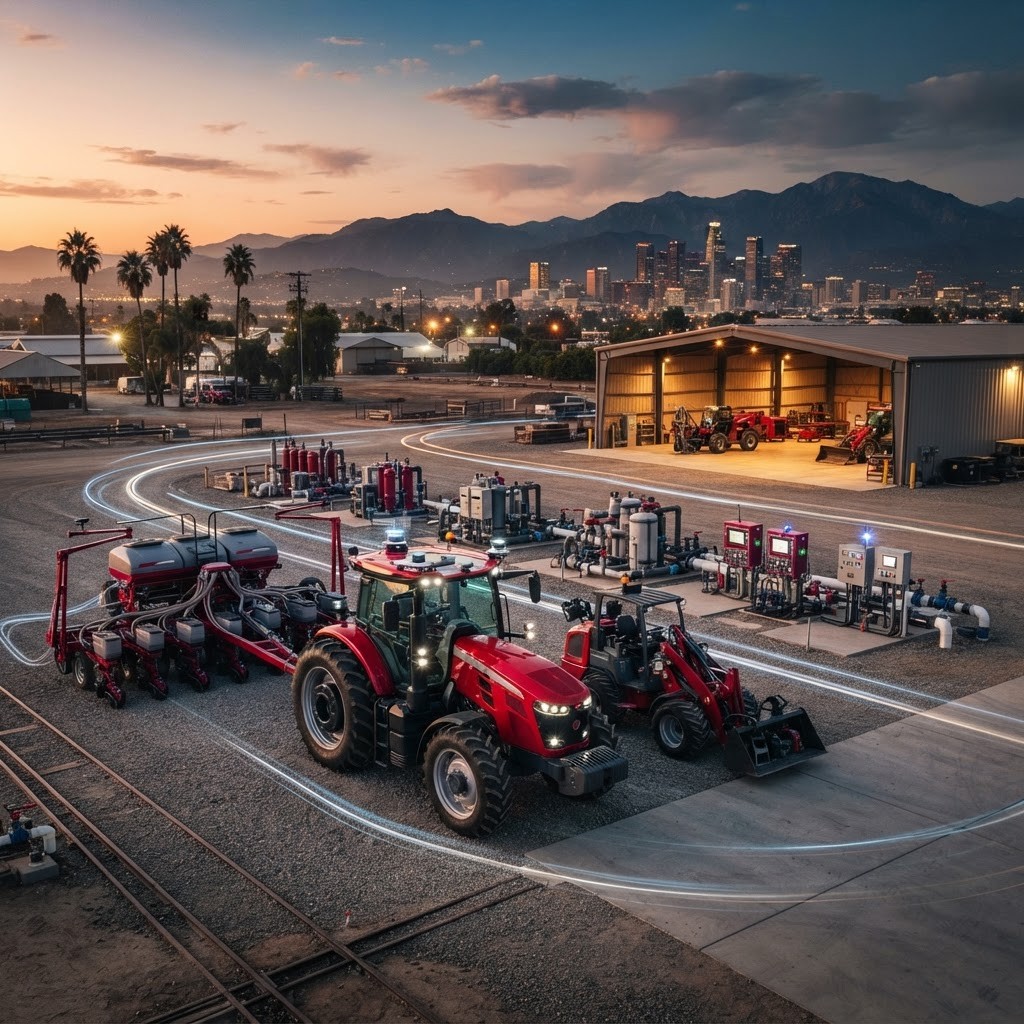
Choosing Agricultural Equipment for Southern California
Agriculture around Los Angeles differs from broad-acre farming in many parts of the country. Regional operators manage orchards, vegetables, nurseries, vineyards, urban plots, equestrian properties, and landscape businesses. Compact dimensions, maneuverability, water efficiency, emissions compliance, and responsive parts support can matter more than maximum horsepower. The following brands are widely respected, although actual value depends heavily on local dealer service and the machine’s fit for a specific operation.
1. John Deere
John Deere offers tractors, loaders, utility vehicles, mowers, planting equipment, and precision agriculture systems across a wide power range. The brand’s broad ecosystem and strong resale recognition appeal to diversified operators. Buyers should compare technology subscriptions, implement compatibility, and nearby service capacity rather than selecting on brand familiarity alone.
2. Caterpillar
Caterpillar equipment is relevant to large farms, land development, material handling, and agricultural infrastructure. Skid steers, compact track loaders, wheel loaders, excavators, and generators handle demanding earthmoving and facility tasks. Durable construction and established dealer support are key strengths, particularly when a machine serves both farming and contracting work.
3. Kubota
Kubota is especially strong in compact and utility tractors, mowers, loaders, excavators, and utility vehicles. Its equipment fits nurseries, orchards, urban farms, and smaller Southern California properties where maneuverability is essential. A wide implement selection lets owners use one power unit for mowing, loading, grading, tillage, and property maintenance.
4. New Holland Agriculture
New Holland provides tractors, hay equipment, harvest machinery, skid steers, and specialty solutions. The brand covers both compact users and larger commercial farms. Its specialty tractor options can suit orchard and vineyard rows, while hay equipment is relevant to equestrian and forage operations around the broader Los Angeles region.
5. Case IH
Case IH is known for high-capacity tractors, harvesting systems, tillage tools, and precision technology. Much of its lineup targets larger operations outside the urban core, but regional producers may value its power, automation, and data capabilities. Dealer expertise and transport logistics deserve careful consideration for large machines.
6. Massey Ferguson
Massey Ferguson offers compact, utility, and higher-horsepower tractors along with hay and forage products. Straightforward machine options and global agricultural experience attract buyers who prioritize practical capability. Comparing hydraulic flow, lift capacity, operator comfort, warranty, and implement availability will reveal whether a specific model fits daily work.
7. Bobcat
Bobcat compact loaders, mini excavators, utility vehicles, and compact tractors are well suited to confined sites. Urban farms, nurseries, compost operations, and landscape contractors benefit from machines that accept many attachments and work where full-sized equipment cannot. Attachment changeover, tire or track choice, and operator visibility strongly affect productivity.
8. Toro
Toro has important offerings in irrigation, turf care, compact utility loaders, and landscape maintenance. For Southern California operations, water-management products are especially relevant. Nurseries, campuses, sports fields, vineyards, and specialty growers can combine efficient irrigation with compact equipment designed for precise maintenance tasks.
9. Vermeer
Vermeer manufactures equipment for hay production, tree care, recycling, landscaping, and underground installation. Chippers, grinders, trenchers, and balers can support agricultural businesses that manage biomass, irrigation lines, or forage. Specialized dealer knowledge is vital because correct setup and maintenance substantially influence output and safety.
10. Mahindra
Mahindra is recognized for durable compact and utility tractors with competitive specifications. The brand can appeal to property owners and small farms seeking loader capability and straightforward operation. Prospective buyers should weigh purchase value alongside local parts inventory, technician access, financing, and long-term resale conditions.
Features That Matter Most
Begin with tasks, not horsepower. Record implement weight, hydraulic requirements, lift height, row spacing, terrain, transport limits, and annual operating hours. In hot conditions, cooling capacity and a comfortable operator station improve both reliability and productivity. California emissions requirements may influence engine selection and resale, while dust makes filtration and maintenance access particularly important.
Precision agriculture is spreading beyond large farms. GPS guidance, variable-rate application, telematics, moisture sensing, and automated irrigation can reduce inputs and document performance. Technology should solve a measurable problem; complex systems create little value if connectivity, training, or data ownership is unclear.
Dealer Support and Ownership Strategy
Agricultural machines earn their return during narrow work windows. Ask dealers about field-service response, technician training, common parts stock, loaner policies, and seasonal hours. Review maintenance intervals and price typical filters, tires, tracks, batteries, and wear items before purchase. A slightly more expensive machine supported nearby may have a lower lifetime cost.
Rent specialized equipment when utilization is low, lease when cash flow and replacement cycles favor predictable payments, and buy core machines used throughout the year. Carefully inspected used equipment can be economical, but service records, fluid analysis, hours, emissions systems, and attachment wear should be reviewed. The best Los Angeles equipment brand is ultimately the one supported by a capable local partner and matched precisely to the operation.
