
Choosing Farm Equipment for North Texas
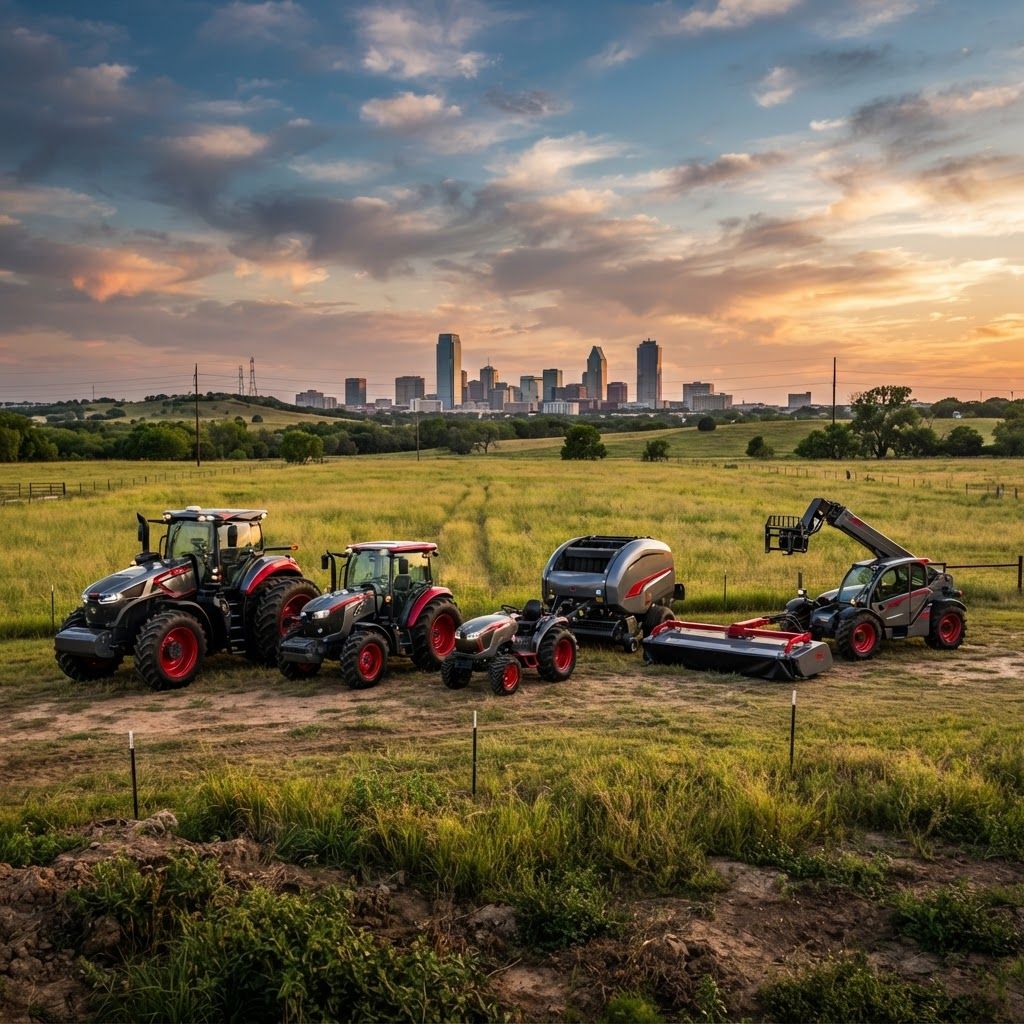
Equipment decisions around Fort Worth are shaped by acreage, livestock, forage production, soil, transport distances, and dealer support. Horse properties may need compact tractors and arena tools, cattle ranches often prioritize loaders and hay equipment, while larger farms require high-horsepower machines and precision systems. Purchase price is only one factor. Parts availability, technician capacity, resale value, fuel use, operator comfort, and implement compatibility determine lifetime value. These brands have strong reputations and practical relevance across the region.
1. John Deere
John Deere offers one of the broadest equipment portfolios, from compact utility tractors to combines, balers, sprayers, and precision technology. Its extensive dealer ecosystem and strong resale recognition are major advantages. Fort Worth-area operators value ready access to familiar controls, compatible implements, and connected-farm tools. The brand is especially compelling for businesses that want to standardize a mixed fleet under one service relationship.
2. Case IH
Case IH is a leading option for row-crop tractors, combines, tillage tools, sprayers, and hay equipment. Its machines emphasize productivity, power, and agronomic performance. Producers can use integrated guidance and data capabilities to reduce overlap and document field work. Around Fort Worth, Case IH is best suited to operations that need commercial-scale capacity and expect the dealer to provide responsive technical support during narrow planting and harvest windows.
3. New Holland Agriculture
New Holland is particularly well known for hay and forage equipment while also offering tractors, combines, skid steers, and specialty machines. That range fits the cattle and horse economy surrounding Fort Worth. Its balers, mower-conditioners, and material-handling products support the full forage cycle. The brand also offers compact and utility tractors that work well on smaller acreages where maneuverability matters as much as raw horsepower.
4. Kubota
Kubota has a strong reputation in compact tractors, utility vehicles, mowers, excavators, and small agricultural equipment. It is a natural fit for ranchettes, equestrian facilities, landscape businesses, and diversified farms near the Metroplex. Straightforward operation and versatile attachments make its machines approachable for owner-operators. Buyers should size tractors carefully, because loader capacity, hydraulic flow, and machine weight can matter more than advertised horsepower.
5. Massey Ferguson
Massey Ferguson offers tractors and hay equipment across practical power ranges. The brand is often considered by value-conscious farms that want proven mechanical capability without paying only for premium technology. Its utility tractors can handle feeding, mowing, loading, and general ranch work. Fort Worth buyers should compare local parts inventory and dealer expertise, since long-term ownership quality depends heavily on nearby service.
6. Mahindra
Mahindra is prominent in the compact and utility tractor market and appeals to rural property owners seeking robust specifications and straightforward value. Many models emphasize machine weight and loader capability, useful for brush removal, material handling, and property maintenance. Around Fort Worth, the brand is worth considering for moderate-acreage operations. Buyers should test ergonomics, turning radius, transmission behavior, and attachment changes before selecting a model.
7. CLAAS
CLAAS is respected globally for forage harvesters, combines, balers, and advanced harvesting systems. Its equipment is aimed primarily at professional operators demanding high throughput and forage quality. Large hay, silage, and custom-harvesting businesses in North Texas may benefit from the company’s specialized engineering. Because these machines are sophisticated, dealer training, parts planning, and operator education should be central to the purchase decision.
8. Vermeer
Vermeer has deep strength in hay and forage tools, including round balers, disc mowers, rakes, and feeding solutions. The brand’s practical connection to cattle operations makes it relevant throughout the Fort Worth region. Durable hay equipment can protect quality while reducing downtime during unpredictable weather. Vermeer also produces industrial machines, but agricultural buyers should focus on local support, pickup performance, bale density, and ease of routine maintenance.
9. Bobcat
Bobcat is synonymous with compact loaders and also offers compact tractors, utility vehicles, mowers, and numerous attachments. Ranches, farms, and equestrian properties appreciate machines that can move feed, clean pens, grade lanes, handle pallets, and clear brush. Attachment versatility is the key differentiator. Buyers should match lift path, rated operating capacity, hydraulic flow, and tire or track configuration to actual tasks and ground conditions.
10. AGCO Fendt
Fendt represents a premium approach to tractors, combines, and application equipment, with attention to fuel efficiency, continuously variable transmissions, automation, and operator comfort. It is best suited to larger or highly utilized operations that can capture value from advanced features. North Texas producers considering Fendt should calculate total productivity, not only acquisition cost, and confirm that trained support is available for its technology-rich systems.
Dealer Support Matters as Much as the Badge
A strong Fort Worth-area dealer should provide realistic delivery dates, mobile service, trained technicians, parts stocking, warranty guidance, and clear financing terms. Ask about service response during hay season and whether common wear parts are on hand. Inspect used equipment history and request fluid analysis where appropriate. For connected machines, clarify subscription costs and data portability. An excellent machine with weak support can become an expensive bottleneck.
Equipment Trends to Watch
Guidance systems, telematics, variable-rate application, machine automation, and electric compact equipment are advancing quickly. Yet simple durability remains essential in dusty, hot North Texas conditions. Operators are also using attachments to make fewer power units perform more jobs. Before buying, create a task list, estimate annual hours, compare ownership and rental, and test the machine with likely implements. The best brand is ultimately the one whose equipment, dealer, and operating economics fit the farm’s real workload.
