
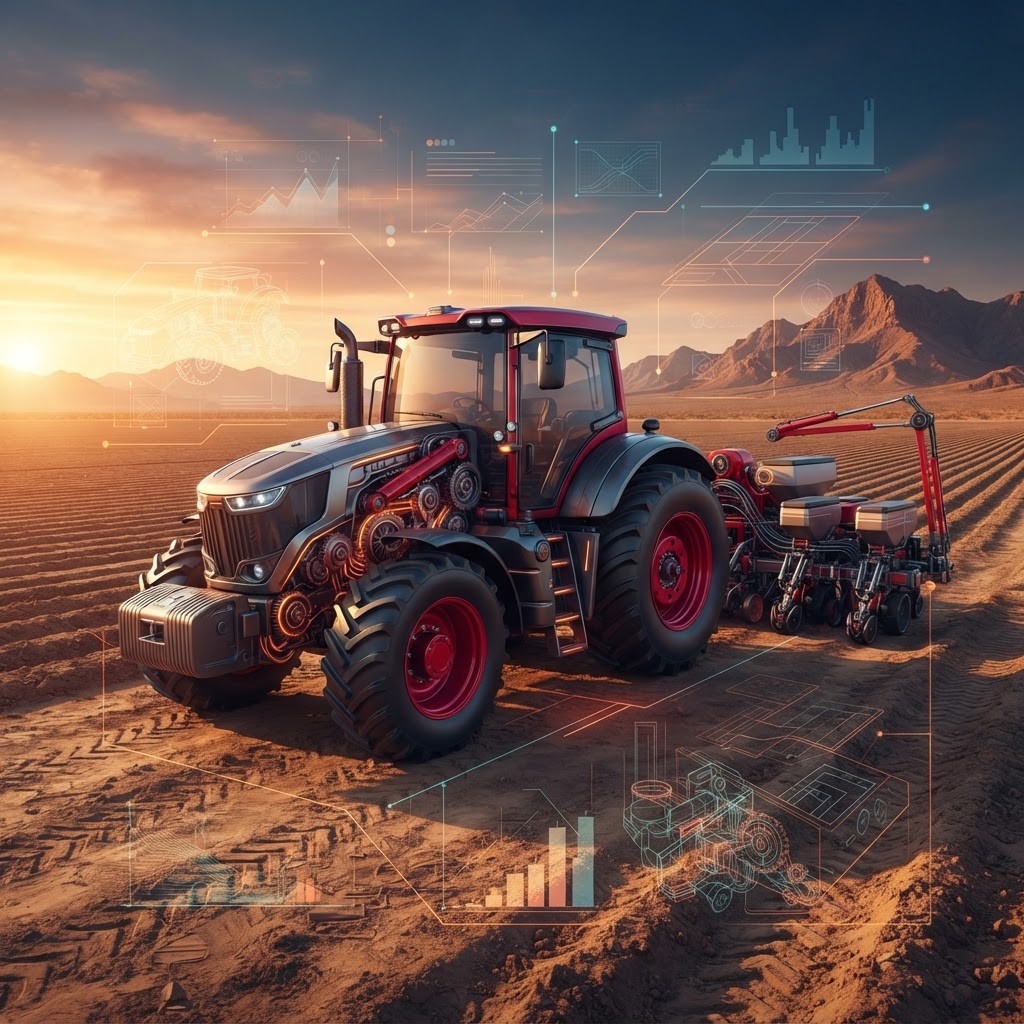
Equipment Built for a Desert Farming Economy
Agricultural machinery faces unusual stress in El Paso. Summer temperatures push cooling systems to their limits, fine alkaline dust attacks filters and bearings, and irrigation-dependent field layouts require implements that work cleanly around drip tape, laser-leveled grades, and permanent orchard rows. Equipment that performs adequately in the Midwest can struggle here without the right specifications.
Local crop mix also shapes demand. Pecan orchards need shakers, sweepers, harvesters, and hedging equipment. Alfalfa and forage acreage require mowers, conditioners, and balers capable of high annual cutting volumes. Chile, onions, and vegetables call for precision planters, transplanters, and specialized harvest aids. Cotton demands strippers or pickers and module handling. As a result, growers in the valley tend to run mixed fleets assembled from several brands rather than committing to a single color.
What Growers Look For in a Brand
Three factors dominate purchasing decisions. Parts availability comes first: a machine that sits idle waiting on a component during a narrow harvest window costs far more than any price difference at purchase. Second is dealer service depth, including field technicians, loaner equipment, and technical support for electronics and guidance systems. Third is total cost of ownership, driven by fuel efficiency, resale value, and the durability of wear components in abrasive desert soils.
Leading Agricultural Equipment Brands Used in El Paso
1. John Deere — The most widely deployed brand across the valley, covering row-crop and utility tractors, hay equipment, cotton harvesters, and an extensive precision agriculture ecosystem. Its strength is integration: guidance, section control, and machine data flow through one platform, and dealer coverage in the region makes parts and service dependable.
2. Case IH — A strong presence in cotton and forage operations, valued for high-horsepower tractors, cotton pickers with onboard module building, and durable tillage tools. Growers often cite operator comfort during long harvest shifts and solid resale values.
3. New Holland — Especially popular for hay and forage work, with well-regarded balers, mower conditioners, and versatile utility tractors. Its equipment suits mid-sized valley operations that need one machine to handle several jobs across the season.
4. Kubota — The dominant choice for smaller acreage, orchards, vineyards, greenhouses, and municipal work. Compact and narrow-profile tractors maneuver easily between pecan rows and inside high tunnels, and reliability with low fuel consumption fits diversified small farms.
5. Massey Ferguson — A practical, value-oriented option with a loyal following among hay producers and family farms. Straightforward mechanical designs are easier to maintain in-house, which appeals to operators who prefer to handle their own repairs.
6. Valley Irrigation — A leading name in mechanized irrigation, supplying center pivots, linear systems, and remote control and monitoring platforms. In a region where water accounting is critical, its variable-rate application and telemetry capabilities help growers document and optimize every delivery.
7. Netafim — A pioneer in drip and micro-irrigation, and arguably the most influential brand in El Paso's shift away from flood irrigation. Pressure-compensating emitters, subsurface drip lines, and filtration and fertigation components allow precise water and nutrient placement in salty, high-evaporation conditions.
8. Lindsay Corporation — Known for pivot and lateral irrigation systems alongside remote management technology. Its equipment is common on larger forage and cotton acreage, where uniform application across long runs directly affects yield consistency.
9. Savage Equipment — A specialist in pecan harvesting machinery including shakers, sweepers, harvesters, and cleaning equipment. Because pecans are one of the valley's signature crops, purpose-built harvest equipment from a dedicated manufacturer carries real weight among orchard managers.
10. Kuhn — Respected for hay tools, mixers, spreaders, and tillage implements. Disc mowers and rakes hold up well under repeated cutting cycles typical of alfalfa production in a long growing season.
Technology Trends in Regional Ag Equipment
Precision agriculture has moved from experiment to expectation. GPS guidance and auto-steer reduce overlap and operator fatigue, section control limits input waste, and yield monitoring feeds decisions about variety selection and fertility programs. In irrigated desert systems, the highest returns often come from irrigation technology: soil moisture sensors, flow meters, and remote pivot or valve control that let managers respond to heat events within hours rather than days.
Telematics is also changing service relationships. Machines that report fault codes and usage data allow dealers to arrive with the right parts, cutting downtime during harvest. Meanwhile, interest in electrification is growing at the compact end of the market for greenhouse and orchard tasks, and solar-powered pump and monitoring installations are increasingly routine across the valley.
Buying Advice for Local Operations
Match equipment to field geometry before comparing brands. Narrow orchard spacing, laser-leveled basins, and drip infrastructure all constrain machine width, turning radius, and tire configuration. Confirm that dust and heat packages are specified: heavy-duty air pre-cleaners, upgraded cooling, and frequent filter service intervals meaningfully extend engine life here.
Evaluate the dealer as carefully as the machine. Ask about average parts lead times, whether field service is available during weekend harvest windows, and how the dealer supports precision electronics. Finally, consider used equipment strategically; well-maintained tractors and hay tools hold value, and buying a proven model with local service history can be smarter than a new machine no nearby technician has trained on.
Final Thoughts
The best agricultural equipment brands in El Paso are the ones that respect the realities of desert farming: extreme heat, abrasive soils, and irrigation systems that leave no room for waste. Growers who assemble fleets around strong local service support and invest in water-management technology consistently get more productive years out of every dollar of capital.
