
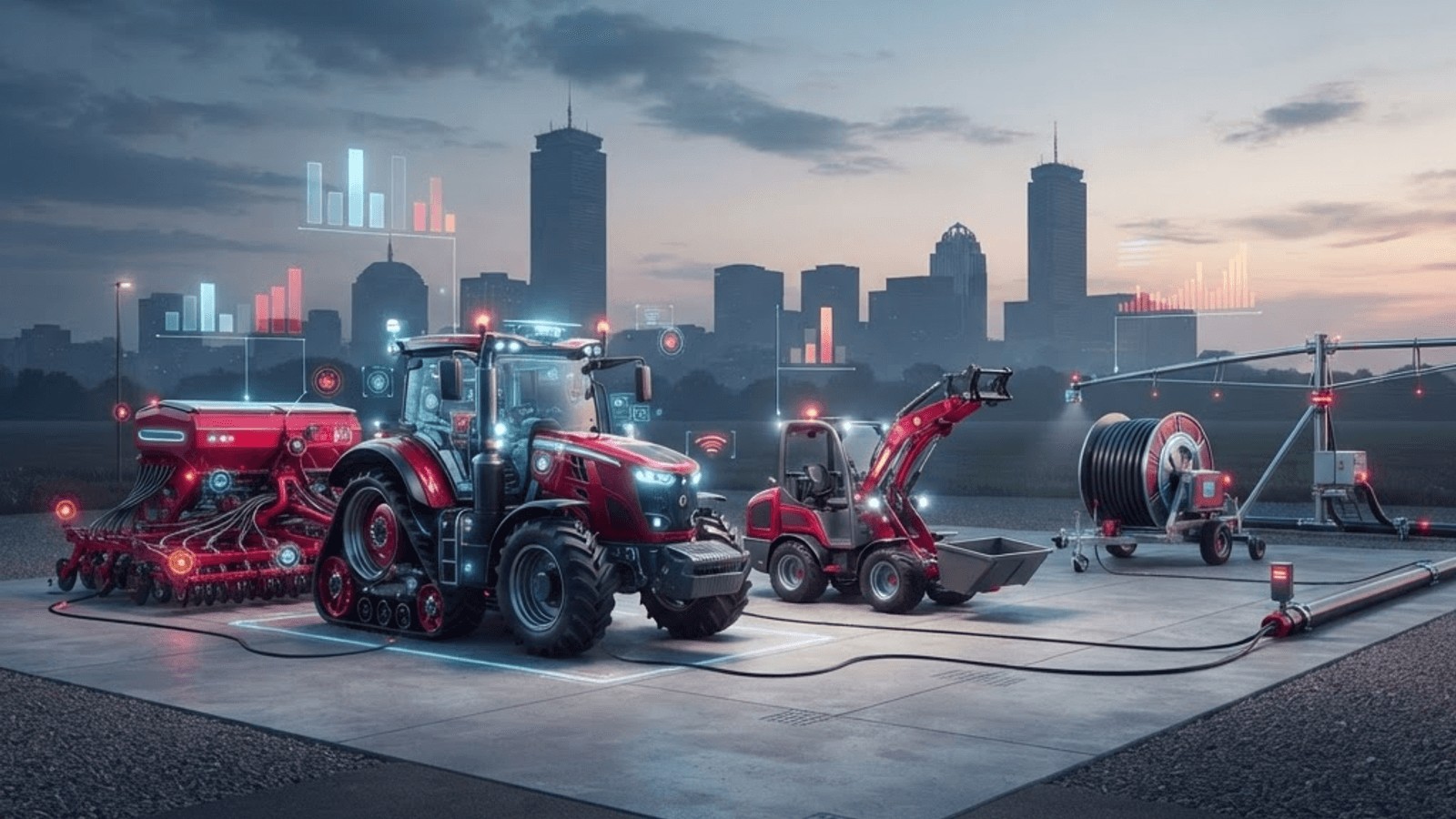
Machinery for a Different Kind of Farming
Agricultural equipment needs in eastern Massachusetts look nothing like those of the Midwest. Farms around Boston are typically small, irregularly shaped, stony and often bordered by stone walls, wetlands or suburban development. Growers cultivate diverse vegetable crops, orchards, nursery stock, hay and protected greenhouse production rather than thousands of acres of a single commodity. The equipment that succeeds here is compact, manoeuvrable, versatile and easy to service.
That reality shapes which brands earn genuine loyalty in the Boston region. Compact and utility tractors in the twenty-five to seventy-five horsepower range dominate. Implements need to work in tight rows and short passes. Reliability matters enormously because a breakdown during a narrow planting or harvest window can cost an entire crop, and small farms rarely have spare machines sitting idle.
Categories of Equipment That Matter Locally
Compact and subcompact tractors form the backbone of most operations, handling loader work, tillage, mowing, snow clearing and implement power. Cultivation and tillage tools, including rotary tillers, spaders, bed shapers and precision cultivators, are critical for vegetable growers. Planting equipment ranges from single-row transplanters to precision seeders. Irrigation systems, particularly drip tape and pump packages, are essential given increasingly erratic rainfall. Harvest aids, greenhouse equipment, sprayers and material handling machinery complete the picture.
Top 10 Best Agricultural Equipment Brands in Boston
1. John Deere. The most recognised name in agriculture, John Deere is widely used across eastern Massachusetts, especially its compact utility tractor range. Growers value build quality, resale value, extensive dealer support in the region and mature telematics and precision technology.
2. Kubota. Arguably the most popular brand among small diversified farms near Boston. Kubota's compact tractors are prized for reliability, tight turning radius, strong hydraulics and excellent visibility, all of which suit small fields, orchards and greenhouse operations.
3. New Holland. Well established in New England hay and livestock operations, New Holland offers a strong range of tractors, balers and mowers. Its hay equipment in particular has a loyal following among growers supplying the region's substantial equine market.
4. Massey Ferguson. A long-standing presence on family farms across Massachusetts, Massey Ferguson is respected for straightforward mechanical simplicity in its utility models, which appeals to farmers who prefer machines they can maintain themselves.
5. Case IH. Better known for larger equipment, Case IH still serves the region through utility tractors and hay tools, with strong dealer networks supporting growers in central and western Massachusetts who also supply Boston markets.
6. BCS and two-wheel tractor brands. Walk-behind tractors are disproportionately important around Boston because many market gardens operate on one to five acres. BCS and similar brands provide tillers, flail mowers, rotary plows and power harrows sized for intensive small-scale vegetable production.
7. Kioti. A value-focused compact tractor brand that has gained real traction in New England, Kioti offers competitive specification and pricing that appeals to newer farms and diversified operations managing capital carefully.
8. Rain-Flo and specialty vegetable equipment makers. Manufacturers producing mulch layers, transplanters, bed shapers and plastic lifters are indispensable for Boston-area vegetable growers using plasticulture to advance harvest timing and suppress weeds.
9. Toro and irrigation equipment brands. Drip irrigation, filtration, pumps and controllers from established irrigation manufacturers underpin water management on farms facing more variable rainfall and periodic drought restrictions.
10. Nifty Hoops and greenhouse structure suppliers. Season extension is central to profitability in Massachusetts, making high tunnel and greenhouse suppliers, along with associated ventilation, heating and bench systems, among the most consequential equipment investments a local farm makes.
Dealer Support Matters More Than Brand
Experienced growers in the Boston region consistently make the same point: the dealer often matters more than the badge on the hood. A dealer with local parts inventory, mobile service capability, loaner equipment and technicians who understand small farm operations will keep you productive. A distant dealer for a nominally superior brand can leave a machine idle for weeks during peak season.
Before purchasing, ask about typical parts lead times, whether field service is available, how quickly warranty claims are processed, and whether the dealer stocks the implements you will need later. Talk to other farms in your area about their actual service experience rather than relying on brochures.
Technology Trends in Farm Equipment
Precision agriculture technology has scaled down to farms of Boston's size. Guidance systems, variable rate application, soil moisture sensors and equipment telematics are now accessible to operations with modest acreage. For high-value vegetable production, even small improvements in input placement and timing generate meaningful returns.
Electrification is emerging. Battery-powered compact tractors, electric utility vehicles and electric implements appeal to farms near residential neighbourhoods where noise and emissions matter, and to operations pursuing carbon reduction goals. Availability remains limited but interest in the Boston area is notably strong.
Automation is the frontier. Robotic weeding, autonomous tractors and vision-based harvest aids address the acute labour shortages that constrain many Massachusetts farms. Given the region's robotics research base, local growers frequently participate in early trials of these systems.
Investing Wisely
Buy for the work you actually do most often rather than the largest job you occasionally face. Match tractor weight and horsepower to your soils and implements, prioritise loader capability since it is used constantly, and consider quality used equipment for lower-hour tasks. Above all, calculate cost per productive hour rather than purchase price. In a region where the growing season is short and unforgiving, equipment that starts every morning is the equipment that pays for itself.
