
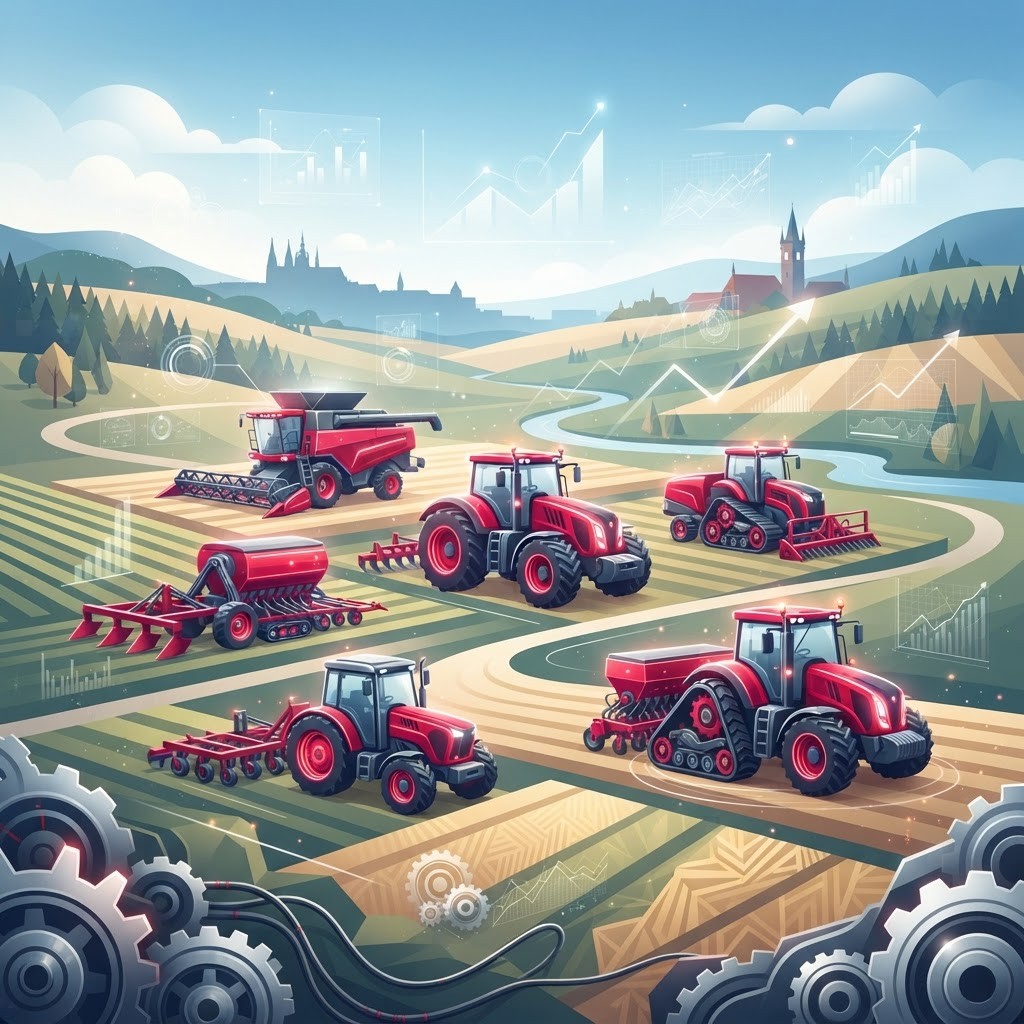
Mechanization Driving Czech Agriculture
Modern Czech agriculture is highly mechanized, relying on advanced machinery to cultivate large tracts of land efficiently. Agricultural equipment brands, whether domestic manufacturers or established distributors of international marques, are central to this productivity. They supply the tractors, harvesters, tillage tools, and precision technology that enable Czech farms to compete within the European single market.
The Czech Republic has a proud engineering heritage, and this expertise extends into agricultural machinery. Domestic manufacturers produce a range of implements and specialized equipment, while distributors bring the latest global technology to Czech fields. Together they form a robust market serving farms of all sizes.
The Equipment Landscape
The agricultural equipment sector in Czechia encompasses several categories. Tractors and self-propelled machines form the backbone of mechanized farming. Tillage, seeding, and crop-protection implements support the cultivation cycle. Harvesting machinery, including combines and forage equipment, is essential during peak seasons. Increasingly, precision agriculture technology, telematics, and automation add a high-tech dimension to the market.
Buyers evaluate equipment on reliability, fuel efficiency, service support, and total cost of ownership. Strong dealer networks offering maintenance, spare parts, and financing are decisive, since downtime during critical windows can be costly. Brands that combine quality machinery with dependable after-sales service earn lasting loyalty.
Ten Notable Agricultural Equipment Brands
Zetor is the flagship Czech tractor brand, with a storied history and a strong presence on farms across the country and abroad. Agrostroj Pelhřimov is a major domestic manufacturer of agricultural implements and components. Bednar FMT has earned an international reputation for innovative tillage and seeding machinery.
Farmet produces soil cultivation and oilseed processing equipment with a focus on engineering quality. Strom Praha is a leading distributor representing premium international brands and providing comprehensive service. AGROTEC is a prominent dealer supplying tractors, harvesters, and support across the country. P & L distributes advanced machinery and precision technology to progressive farms. Kuhn Center Czech supplies specialized implements, while SMS CZ manufactures handling and loading equipment. Agrico completes the list with a range of machinery and farming solutions.
Trends in Farm Machinery
Precision agriculture is the defining trend, with GPS guidance, variable-rate application, and telematics improving efficiency and reducing input waste. These technologies help farms cut costs and meet environmental targets, making them increasingly standard rather than optional. Data integration between machines and farm management software is a growing priority.
Sustainability is also reshaping equipment design. Manufacturers are developing lower-emission engines, exploring alternative fuels, and improving fuel efficiency. Automation and even early-stage autonomous machinery promise to address rural labor shortages. Meanwhile, robust after-sales support and digital diagnostics have become key differentiators in a competitive market.
Domestic Engineering Heritage
The Czech Republic's strength in agricultural equipment is rooted in a long and distinguished engineering tradition. The country has produced machinery for generations, and this heritage lives on in domestic brands that combine mechanical know-how with an understanding of local farming conditions. Czech-made tractors and implements are valued not only at home but also in export markets, where they compete on quality, durability, and value.
This manufacturing base also supports a healthy ecosystem of component suppliers, service providers, and specialists. Farmers benefit from access to locally produced spare parts, skilled technicians, and equipment designed with regional soils, crops, and field sizes in mind. The combination of domestic manufacturing and distribution of leading international brands gives Czech farms an unusually rich set of options.
Financing, Leasing, and Total Cost of Ownership
Agricultural machinery represents a substantial capital investment, and how farms finance these purchases significantly affects their decisions. Leasing, hire-purchase, and financing arrangements have become common, allowing farms to spread costs and preserve working capital. Equipment brands and dealers that offer flexible, tailored financing packages gain an important competitive advantage.
Increasingly, buyers focus on total cost of ownership rather than purchase price alone. Fuel efficiency, maintenance costs, reliability, resale value, and downtime all factor into the calculation. Brands that can demonstrate low lifetime costs, backed by strong service and parts availability, appeal to farms managing tight margins. Telematics and predictive maintenance further help reduce unexpected breakdowns and optimize machinery use across the season.
Choosing the Right Equipment Partner
For Czech farmers, selecting an equipment brand means balancing purchase price with reliability, service coverage, and technological capability. Access to local dealers, rapid parts availability, and flexible financing often outweigh headline specifications. Long-term relationships with trusted brands reduce risk and support continuous modernization.
As Czech agriculture continues to embrace precision and sustainability, agricultural equipment brands will remain vital enablers of progress. Those that pair engineering excellence with strong service networks and forward-looking technology are best placed to lead the market.
As farms grow more data-driven and environmentally conscious, the relationship between farmers and equipment providers is deepening into a genuine partnership. Beyond selling machines, leading brands increasingly offer training, agronomic insight, and digital platforms that help farmers extract maximum value from their investment. This shift from transactional sales toward ongoing support reflects the future of the sector, one in which the right equipment partner becomes a long-term contributor to a farm's productivity and sustainability.
