
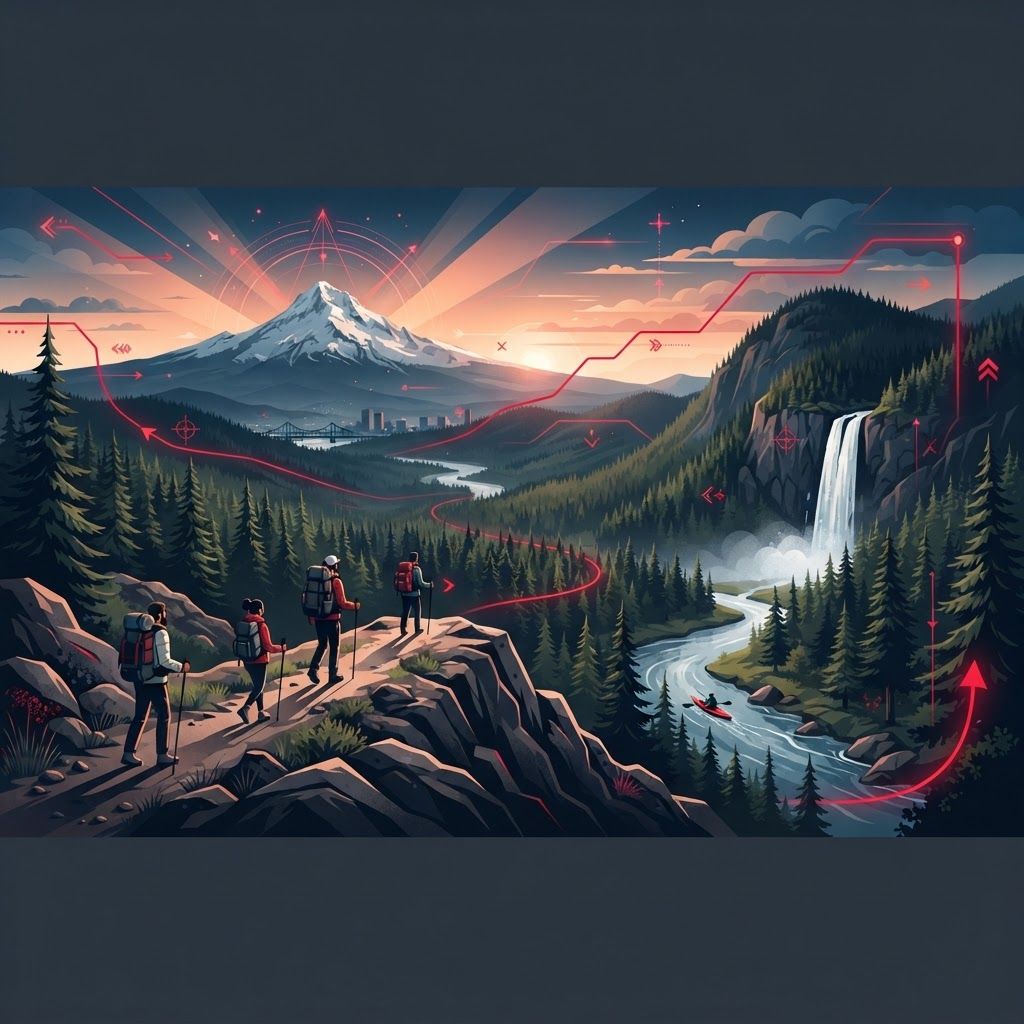
Portland as an Adventure Basecamp
Few American cities offer the range of terrain that Portland does within a short drive. Mount Hood provides glaciated alpine climbing and year-round snow. The Columbia River Gorge concentrates dozens of waterfall hikes and world-class windsurfing into a single corridor. The Deschutes and Clackamas rivers deliver whitewater at every difficulty grade. To the west, the Oregon Coast offers sea kayaking, surfing, and headland trails; to the east, the high desert opens up rock climbing and dark-sky camping.
That geographic wealth has produced a guiding industry with real depth. Portland-area adventure companies tend to be specialists rather than generalists, and the best of them combine technical credentials with a conservation ethic that matches local values. Understanding who does what well is the key to booking a trip that fits your ambition and experience level.
The Ten Operators Leading the Field
1. Timberline Mountain Guides is a natural first stop for anyone serious about Cascade mountaineering. Programs range from introductory glacier travel and crevasse rescue to summit attempts on Mount Hood and neighboring volcanoes. Instruction quality and safety culture are the calling cards, and graduates often continue on to bigger objectives elsewhere in the world.
2. Smith Rock Climbing Guides and similar central Oregon climbing outfitters serve Portland climbers heading to the state's most famous crag. Sport climbing instruction, multi-pitch coaching, and private guiding make an intimidating destination approachable, and the desert climate means a viable season when the west side is soaked.
3. Wet Planet Whitewater operates on the White Salmon and nearby rivers within easy reach of Portland, running everything from splashy family floats to steep creek descents. Its kayak school has a strong reputation for turning complete beginners into competent paddlers over a multi-day progression.
4. Blue Sky Rafting represents the accessible end of the river market, focusing on scenic and moderate whitewater trips that suit mixed-ability groups, corporate outings, and first-timers who want adrenaline without commitment.
5. Next Adventure is a Portland institution that pairs a beloved outdoor retail operation with a paddle center and guided instruction. Its rental program lowers the barrier to trying sea kayaking or backcountry touring before investing in gear, and its community classes are a common on-ramp for new residents.
6. Portland Kayak Company specializes in urban and near-city paddling, including circumnavigation trips around Ross Island and instruction on the Willamette. It is an excellent introduction to flatwater skills for anyone who wants an adventure that starts and ends inside the city limits.
7. Pedal Bike Tours and the wider cycling-tour segment capitalize on Portland's status as a cycling capital. Offerings span half-day city rides, wine country tours in the Willamette Valley, and multi-day supported routes. Electric-assist options have widened the audience considerably.
8. Evergreen Escapes builds curated small-group day trips that combine hiking with regional food and wine, aimed at travelers who want authentic access without a full expedition. Waterfall hikes in the Gorge paired with a vineyard stop are a signature format.
9. Oregon Coast Adventure Outfitters and similar coastal specialists cover surfing lessons, sea cave paddling, and headland trekking on the shoreline west of the city. Cold-water expertise, tide knowledge, and proper wetsuit provisioning distinguish serious operators here.
10. Wildland Trekking brings a national-scale backpacking program to Oregon, offering inn-based and camping treks around Mount Hood, the Gorge, and Crater Lake. For travelers who want a multi-day wilderness itinerary with logistics fully handled, it is among the most polished options serving the region.
Choosing an Operator With Confidence
Credentials matter more in adventure travel than in almost any other service industry. Look for permits from the relevant national forest or state agency, guides carrying current wilderness medical certifications, and clear published guide-to-client ratios. Reputable companies are transparent about the physical requirements of each trip and will tell you honestly when an itinerary is beyond your current fitness or skill.
Seasonality is the other planning variable. Alpine climbing peaks from late spring into midsummer when snow is consolidated. Whitewater flows are strongest in spring runoff. Coastal conditions calm in late summer. Fall brings quiet trails and dramatic light, and winter shifts the focus to snowshoeing, backcountry skiing, and storm watching. A good outfitter will steer you toward the right month rather than simply selling the trip you asked about.
Trends Reshaping Adventure Travel Locally
Sustainability has moved from marketing language to operating practice. Leading Portland companies limit group sizes, follow strict Leave No Trace protocols, contribute to trail maintenance organizations, and increasingly measure the footprint of their transport. Many now build itineraries specifically to disperse pressure away from the most heavily visited waterfalls and viewpoints.
Two other shifts are notable. Micro-adventures, short single-day or overnight experiences designed around busy schedules, have grown rapidly among local residents. And skills-based programming has expanded, with clients booking instruction that lets them travel independently later rather than relying on guides indefinitely. Together these trends reflect a market where customers are more experienced and more discerning than a decade ago.
Practical Preparation
Pacific Northwest adventure rewards good gear discipline. Layering systems, genuinely waterproof shells, and reliable footwear matter more than expensive extras. Water is rarely scarce but purification is still essential on multi-day routes. Permit systems apply to several popular trailheads and climbing routes, and reputable operators handle these for you.
Book earlier than feels necessary for summer dates, arrive with realistic expectations about weather, and communicate any medical or mobility considerations in advance. Portland's adventure companies are, on the whole, unusually good at matching people to the right experience. Give them accurate information and they will deliver a trip that feels ambitious without ever feeling reckless.
