
Understanding Market Supply in Small-Town Economics
The market supply of any agricultural product in a small town is shaped by a complex interplay of factors that differ significantly from those in larger urban markets. Small towns face unique challenges and opportunities when it comes to the supply of fresh produce like lettuce, and understanding these dynamics is essential for farmers, retailers, consumers, and policymakers alike.
In economics, market supply refers to the total quantity of a good that all producers in a market are willing and able to sell at various prices over a given period of time. For lettuce in a small town, this supply is determined by local production capacity, the availability and cost of imported lettuce from outside the community, transportation infrastructure, seasonal patterns, and the behavior of both producers and consumers in the local market.
Small towns often have smaller, more concentrated markets where changes in supply or demand can have outsized effects on prices and availability. A single local farmer's decision to plant more or less lettuce, or a disruption in the supply chain from a regional distributor, can significantly impact the availability and price of lettuce at the local grocery store or farmers market. This makes the study of lettuce supply in small towns particularly interesting from an economic perspective.
Factors Affecting the Local Supply of Lettuce
Several key factors determine how much lettuce is available in a small-town market. Local agricultural production is often the most visible factor. Small towns located in regions with favorable growing conditions may have local farmers who grow lettuce for sale at farmers markets, roadside stands, or directly to local grocery stores. The quantity of locally produced lettuce depends on the number of growers, the acreage devoted to lettuce production, growing season length, soil quality, water availability, and the grower's choice of lettuce varieties.
Climate and weather conditions play a significant role in lettuce production. Lettuce is a cool-season crop that thrives in temperatures between 60 and 70 degrees Fahrenheit. High temperatures cause lettuce to bolt (go to seed prematurely), which makes it bitter and unmarketable. Frost can damage or destroy lettuce crops. In small towns where local production is a significant portion of the supply, an unusually hot summer or an early frost can dramatically reduce the available supply and drive up prices.
The cost of inputs also affects supply. Seeds, fertilizer, irrigation water, labor, and pest management all contribute to the cost of growing lettuce. When input costs rise, some growers may reduce their lettuce acreage or switch to more profitable crops, reducing the local supply. Conversely, when input costs fall or market prices for lettuce increase, growers may be incentivized to expand production.
Transportation and distribution infrastructure are critical factors for lettuce supply in small towns that depend on imported lettuce from regional or national distributors. Small towns located far from major distribution centers may face higher transportation costs, which can increase the retail price of lettuce and reduce the quantity supplied. The frequency and reliability of delivery services also affect supply, as perishable goods like lettuce require efficient cold-chain logistics to maintain quality and freshness.
The Role of Local Farmers and Growers
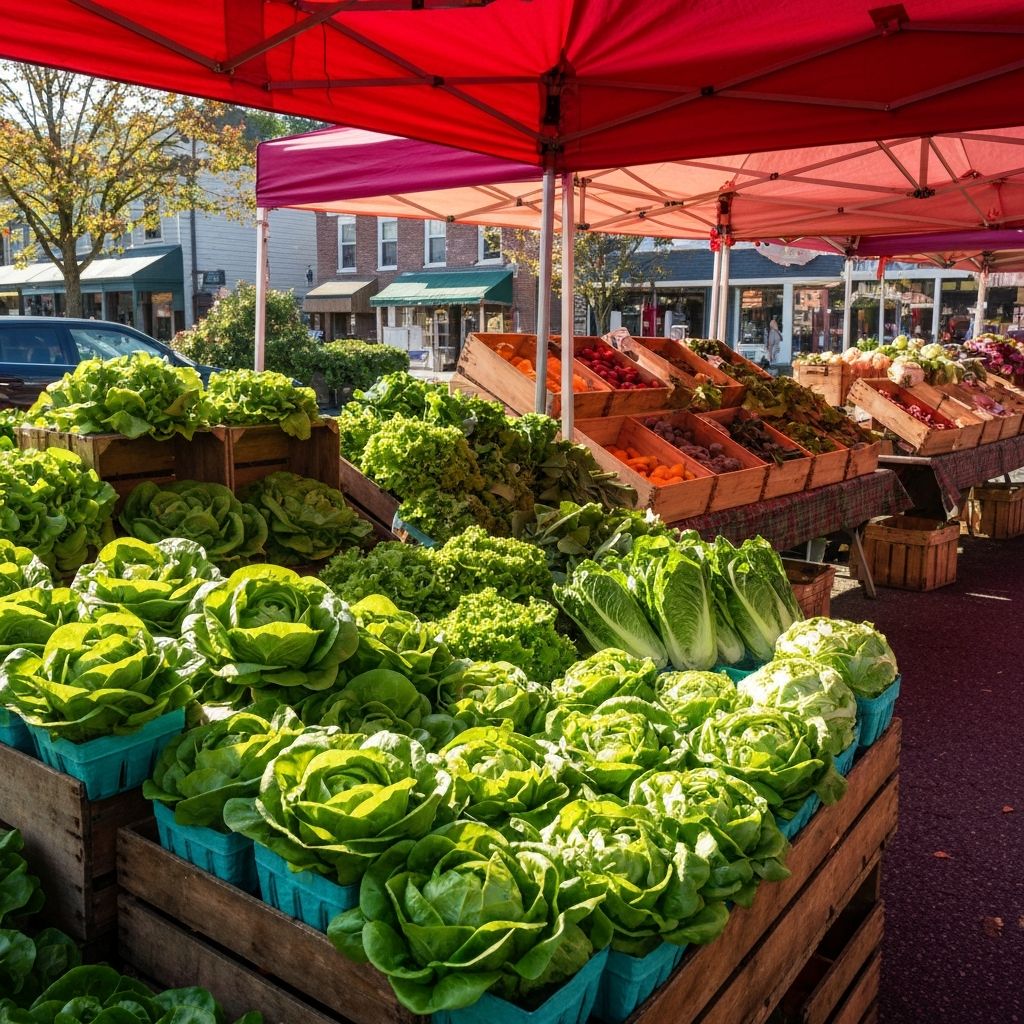
Local farmers and growers play a vital role in the lettuce supply of small towns. In many rural communities, locally grown lettuce is available during the growing season at farmers markets, community-supported agriculture (CSA) programs, and farm stands. These direct-to-consumer sales channels bypass the traditional supply chain, reducing costs and ensuring maximum freshness.
The economic relationship between local growers and the small-town market is intimate and dynamic. A local farmer who supplies lettuce to the community is directly responsive to local demand signals. If customers at the farmers market consistently purchase all available lettuce early in the morning, the farmer may respond by increasing production the following season. Conversely, if lettuce goes unsold, the farmer may reduce production or divert it to other uses.
Local growers also contribute to the variety of lettuce available in small-town markets. While grocery stores may stock primarily iceberg and romaine lettuce, local farmers often grow a wider range of varieties, including butterhead, red leaf, green leaf, oakleaf, and specialty greens like arugula and mesclun mix. This variety enhances the local food culture and gives consumers access to fresh, unique products that may not be available through conventional distribution channels.
Supply Chain Dynamics for Imported Lettuce
Most small towns depend on lettuce imported from outside the community for the majority of their supply, especially during the off-season when local production is not possible. This imported lettuce typically travels through a multi-step supply chain that begins with large-scale commercial growers, primarily in California's Salinas Valley and Arizona's Yuma region, which together produce the vast majority of the lettuce consumed in the United States.
From these growing regions, lettuce is harvested, cooled, packed, and shipped via refrigerated trucks to regional distribution centers. Wholesale distributors then break down large shipments into smaller orders and deliver them to grocery stores, restaurants, and food service operations across their service territory. For small towns located far from distribution centers, this process can add several days of transit time, increasing the age of the lettuce by the time it reaches store shelves and reducing its shelf life for consumers.
The cost of this distribution process is reflected in the retail price of lettuce. Transportation fuel costs, driver wages, refrigeration costs, and distributor margins all contribute to the final price that consumers pay. In small towns with limited competition among retailers, the retail markup may be higher than in larger markets where competition keeps prices lower.
Seasonal Variations in Supply
Lettuce supply in small towns exhibits pronounced seasonal patterns. During the local growing season, typically spring through early fall in most regions, locally grown lettuce supplements the imported supply, increasing overall availability and often reducing prices due to the higher total supply. Farmers markets and farm stands are most active during this period, and consumers may have access to the freshest and most diverse selection of lettuce varieties.
During the winter months, small towns in colder climates depend entirely on imported lettuce. The supply during this period is more vulnerable to disruptions, including weather events in the major growing regions, transportation delays due to winter storms, and increased demand during the holiday season. Prices for lettuce typically increase during the winter months, reflecting the higher cost of production (some lettuce is grown in heated greenhouses or tunnels) and transportation during this period.
Some forward-thinking small-town growers are extending the local lettuce season through the use of season-extension technologies such as high tunnels, cold frames, and heated greenhouses. These structures allow growers to produce lettuce well beyond the natural outdoor growing season, providing fresh, locally grown lettuce during months when it would otherwise be unavailable. While the cost of production in these structures is higher than open-field production, consumers who value freshness and local sourcing are often willing to pay a premium.
Pricing Dynamics in Small-Town Markets
The pricing of lettuce in small-town markets is influenced by supply and demand conditions, competition among retailers, and the cost structure of the supply chain. In a perfectly competitive market, prices would be determined solely by the intersection of supply and demand curves. However, small-town markets often deviate from perfect competition due to the limited number of retailers, imperfect information, and the presence of differentiated products.
In many small towns, a single grocery store may serve as the primary retail outlet for lettuce. This lack of competition can result in higher prices than consumers in larger markets would pay. However, the presence of farmers markets, farm stands, and other alternative retail channels can introduce competition and help moderate prices. The seasonal availability of locally grown lettuce can also put downward pressure on prices during the growing season.
Price elasticity of demand for lettuce in small towns may differ from that in larger markets. In a small town with limited alternative sources of fresh produce, consumers may be less price-sensitive because they have fewer substitutes available. Conversely, in towns where consumers have access to home gardens, foraging, or bartering with neighbors, the demand for commercially sold lettuce may be more elastic, as consumers can more easily reduce their purchases when prices rise.
The Impact of Consumer Preferences and Trends
Consumer preferences have a significant impact on the market supply of lettuce in small towns. The growing demand for organic, locally grown, and specialty lettuce varieties has created new opportunities for local growers and changed the product mix offered by retailers. Small-town consumers are increasingly interested in knowing where their food comes from and how it was produced, driving demand for locally grown lettuce and supporting the viability of small-scale farming operations.
The rise of health consciousness has also boosted demand for lettuce and salad greens. As consumers become more aware of the nutritional benefits of fresh vegetables, demand for lettuce has grown, encouraging both local production and the stocking of a wider variety of lettuce products at small-town grocery stores. Pre-washed and pre-packaged salad mixes have become increasingly popular even in small-town markets, reflecting national trends in convenience and healthy eating.
Challenges and Opportunities for Small-Town Lettuce Markets
Small-town lettuce markets face several challenges, including limited economies of scale, higher per-unit transportation costs, shorter shelf life due to longer supply chains, and vulnerability to supply disruptions. However, these challenges also create opportunities for innovation and community-based solutions. Local food cooperatives, community gardens, and farm-to-school programs are examples of initiatives that can strengthen the local food supply and reduce dependence on distant supply chains.
Technology is also creating new opportunities for small-town lettuce production. Indoor vertical farming, hydroponic systems, and controlled-environment agriculture are becoming more accessible and affordable, potentially allowing small-town entrepreneurs to produce lettuce year-round regardless of climate or geographic location. While these technologies require significant capital investment, they offer the potential for consistent, high-quality local production that can supplement or replace imported lettuce.
Conclusion
The market supply of lettuce in a small town is a fascinating microcosm of broader economic principles at work. From local farm production to global supply chain dynamics, from seasonal weather patterns to consumer preference trends, the availability and pricing of lettuce in small-town markets reflects a complex web of interconnected factors. Understanding these dynamics is valuable for farmers, retailers, policymakers, and consumers who want to support vibrant, resilient local food systems that provide fresh, affordable, and diverse produce to their communities.
