
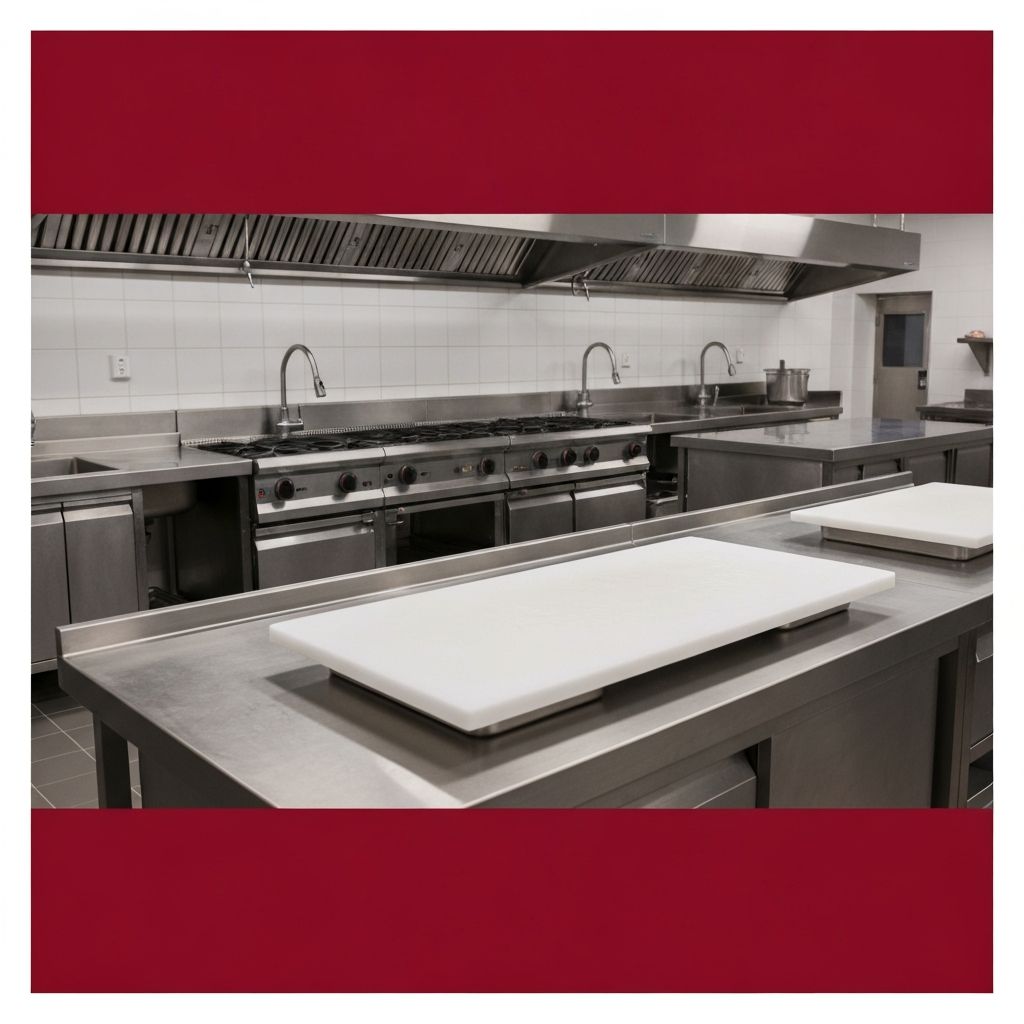
What Are Food Contact Surfaces
In the world of food safety, the term "food contact surface" refers to any surface that comes into direct contact with food during preparation, processing, cooking, serving, or storage. This seemingly simple concept is actually one of the most important pillars of food safety management, as contaminated food contact surfaces are a leading cause of foodborne illness outbreaks. Understanding what constitutes a food contact surface, how to properly maintain them, and what regulations govern their use is essential knowledge for anyone involved in food handling.
Food contact surfaces include a wide range of items found in any kitchen, whether commercial or residential. Cutting boards, countertops, knives, cooking utensils, pots and pans, plates, bowls, glasses, food processor blades, mixer bowls, baking sheets, serving platters, food storage containers, and the interior surfaces of ovens, microwaves, and refrigerators are all examples of food contact surfaces. Even less obvious items like thermometer probes, can openers, colanders, and the gloves worn by food handlers are considered food contact surfaces.
Regulatory Requirements for Food Contact Surfaces
In the United States, food contact surfaces are regulated by both the FDA and state and local health departments. The FDA Food Code, which serves as a model code for state and local food safety regulations, establishes specific requirements for food contact surface materials, construction, maintenance, and cleaning and sanitizing procedures. According to the FDA Food Code, food contact surfaces must be safe, meaning they must not leach harmful chemicals into food under normal conditions of use.
Food contact surfaces must be durable and resistant to corrosion, meaning they should withstand repeated use, cleaning, and sanitizing without deteriorating. They must be smooth and easily cleanable, with no cracks, crevices, or other imperfections where food particles and bacteria can accumulate. They must be nonabsorbent, meaning they should not soak up liquids, odors, or bacteria. And they must be resistant to pitting, chipping, scratching, decomposition, and distortion under normal conditions of use. These requirements ensure that food contact surfaces can be effectively cleaned and sanitized, preventing the buildup of harmful bacteria and other contaminants.
Approved Materials for Food Contact Surfaces
Not all materials are suitable for use as food contact surfaces. The FDA and NSF International (formerly the National Sanitation Foundation) have established standards for materials that are acceptable for food contact. Stainless steel is the gold standard for food contact surfaces in commercial kitchens. It is durable, corrosion-resistant, nonporous, easy to clean and sanitize, and does not react with acidic or alkaline foods. Most commercial kitchen equipment, countertops, and utensils are made from food-grade stainless steel, typically 304 or 316 grade.
Food-grade plastics, including various types of polyethylene, polypropylene, and certain other polymers, are widely used for cutting boards, food storage containers, and disposable food service items. These materials must comply with FDA 21 CFR regulations for plastic food contact materials. Hard maple and other approved hardwoods are acceptable for cutting boards and certain other food contact applications, though they require more maintenance than stainless steel or plastic. Tempered glass and food-grade ceramic are used for serving dishes, storage containers, and some cooking vessels.
Cleaning and Sanitizing Food Contact Surfaces
Proper cleaning and sanitizing of food contact surfaces is one of the most critical food safety practices in any kitchen. It is important to understand that cleaning and sanitizing are two distinct steps, each with its own purpose. Cleaning removes visible dirt, food particles, and grease from surfaces. Sanitizing reduces the number of microorganisms on a surface to safe levels. Both steps are necessary; sanitizing a dirty surface is ineffective because food residue can shield bacteria from the sanitizing agent.
The standard procedure for cleaning and sanitizing food contact surfaces follows a specific sequence. First, scrape or rinse the surface to remove loose food particles and debris. Second, wash the surface with warm water and an approved food-service detergent, using a clean cloth, brush, or sponge. Third, rinse the surface with clean water to remove all traces of detergent. Fourth, sanitize the surface using an approved sanitizing method. Fifth, allow the surface to air dry; do not towel dry, as towels can reintroduce contaminants.
There are three common sanitizing methods approved for food contact surfaces. Chemical sanitizing involves applying a sanitizing solution at the correct concentration and for the required contact time. Common chemical sanitizers include chlorine bleach solution (50 to 100 parts per million), quaternary ammonium compound solution (per manufacturer's directions), and iodine solution (12.5 to 25 parts per million). Hot water sanitizing involves immersing items in water at 171 degrees Fahrenheit (77 degrees Celsius) or above for at least 30 seconds. Steam sanitizing uses steam at high temperatures to kill microorganisms and is often used for equipment that cannot be easily immersed or chemically sanitized.
Frequency of Cleaning and Sanitizing
Food contact surfaces must be cleaned and sanitized frequently throughout the workday. The FDA Food Code requires cleaning and sanitizing each time you switch from one type of food to another, such as moving from raw chicken to vegetables. It is required after handling raw meat, poultry, or seafood before using the surface for ready-to-eat foods. It is also required after any interruption in operations during which contamination may have occurred, at least every four hours during continuous use, and whenever surfaces become visibly contaminated.
In a busy commercial kitchen, this means food contact surfaces may be cleaned and sanitized dozens of times throughout a single shift. Establishing efficient cleaning and sanitizing routines is essential for maintaining compliance without disrupting workflow. Many kitchens use a system of sanitizer buckets positioned at workstations, allowing cooks to quickly wipe down surfaces between tasks without leaving their station.
Cross-Contamination Prevention
Properly managing food contact surfaces is one of the primary defenses against cross-contamination, which occurs when harmful bacteria or allergens are transferred from one surface or food item to another. Color-coded cutting boards are a widely used strategy for preventing cross-contamination. A common color-coding system uses red for raw meat, blue for raw fish, yellow for raw poultry, green for fruits and vegetables, white for dairy and bread, and brown for cooked meats.
Beyond cutting boards, designating specific utensils and equipment for specific food types helps prevent cross-contamination. For example, using separate tongs for raw and cooked items on a grill, having designated prep areas for allergen-free food preparation, and using different containers for raw and cooked food storage all contribute to a safer food handling environment.
Home Kitchen Best Practices
While home kitchens are not subject to the same regulatory requirements as commercial food service operations, the principles of food contact surface safety apply equally in the home. Homeowners should wash cutting boards, countertops, and utensils with hot, soapy water after each use, especially after contact with raw meat, poultry, or seafood. Replace cutting boards that have become heavily scarred, cracked, or warped, as these defects create hiding places for bacteria that are difficult to eliminate through cleaning. Use separate cutting boards for raw meat and produce, and sanitize kitchen surfaces regularly using a solution of one tablespoon of unscented liquid chlorine bleach per gallon of water. These simple practices can significantly reduce the risk of foodborne illness in your home.
