
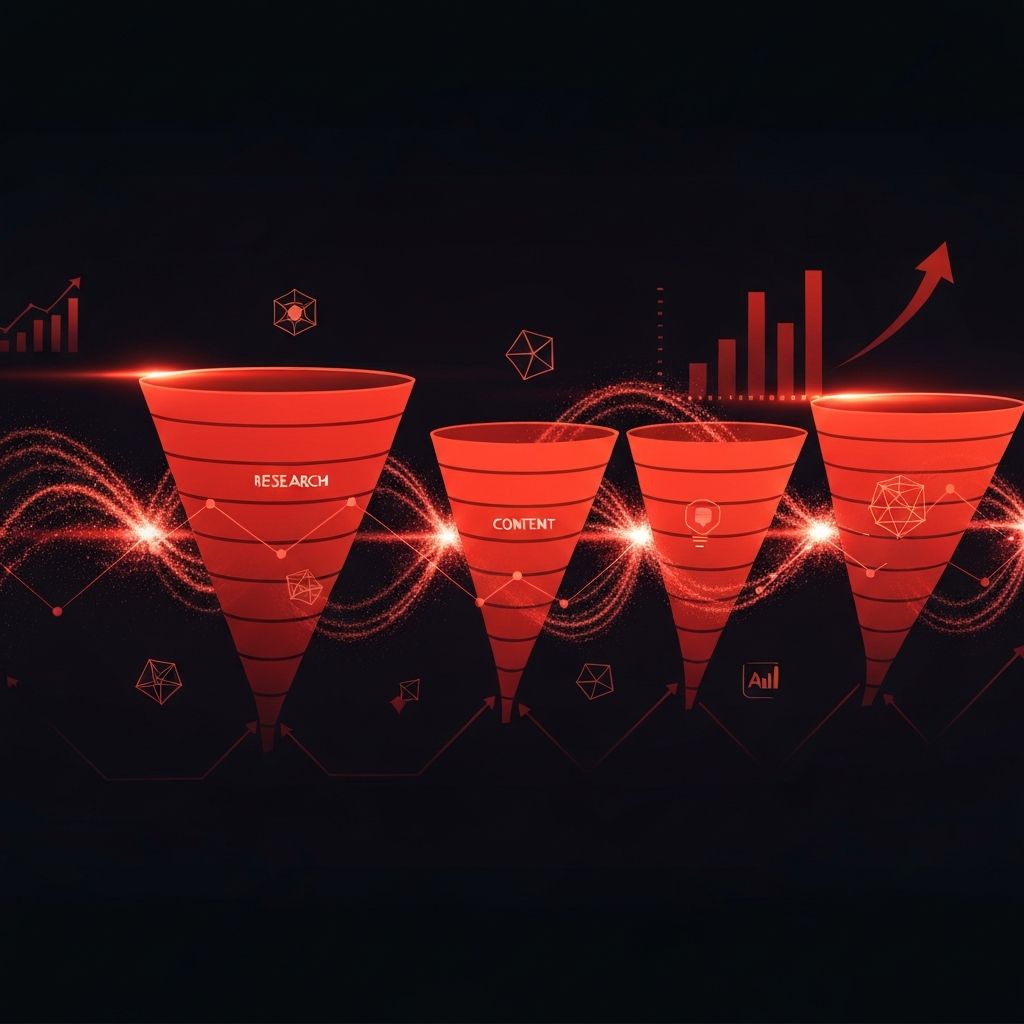
Introduction: Why Understanding the Stages Matters
Digital marketing is rarely a single action; it is a journey that unfolds across distinct stages. Skipping or rushing through any one of them almost always leads to wasted budget, inconsistent results, and frustrated teams. Whether you are a startup founder running your first campaign or a marketing leader scaling a global brand, understanding the stages of digital marketing gives you a clear mental model for planning, executing, and improving your work. It transforms marketing from a guessing game into a repeatable system.
Each stage builds on the previous one. Strong research informs better strategy, sharper strategy enables tighter execution, and consistent measurement drives smarter optimization. When all stages function together, growth feels less like luck and more like inevitable progress.
How AAMAX.CO Guides You Through Every Stage
For organizations that want a partner across the full marketing lifecycle, AAMAX.CO offers an integrated approach that covers every stage from research to scaling. Their team helps clients clarify goals, build comprehensive strategies, execute across multiple channels, and continuously optimize based on real performance data. By working within a single framework, they help businesses avoid the common trap of disconnected tactics and instead deliver compounding results over time.
Stage 1: Research and Discovery
Every successful campaign begins with deep understanding. Who is your customer? What problems are they trying to solve? Where do they spend time online? What language do they use to describe their needs? Without solid answers, even brilliant creative will miss the mark.
Research includes audience interviews, competitive analysis, keyword research, and market trend evaluation. The goal is not to produce a 100-page report; it is to extract a handful of sharp insights that shape every decision that follows.
Stage 2: Strategy and Goal Setting
Once you understand the landscape, you can craft a strategy. This stage answers three big questions: what are we trying to achieve, who are we trying to reach, and how will we know if we succeeded? Strong strategies define specific KPIs, choose primary channels, and set realistic budgets and timelines.
Strategy is also where positioning and messaging are locked in. Decide what makes your brand different, distill it into clear value propositions, and ensure every channel reinforces that core story.
Stage 3: Channel Selection and Planning
Not every channel makes sense for every business. A B2B SaaS company might prioritize LinkedIn, content marketing, and search engine optimization, while a local restaurant might focus on Google, Instagram, and review platforms. Choose channels based on where your audience already engages and where your team can execute consistently.
Build a channel plan that maps each platform to a specific role in the funnel: awareness, consideration, conversion, or retention. Avoid the temptation to be everywhere at once; depth almost always beats breadth in the early stages.
Stage 4: Content and Creative Development
Content is the vehicle through which your strategy reaches the audience. This stage covers everything from blog posts and videos to ad creative, landing pages, and email copy. Strong creative is anchored in customer insights, aligned with brand voice, and tailored to each channel's native style.
Plan a steady production rhythm rather than relying on heroic bursts. Editorial calendars, creative briefs, and asset libraries dramatically improve consistency and reduce last-minute scrambling.
Stage 5: Campaign Launch and Execution
Execution is where many strategies break down. Campaigns must be tracked properly from day one, with UTM parameters, conversion events, and analytics dashboards configured before any spend goes live. Launch in stages when possible, validate that everything is firing correctly, and only then scale up.
Coordinate across paid media, organic content, email, and sales so the customer experience feels seamless. Misaligned launches confuse audiences and waste momentum.
Stage 6: Measurement and Analysis
Once campaigns are live, the data starts flowing. The measurement stage is about turning that data into decisions. Track the metrics that map directly to business outcomes — cost per acquisition, return on ad spend, lifetime value, pipeline velocity — rather than getting distracted by vanity numbers.
Schedule regular reviews: weekly tactical check-ins for campaign managers, monthly strategic reviews for leadership, and quarterly deep dives that connect marketing performance to overall business growth.
Stage 7: Optimization and Iteration
No campaign launches perfectly. The optimization stage is where you refine creative, adjust targeting, reallocate budgets, and improve landing pages based on what the data reveals. Small, consistent improvements compound dramatically over time.
Run structured tests rather than random changes. A/B test headlines, audiences, formats, and offers, but only one variable at a time. Document what you learn so future campaigns benefit from past experiments.
Stage 8: Scaling What Works
Once you have identified winning channels, audiences, and creatives, the final stage is scaling. This means increasing budget on proven campaigns, expanding into adjacent audiences, and investing in infrastructure — better automation, more advanced analytics, and stronger team capabilities.
Scaling responsibly requires watching for signs of saturation. Returns will eventually flatten, which is the signal to introduce new creatives, channels, or markets rather than simply spending more on the same thing.
Conclusion: Treat Marketing Like a System
The stages of digital marketing are not a checklist to complete once; they form an ongoing cycle that drives continuous improvement. Brands that respect the discipline of each stage outperform those that chase trends or skip steps. By investing in research, strategy, execution, measurement, and optimization in equal measure, you build a marketing engine that becomes more efficient, more predictable, and more valuable over time.
