
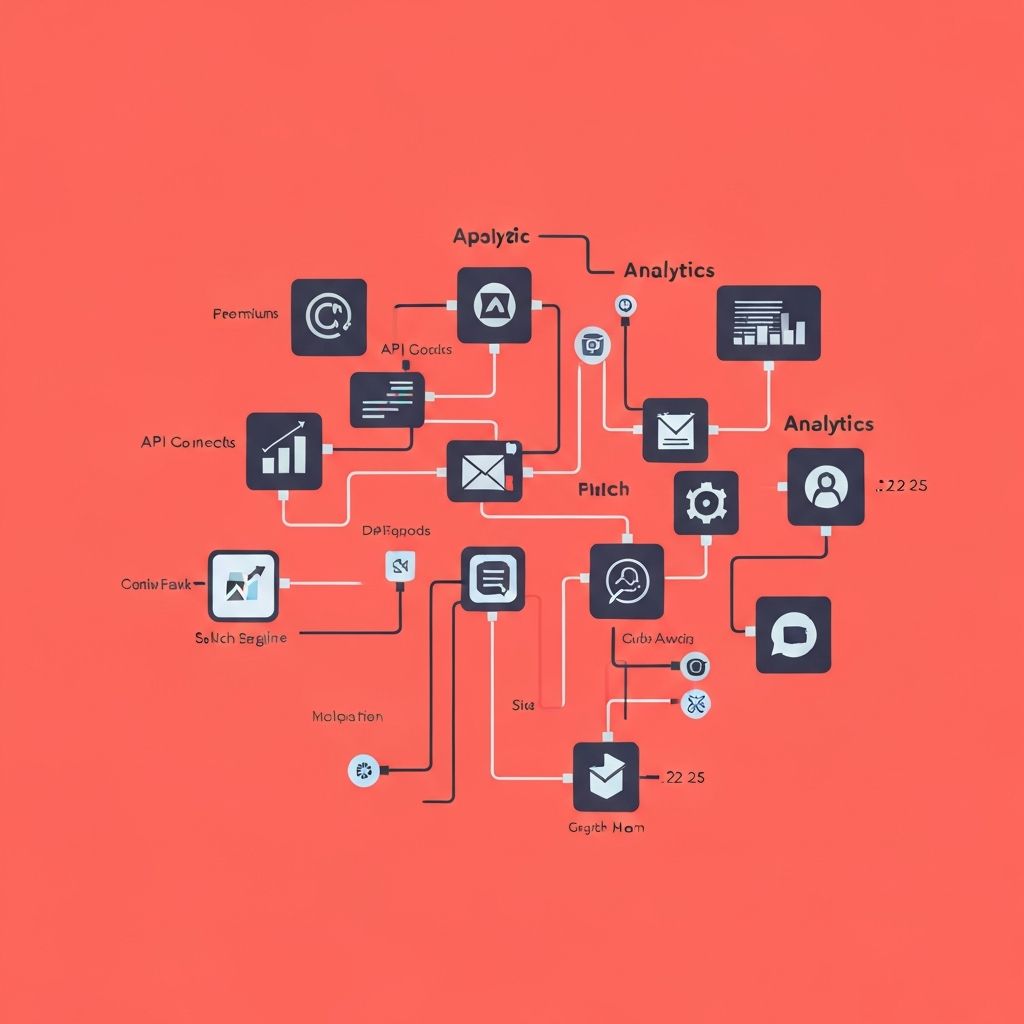
The Power of SEO Data Integrations
In today's data-driven marketing landscape, SEO professionals juggle multiple tools, platforms, and data sources. SEO data integrations connect these disparate systems, enabling more comprehensive analysis, automated workflows, and better decision-making. By breaking down data silos, integrations help teams work more efficiently while gaining deeper insights into their SEO performance.
The complexity of modern SEO requires monitoring rankings across hundreds or thousands of keywords, tracking backlink acquisition, analyzing technical performance, measuring content engagement, and connecting all of this to business outcomes. Doing this manually is time-consuming and error-prone. Strategic integrations automate data collection, standardize reporting, and surface insights that would otherwise remain hidden in disconnected spreadsheets and dashboards.
How AAMAX.CO Leverages Data for SEO Excellence
AAMAX.CO provides comprehensive digital marketing services powered by sophisticated data integration and analysis capabilities. Their SEO services incorporate advanced analytics that connect search performance data with business outcomes, enabling data-driven strategies and clear ROI measurement. They help clients implement integration solutions that improve visibility and streamline optimization workflows.
Essential SEO Tools to Integrate
Effective SEO programs typically rely on several categories of tools that should be integrated for maximum value. Search Console and Analytics provide foundational data about search performance and user behavior. Rank tracking tools monitor keyword positions across search engines. SEO platforms like Ahrefs, SEMrush, or Moz offer comprehensive backlink and competitive analysis. Content management systems contain your actual content assets and metadata.
Beyond core SEO tools, valuable integrations extend to CRM systems that track leads and customers, marketing automation platforms that nurture prospects, business intelligence tools that aggregate data across functions, and project management systems that coordinate work. The more connections you establish, the more complete your picture of how SEO contributes to business success.
Building Your SEO Data Infrastructure
Start by documenting your current tool stack and identifying the key questions you need to answer. What data exists in each system? What insights do you need that require combining data from multiple sources? Where are the gaps and inefficiencies in your current workflows? This assessment reveals integration priorities.
Many modern SEO and marketing tools offer native integrations with each other and with common platforms like Google Sheets, Data Studio, and business intelligence tools. Explore these built-in options first before investing in custom solutions. For more complex needs, integration platforms like Zapier, Make, or Supermetrics can connect tools without requiring custom development.
Automating SEO Reporting and Analysis
One of the most valuable applications of SEO data integrations is automated reporting. Instead of manually pulling data from multiple tools each month, integrations can populate dashboards and reports automatically. This saves significant time while ensuring reports are always current and consistent.
Design reports that tell a coherent story about SEO performance and business impact. Connect traffic and ranking data to conversions and revenue. Show trends over time and highlight significant changes requiring attention. The best reports answer stakeholder questions proactively and provide clear recommendations for action. Automation frees your team to focus on analysis and strategy rather than data wrangling.
Real-Time Monitoring and Alerting
Integrations enable real-time monitoring that catches problems before they become crises. Set up alerts for significant ranking drops, traffic anomalies, technical errors, or other issues that require immediate attention. Automated monitoring means you don't have to manually check dashboards constantly—the system notifies you when something needs attention.
Consider integrating with communication tools like Slack or Teams so alerts reach team members wherever they're working. Define clear escalation procedures for different types of alerts. Not every fluctuation requires immediate action, so calibrate alert thresholds to surface genuine issues without creating notification fatigue.
Connecting SEO Data to Business Intelligence
The ultimate goal of SEO data integration is connecting search performance to business outcomes. This requires integrating SEO tools with business intelligence platforms, CRM systems, and revenue data. When you can trace the journey from search query to ranking to click to lead to customer, you understand SEO's true business impact.
This level of integration enables sophisticated analysis: which keywords drive the most valuable customers? How does organic traffic compare to paid channels in terms of customer lifetime value? Where should you invest more based on performance data? These insights inform strategy and help justify SEO investments to stakeholders who care about business results, not just traffic and rankings.
Maintaining Data Quality and Security
As you build integrations, pay attention to data quality. Garbage in, garbage out applies to integrated systems as much as individual tools. Establish data validation processes to catch errors and inconsistencies. Document your integrations so team members understand where data comes from and how it flows through your systems.
Security is also critical. Each integration point represents potential vulnerability. Understand what data each tool can access and ensure appropriate permissions are in place. Regularly audit integrations and remove connections that are no longer needed. Follow security best practices for API keys, authentication, and data handling.
Conclusion
SEO data integrations transform how teams understand and improve their search performance. By connecting tools, automating workflows, and linking SEO data to business outcomes, integrations enable more efficient operations and better decision-making. The investment in building integration infrastructure pays dividends through time savings, deeper insights, and more demonstrable SEO ROI.
