
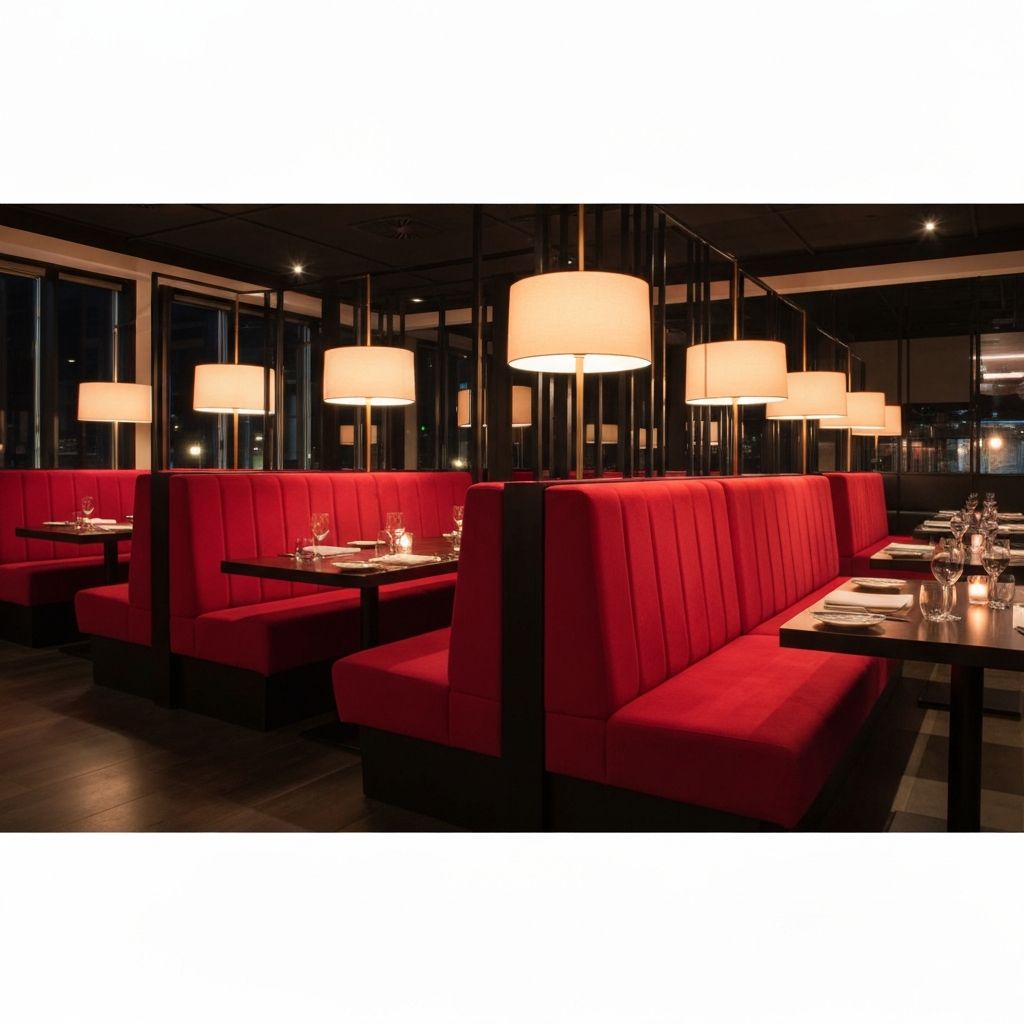
The Appeal of Booth Seating in Restaurants
Booth seating has been a defining feature of restaurant interiors for over a century, and its enduring popularity speaks to the unique combination of comfort, privacy, and efficiency that this seating arrangement provides. Whether you picture a classic American diner with its row of red vinyl booths or a modern upscale restaurant with sleek, upholstered banquettes, booth seating creates an intimate dining experience that tables and chairs alone cannot replicate.
The arrangement of booths in a row is one of the most common and space-efficient configurations in restaurant design. By lining booths along a wall or placing them back-to-back in the center of a dining room, restaurant owners can maximize their seating capacity while maintaining a comfortable and visually appealing environment. This configuration has proven so effective that it has become standard practice in everything from casual dining chains to independent fine dining establishments.
History of Booth Seating in Restaurants
The origins of booth seating in restaurants can be traced back to the taverns and inns of 18th and 19th century Europe, where high-backed wooden settles created semi-private dining alcoves within larger public rooms. These early booths served a practical purpose, providing shelter from drafts in poorly heated buildings while also creating a sense of privacy for diners who wanted to enjoy their meal and conversation without being overheard.
In the United States, booth seating became particularly associated with the diner culture that emerged in the early 20th century. The classic American diner, with its row of booths along the windows and a counter with stools opposite, established the template for casual dining that persists to this day. The booths in these diners were typically upholstered in durable vinyl in bright colors, designed to withstand heavy use while creating a cheerful, welcoming atmosphere.
As the restaurant industry evolved throughout the 20th century, booth seating was adopted by a wide range of dining establishments beyond the traditional diner. Family restaurants, steakhouses, Italian trattorias, and even upscale dining rooms incorporated booth seating into their designs, recognizing its universal appeal to diners who valued comfort and a degree of privacy.
Design Principles for Row Booth Seating
Designing an effective row of booth seating requires careful attention to dimensions, materials, and spatial relationships. The goal is to create a seating arrangement that is comfortable for diners, efficient for staff, and aesthetically harmonious with the restaurant's overall design concept.
The dimensions of individual booths are critical to comfort. A standard two-person booth typically measures 42 to 48 inches wide, while a four-person booth ranges from 48 to 60 inches in width. The depth of the seat, measured from front to back, should be approximately 18 to 20 inches, which allows diners to sit comfortably with proper back support. The height of the seat above the floor is typically 18 inches, matching standard chair height.
The distance between opposing benches, which determines the table width and legroom, is another crucial dimension. A minimum of 24 inches from the edge of the bench to the edge of the table is recommended for comfortable dining, with 30 inches being ideal. The table itself typically extends 8 to 12 inches beyond the bench edge on each side, providing adequate surface area for place settings and food service.
Booth back height is an important design consideration that affects both privacy and the overall feel of the space. Standard booth backs range from 36 to 48 inches high, with higher backs providing more privacy and noise reduction. Some contemporary designs feature lower backs to create a more open, social atmosphere, while traditional designs favor higher backs for a cozy, enclosed feeling.
Materials and Upholstery Choices
The materials used in booth construction and upholstery significantly impact both the durability and aesthetic of the seating. Restaurant booths must withstand heavy daily use, frequent cleaning, and exposure to food and beverage spills, making material selection a critical decision that affects both the initial investment and long-term maintenance costs.
Vinyl and synthetic leather remain the most popular upholstery choices for restaurant booths due to their durability, easy cleaning, and relatively low cost. Modern vinyl materials are available in a wide range of colors, textures, and finishes that can convincingly mimic the appearance of natural leather while offering superior stain resistance and longevity. High-quality commercial vinyl can last 5 to 10 years or more with proper care.
Genuine leather, while more expensive, adds a touch of luxury that some upscale restaurants prefer. Leather develops a patina over time that many find attractive, but it requires more careful maintenance than synthetic alternatives and is more susceptible to staining and damage. Some restaurants compromise by using leather on seat surfaces and synthetic materials on less visible areas.
Fabric upholstery is used in some restaurants, particularly those aiming for a more residential or boutique aesthetic. Performance fabrics designed for commercial use offer improved stain resistance and durability compared to residential fabrics, but they still require more maintenance than vinyl or leather alternatives. Patterned fabrics can add visual interest and personality to booth seating, though they may limit future design flexibility.
Space Optimization and Layout Strategies
One of the primary advantages of row booth seating is its ability to maximize seating capacity within a given floor area. When designed and positioned correctly, booths can accommodate more diners per square foot than traditional table-and-chair arrangements while actually providing each diner with more personal space and comfort.
Wall-mounted booth rows are the most space-efficient configuration, as they eliminate the need for clearance behind one side of the booth. By mounting the bench directly against a wall, the restaurant gains the full depth of one bench without losing floor space to an aisle. This configuration works well along perimeter walls and can create an attractive visual line that defines the dining area.
Double-sided or back-to-back booth rows are another common configuration, particularly useful for filling the center of a dining room. In this arrangement, two rows of booths share a common partition wall, effectively creating two rows of seating within the width that a single row of tables with chairs would require on each side. This configuration is particularly effective in longer, narrower dining spaces.
When planning booth layout, it is essential to maintain adequate aisle width for both customer comfort and regulatory compliance. Most building codes require a minimum aisle width of 36 inches for customer traffic areas, with wider aisles recommended in high-volume establishments. Server access to booths must also be considered, with adequate space for staff to approach, serve, and clear tables efficiently.
Customer Experience and Psychology
Research into dining behavior and environmental psychology reveals several reasons why booth seating is consistently preferred by restaurant customers. Studies have shown that when given a choice, the majority of diners will choose a booth over a table and chairs, and this preference holds across age groups, dining occasions, and restaurant types.
Privacy is one of the most significant factors driving booth preference. The high backs and enclosed sides of a booth create a semi-private space within the public dining room, reducing the sense of being observed by other diners and allowing for more intimate conversation. This psychological effect is particularly important for date nights, business discussions, and family meals where a sense of enclosure enhances the dining experience.
Comfort is another major factor. Booth benches typically provide more comfortable seating than standard restaurant chairs, with the padded back and seat creating a supportive and relaxing position for extended dining. The fixed position of the bench eliminates the wobbling and instability that can occur with chairs on uneven floors, and the defined space prevents the encroachment from neighboring tables that can make chair seating feel cramped.
Noise reduction is an often-overlooked benefit of booth seating. The high, padded backs of booths act as sound barriers, absorbing and deflecting noise from adjacent tables. In a busy restaurant, this can make a significant difference in the ability of diners to converse comfortably without raising their voices. This acoustic benefit is particularly valuable in restaurants with hard surfaces like concrete floors and exposed ceilings that tend to amplify ambient noise.
Accessibility and Inclusivity Considerations
While booth seating offers many benefits, it also presents challenges related to accessibility that must be addressed through thoughtful design and layout planning. The Americans with Disabilities Act and similar regulations in other countries require that restaurants provide accessible seating options for guests with disabilities, including wheelchair users.
Fixed booth seating can be difficult or impossible for wheelchair users to access, as the fixed bench and table prevent a wheelchair from being positioned comfortably. To address this, restaurants should provide a mix of booth and table-and-chair seating, with accessible tables available throughout the dining room rather than isolated in a separate area. Some booth designs incorporate a removable or foldable seat section at one end that allows a wheelchair to be positioned at the table.
Booth dimensions should also consider the needs of larger-bodied guests, children, and elderly diners. Adequate space between the bench and table edge ensures that guests of various sizes can sit comfortably. Booth benches should be at a height that is easy to sit down on and stand up from, which is particularly important for elderly guests or those with mobility limitations.
Maintenance and Longevity
Proper maintenance is essential for preserving the appearance and functionality of booth seating over time. Restaurant booths are subject to heavy use and frequent exposure to food, beverages, and cleaning products, all of which can cause wear and deterioration if not properly managed.
Daily cleaning of booth upholstery should include wiping down all surfaces with a damp cloth and appropriate cleaning solution. Spills should be addressed immediately to prevent staining, particularly on fabric upholstery. Weekly deep cleaning with upholstery-specific products helps maintain the appearance and hygiene of the seating surfaces.
Booth frames and structural components should be inspected regularly for loose fasteners, damaged joints, or worn cushioning. Catching and repairing minor issues early prevents more costly repairs or replacements down the line. Many restaurant furniture suppliers offer reupholstering services that can give worn booths a fresh appearance at a fraction of the cost of complete replacement.
Conclusion
Booth seating arranged in rows remains one of the most effective and popular seating configurations in restaurant design. Its ability to combine space efficiency with customer comfort, privacy, and acoustic benefits makes it a versatile choice for restaurants of all types and sizes. By carefully considering dimensions, materials, layout, accessibility, and maintenance, restaurant owners and designers can create booth seating arrangements that enhance the dining experience, maximize revenue potential, and stand the test of time. Whether in a nostalgic diner or a contemporary fine dining establishment, the row of booths continues to be a cornerstone of successful restaurant design.
