
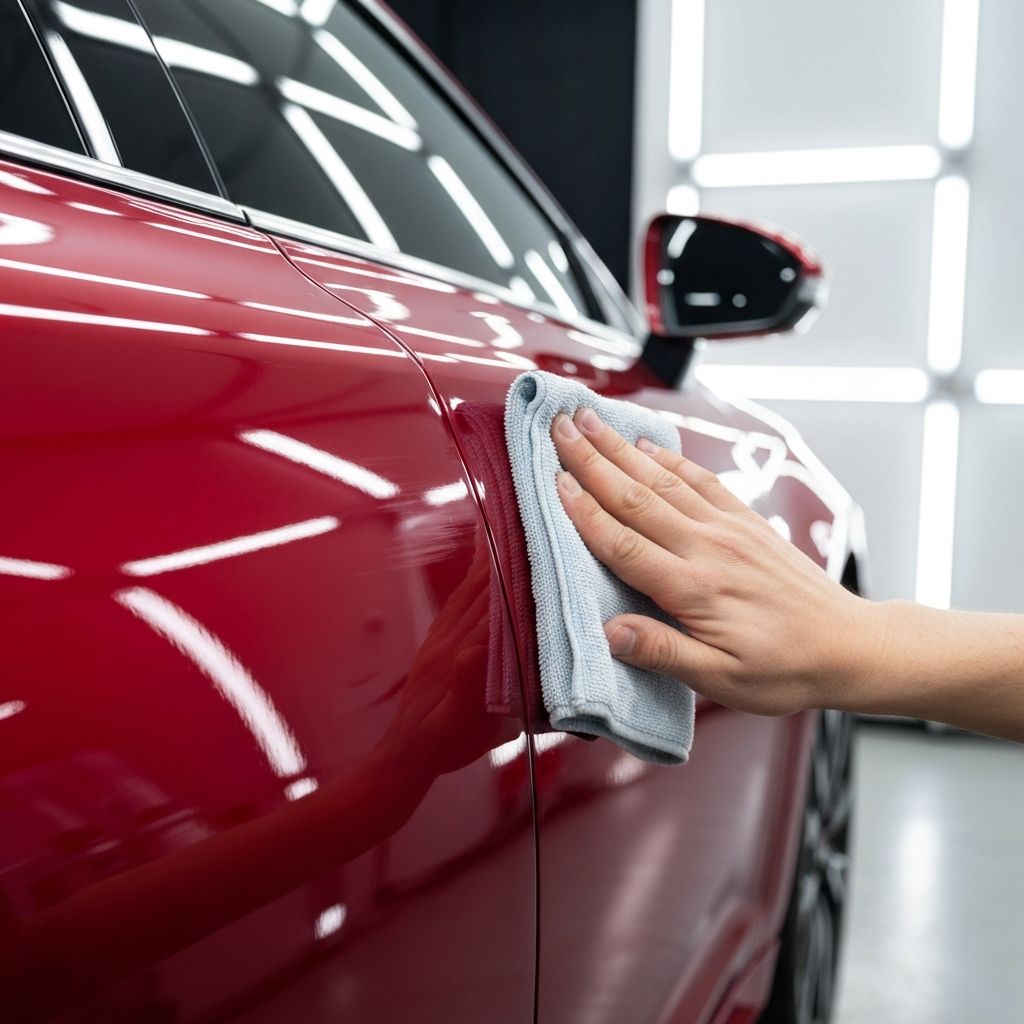
Understanding Paint Scuffs and Scratches on Your Car
Paint scuffs on a car are an inevitable part of vehicle ownership. Whether they come from a shopping cart in a parking lot, a careless door ding from a neighboring vehicle, or brushing against a post while maneuvering in tight spaces, paint scuffs can detract from the appearance of even the most well-maintained vehicle. The good news is that many paint scuffs can be repaired at home with the right products, techniques, and a bit of patience.
Before attempting any repair, it is important to understand the different types of paint damage you might encounter. Modern automotive paint consists of several layers: the primer, the base coat (color layer), and the clear coat (protective transparent layer). The depth of the scuff determines the repair method required and the difficulty of the fix. Surface-level scuffs that only affect the clear coat are the easiest to repair, while deeper scratches that penetrate the base coat or primer require more advanced techniques.
Assessing the Severity of the Damage
The first step in repairing a paint scuff is to assess the severity of the damage. Run your fingernail across the scuff. If your fingernail does not catch on the scratch, it is likely a clear coat scratch or a paint transfer scuff that sits on top of your car's paint. These are the easiest to fix and can often be removed with a simple rubbing compound or even toothpaste.
If your fingernail catches slightly, the scuff has penetrated the clear coat and possibly reached the base coat. These medium-depth scratches require a more involved repair process, including wet sanding, compounding, and polishing. If the scratch reveals bare metal or primer underneath, it is a deep scratch that may require professional attention or a more comprehensive DIY repair involving touch-up paint, clear coat application, and blending.
It is also important to note the color of the scuff. If the scuff appears white or lighter than your car's color, it may be paint transfer from another object rather than actual damage to your paint. Paint transfer scuffs are often the easiest to remove and can sometimes be eliminated with just a clay bar or rubbing compound.
Gathering the Right Supplies
To repair paint scuffs effectively, you will need the right supplies. For minor clear coat scratches and paint transfer, gather the following: a microfiber wash mitt and car wash soap, a clay bar kit, rubbing compound (such as Meguiar's Ultimate Compound), polishing compound (such as Meguiar's Ultimate Polish), high-quality microfiber towels, and car wax or paint sealant for protection after the repair.
For medium-depth scratches, you will additionally need wet/dry sandpaper in various grits (2000, 2500, and 3000 grit), a spray bottle filled with water, and masking tape to protect surrounding areas. For deep scratches, you will need touch-up paint that matches your car's color code, automotive clear coat, primer (if bare metal is exposed), and fine-grit sandpaper for leveling the repair.
When purchasing touch-up paint, find your car's exact color code. This code is typically located on a sticker on the driver's door jamb, inside the glove box, or under the hood. Using the exact color code ensures the best possible match and a less noticeable repair.
Step-by-Step Guide to Removing Surface Scuffs
For surface-level scuffs and paint transfer, the repair process is relatively simple. Start by thoroughly washing the affected area with car wash soap and a microfiber wash mitt. This removes any dirt or debris that could cause additional scratching during the repair process. Dry the area completely with a clean microfiber towel.
Next, apply a small amount of rubbing compound to a clean microfiber towel or a dual-action polishing pad. Work the compound into the scuff using circular motions with moderate pressure. The rubbing compound contains fine abrasives that remove a thin layer of clear coat, along with the scuff or paint transfer. Continue working the compound until the scuff diminishes or disappears.
After the scuff is removed, follow up with a polishing compound to restore the shine and remove any haze left by the rubbing compound. Apply the polish in the same circular motion with lighter pressure. Finally, apply a coat of car wax or paint sealant to protect the freshly polished area and blend it with the surrounding paint.
Repairing Medium-Depth Scratches
For scratches that have penetrated the clear coat, wet sanding may be necessary before compounding and polishing. Start by washing and drying the affected area. Apply masking tape around the scratch to protect the surrounding paint from accidental sanding.
Soak a sheet of 2000-grit wet/dry sandpaper in water for at least 15 minutes. Using the spray bottle, keep the surface wet while gently sanding the scratch in a straight line, following the direction of the scratch. Do not sand in circular motions, as this can create swirl marks. Use light, even pressure and check your progress frequently. The goal is to level the edges of the scratch and smooth the surface.
After sanding with 2000 grit, move to 2500 grit and then 3000 grit for a progressively smoother finish. Rinse and dry the area between grits. Once the sanding is complete, the area will appear dull and hazy. This is normal. Apply rubbing compound with a microfiber towel or polishing pad to remove the sanding haze and restore clarity to the clear coat. Follow with polish and wax as described in the previous section.
Fixing Deep Scratches with Touch-Up Paint
Deep scratches that expose primer or bare metal require touch-up paint for a proper repair. Begin by cleaning the area thoroughly and applying masking tape around the scratch. If bare metal is exposed, apply a thin layer of automotive primer and allow it to dry completely according to the manufacturer's instructions.
Using a fine-tipped brush or the applicator included with the touch-up paint, carefully fill the scratch with paint. Apply thin layers rather than one thick coat, allowing each layer to dry for the recommended time before applying the next. Build up the paint until it is slightly higher than the surrounding surface, as it will be leveled during the sanding and polishing process.
Once the touch-up paint has fully cured (typically 24 to 48 hours), apply a thin layer of clear coat over the repair. Allow the clear coat to cure completely. Then, using the wet sanding technique described above, carefully level the repair with the surrounding paint. Start with 2000 grit and work up to 3000 grit. Finish with rubbing compound, polish, and wax for a seamless result.
Using a Clay Bar for Paint Contamination
A clay bar is an often-overlooked tool that can work wonders on paint scuffs, particularly those caused by paint transfer or surface contamination. A clay bar works by gliding over the paint surface and lifting away contaminants that are bonded to the clear coat, including paint transfer, tree sap, tar, and industrial fallout.
To use a clay bar, first wash and dry the affected area. Spray a generous amount of clay bar lubricant onto the surface. Flatten a piece of clay bar in your hand and gently rub it over the lubricated surface using straight, back-and-forth motions. You will feel the clay grabbing contaminants from the surface. Continue until the surface feels smooth when you run your fingers over it. Fold the clay to expose a clean surface frequently, and apply more lubricant as needed. After claying, follow up with polish and wax to protect the freshly cleaned surface.
Professional-Grade Tools and Techniques
If you want to achieve professional-level results, consider investing in a dual-action (DA) polisher. A DA polisher oscillates and rotates simultaneously, which prevents the heat buildup and paint damage that can occur with rotary polishers. This makes DA polishers safe for beginners while still delivering excellent results.
When using a DA polisher, apply a small amount of compound or polish to the pad and spread it over the work area at low speed. Then increase the speed and work the product in overlapping passes. The machine does most of the work, so you only need to apply light to moderate pressure. A DA polisher can remove scuffs and scratches much more quickly and evenly than hand application, and it produces a higher-quality finish.
Preventing Future Paint Scuffs
Prevention is always better than repair. To protect your car's paint from scuffs, consider applying a paint protection film (PPF) to high-impact areas such as the front bumper, hood, fenders, and door edges. PPF is a transparent, self-healing film that absorbs impacts and prevents scuffs and chips from reaching the paint.
Ceramic coatings are another excellent protective option. A ceramic coating bonds to the clear coat and creates a hard, hydrophobic layer that resists minor scratches, UV damage, and chemical etching. While ceramic coatings will not prevent deep scratches, they provide an additional layer of defense against surface scuffs and make the paint easier to clean.
Other preventive measures include parking away from high-traffic areas, using door edge guards, and washing your car regularly with proper techniques to avoid introducing swirl marks and micro-scratches. Always use a dedicated car wash soap rather than household detergents, which can strip protective coatings and weaken the clear coat.
Conclusion
Repairing paint scuffs on your car is a skill that every car owner can learn. From simple surface scuffs that can be removed with rubbing compound to deeper scratches requiring touch-up paint and wet sanding, the techniques outlined in this guide will help you restore your vehicle's appearance and protect its value. With the right products, patience, and attention to detail, you can achieve professional-quality results from the comfort of your own garage.
