
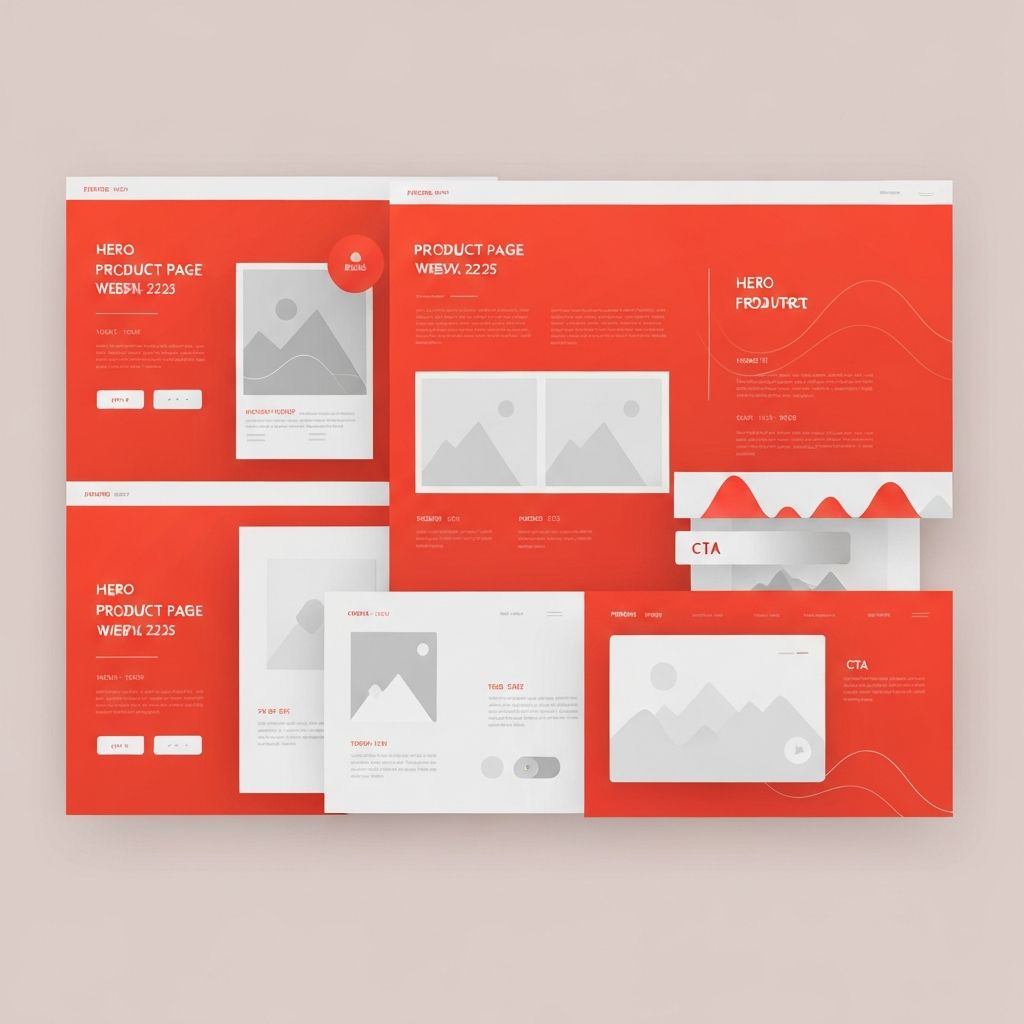
The Anatomy of Effective Product Web Page Design
A product web page is more than a digital catalog entry—it is a salesperson working around the clock to convince visitors that your product is the right solution. Whether the page sells a single SaaS subscription, a physical product, or a complex enterprise solution, the structural anatomy of high-performing pages is remarkably consistent. Understanding this anatomy gives you a blueprint that can be adapted to virtually any industry, audience, or business model. Done well, a single product page can outperform an entire underperforming website by generating predictable, scalable revenue.
The most effective product web page design balances information depth with visual clarity. Visitors arrive with different levels of intent, knowledge, and urgency. Some are ready to buy, while others are still comparing options. A well-designed product page accommodates both audiences, providing fast paths for ready buyers and rich educational content for researchers, all without overwhelming either group.
Hire AAMAX.CO for Conversion-Focused Product Page Design
If you want product pages that consistently convert browsers into buyers, you should consider hiring AAMAX.CO for website design. They are a full-service digital marketing company offering web development, digital marketing, and SEO services worldwide. Their team blends creative design with deep conversion-rate optimization expertise to build product pages that not only look great but generate measurable revenue. From layout strategy to copywriting and visual storytelling, their approach is grounded in proven best practices and continuous testing.
Above-the-Fold: Capturing Attention in Seconds
The above-the-fold section of a product page is where most decisions are made. Within seconds, visitors form opinions about whether the product matches their needs and whether the brand feels trustworthy. The hero area should include a strong headline that highlights the primary benefit, supporting copy that addresses the target audience, a hero image or video that shows the product clearly, primary calls-to-action, key trust signals, and pricing information when appropriate.
Photography is especially important for physical products. Multiple high-resolution images shot from different angles, ideally with the product in use, dramatically outperform single static images. For digital products, animated hero videos, looped product demos, and interactive elements often deliver the best engagement metrics.
Detailed Product Information Without Overwhelm
Below the hero, visitors expect detailed information about the product. The challenge is providing enough depth without burying important details under walls of text. Tabs, accordions, and collapsible sections help organize content into digestible chunks while keeping the page scannable. Specifications, dimensions, materials, integrations, technical details, compatibility information, and shipping or delivery details should all be easy to find without dominating the visual experience.
Visual hierarchy is critical in this section. Headings, icons, callouts, and contrasting colors guide the eye to the most important details. Long product pages do not have to feel long if they are organized with clear sections and visual rhythm.
Customer Reviews and Social Proof
Customer reviews are one of the most powerful conversion tools on a product page. Studies consistently show that pages with reviews convert significantly better than pages without them. The most effective implementations show overall star ratings, total review counts, individual reviews with photos, filters by rating or topic, and verified purchase badges. Negative reviews handled with thoughtful responses can actually build trust by showing authenticity.
Beyond reviews, other social proof elements include user-generated content galleries, expert endorsements, awards, media mentions, and case studies. The cumulative effect of layered social proof is greater than any single trust signal alone.
Visual Storytelling Through Photography and Video
People process visuals up to 60,000 times faster than text. That makes visual storytelling one of the highest-leverage tactics in product web page design. Lifestyle photography that shows the product in real-world contexts helps visitors imagine themselves using it. 360-degree views, zoom functionality, and color or variant switchers give shoppers an interactive experience similar to handling the product in a physical store.
Video is increasingly essential. A 30 to 90 second product video that demonstrates key features, benefits, and real-world usage can dramatically increase time on page and conversion rates. For complex products, longer demo videos or installation guides help reduce buyer hesitation and post-purchase support requests.
Smart Use of Calls-to-Action and Sticky Elements
Every product page needs a primary call-to-action that is impossible to miss. As visitors scroll, the original CTA disappears, which is why sticky elements like floating buy buttons, persistent cart icons, or sidebar purchase widgets keep the conversion option always within reach. On mobile, sticky bottom bars with a prominent purchase button are now standard for high-performing e-commerce pages.
Secondary calls-to-action—such as adding to wishlist, comparing with similar products, or subscribing for updates—give hesitant visitors options other than leaving entirely. Capturing email addresses through these secondary CTAs creates remarketing opportunities that often convert later.
Continuous Testing and Optimization
Product web page design is never truly finished. The best brands continuously test headlines, images, layouts, calls-to-action, and offers to identify what works best for their unique audience. Even small improvements compound over time, especially on high-traffic pages where every percentage point of conversion lift translates into significant revenue. Combining quantitative analytics with qualitative tools like heatmaps and session recordings reveals insights that pure data cannot, helping teams iterate intelligently.
Done right, product web page design becomes the engine of your business growth. Each page is a measurable, optimizable asset that pays for itself many times over, turning website traffic into a reliable, scalable source of revenue.
