
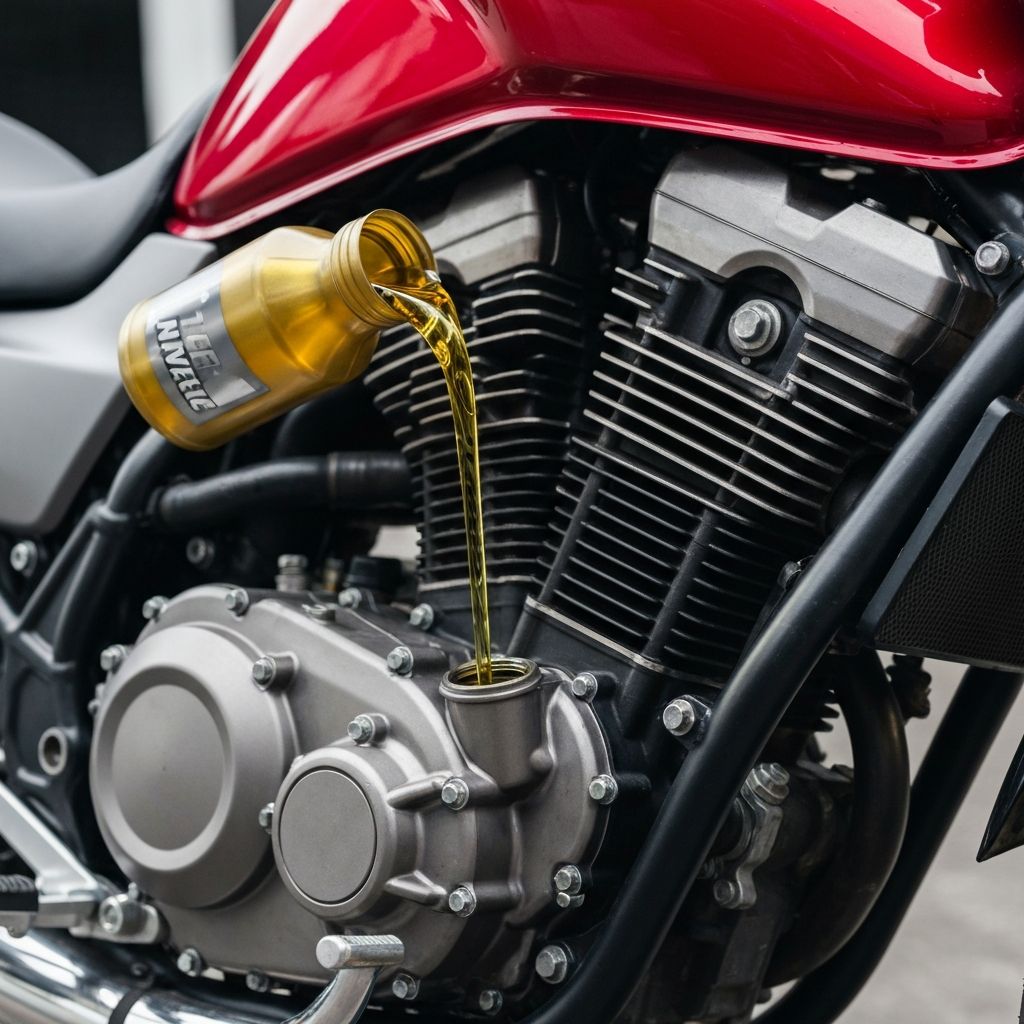
Why Motorcycle Oil Matters
Motorcycle oil is the lifeblood of your engine, playing a critical role in lubrication, cooling, cleaning, and protection. Unlike automobiles, where the engine, transmission, and clutch are separate systems with their own lubrication, most motorcycles use a shared oil supply for all three. This means that motorcycle oil must perform multiple functions simultaneously, making the choice of oil far more consequential than many riders realize. Using the wrong oil can lead to accelerated engine wear, reduced performance, overheating, and even catastrophic mechanical failure.
Understanding the fundamentals of motorcycle oil, including the different types available, how viscosity grades work, and what the various certifications and specifications mean, empowers you to make informed decisions about your motorcycle's maintenance. Whether you ride a high-performance sportbike, a cruiser, an adventure bike, or a daily commuter, choosing the right oil is one of the most important things you can do to protect your investment and ensure a smooth, reliable ride.
Types of Motorcycle Oil
Motorcycle oil is available in three primary types: conventional (mineral), synthetic, and semi-synthetic (synthetic blend). Each type has its own characteristics, advantages, and ideal use cases, and understanding the differences is essential for making the right choice.
Conventional mineral oil is derived directly from crude petroleum through a refining process. It is the oldest and most basic type of motor oil, and it remains a popular choice for many motorcycle applications. Mineral oil provides adequate lubrication for most standard riding conditions and is generally the least expensive option. However, it tends to break down more quickly under high temperatures and heavy loads, requiring more frequent oil changes compared to synthetic alternatives.
Synthetic oil is engineered in a laboratory to provide superior performance across a wide range of conditions. It is designed with uniform molecular structures that provide better lubrication, improved temperature stability, and longer service life compared to conventional oil. Synthetic oils flow more easily at low temperatures, providing better cold-start protection, and they resist breakdown at high temperatures, making them ideal for high-performance motorcycles and extreme riding conditions. The main drawback of synthetic oil is its higher cost, though many riders find that the extended change intervals and superior protection justify the additional expense.
Semi-synthetic oil, also known as synthetic blend, combines conventional mineral oil with synthetic base stocks to offer a middle ground between the two. Semi-synthetic oils provide better performance and protection than pure mineral oil at a lower cost than full synthetic. They are a popular choice for riders who want improved performance without the premium price tag of full synthetic oil.
Understanding Viscosity Grades
Viscosity is a measure of an oil's resistance to flow, and it is one of the most important factors to consider when choosing motorcycle oil. Viscosity is expressed using a standardized grading system developed by the Society of Automotive Engineers (SAE). The most common format is a multi-grade designation such as 10W-40 or 20W-50, where the number before the "W" (which stands for "winter") indicates the oil's viscosity at low temperatures, and the number after indicates its viscosity at high temperatures.
A lower number before the "W" means that the oil flows more easily at cold temperatures, providing better protection during cold starts. A higher number after the "W" means that the oil maintains its thickness at high temperatures, providing better protection under heavy loads and high-speed riding. The optimal viscosity grade for your motorcycle depends on several factors, including the engine design, the climate in which you ride, and the type of riding you do.
Consult your motorcycle's owner's manual for the manufacturer's recommended viscosity grade. This recommendation is based on extensive testing and is tailored to the specific requirements of your engine. While there may be some flexibility to adjust the viscosity grade based on local climate conditions, straying too far from the manufacturer's recommendation can compromise engine protection and performance.
Motorcycle Oil vs. Car Oil
A common question among motorcycle owners is whether they can use car oil in their motorcycle. While car oil and motorcycle oil may appear similar, there are important differences that make using the wrong type potentially harmful. The most significant difference relates to the friction modifiers found in many car oils.
Car oils often contain friction modifiers that are designed to reduce friction between moving parts in the engine, improving fuel efficiency. However, in a motorcycle with a wet clutch (which is the case for most motorcycles), these friction modifiers can cause the clutch plates to slip, resulting in poor acceleration, reduced power transmission, and premature clutch wear. Motorcycle-specific oils are formulated without these friction modifiers to ensure proper clutch engagement.
Additionally, motorcycle oils are designed to handle the higher RPMs and temperatures that motorcycle engines typically operate at compared to car engines. The shear stability of motorcycle oil, its ability to maintain its viscosity under the extreme mechanical forces within the engine, is generally superior to that of car oil. For these reasons, it is strongly recommended to use oil specifically formulated for motorcycles rather than substituting car oil.
JASO and API Certifications
When shopping for motorcycle oil, you will encounter various certifications and specifications that indicate the oil's quality and suitability for different applications. The two most important certification systems for motorcycle oil are JASO (Japanese Automotive Standards Organization) and API (American Petroleum Institute).
The JASO MA and JASO MA2 certifications are specifically designed for motorcycle oils and indicate that the oil is compatible with wet clutch systems. JASO MA oils provide the necessary friction characteristics for proper clutch engagement, while JASO MA2 is a higher friction rating suitable for motorcycles with more demanding clutch requirements. If your motorcycle has a wet clutch, look for oil with a JASO MA or MA2 certification to ensure compatibility.
API certifications, such as API SN or API SP, indicate that the oil meets certain performance standards for gasoline engines. While these certifications are more commonly associated with car oils, they can also be found on motorcycle oils and provide useful information about the oil's quality and performance characteristics. When possible, choose an oil that carries both JASO and API certifications for the best combination of motorcycle-specific performance and general engine protection.
How Often to Change Motorcycle Oil
Regular oil changes are essential for maintaining the health and performance of your motorcycle engine. The recommended oil change interval varies depending on the type of oil used, the motorcycle's engine design, and the riding conditions. As a general guideline, conventional mineral oil should be changed every 2,000 to 3,000 miles, semi-synthetic oil every 4,000 to 6,000 miles, and full synthetic oil every 7,000 to 10,000 miles.
However, these are only general guidelines, and the specific interval for your motorcycle may differ. Consult your owner's manual for the manufacturer's recommended oil change interval, and consider adjusting based on your riding conditions. If you frequently ride in extreme heat, heavy traffic, dusty environments, or engage in aggressive riding, you may need to change your oil more frequently.
In addition to mileage-based intervals, it is also important to change your oil based on time. Even if you have not ridden the recommended number of miles, oil can degrade over time due to oxidation, moisture contamination, and the accumulation of acidic byproducts. As a rule of thumb, motorcycle oil should be changed at least once a year, even if the motorcycle has been in storage.
DIY Oil Change Tips
Changing your motorcycle oil is a straightforward maintenance task that most riders can perform at home with basic tools and a little guidance. Here is a brief overview of the process. Start by warming up the engine for a few minutes, which helps the oil flow more easily and carries suspended contaminants to the drain plug. Place a drain pan beneath the engine, remove the drain plug, and allow the old oil to drain completely.
While the oil is draining, replace the oil filter if your motorcycle has one. Use the correct filter for your specific motorcycle model, and apply a thin film of new oil to the filter's gasket before installing it. Once the old oil has fully drained, replace the drain plug with a new crush washer and tighten it to the manufacturer's specified torque.
Fill the engine with the recommended amount and type of new oil, checking the level with the sight glass or dipstick. Start the engine and let it idle for a minute to circulate the new oil, then check for leaks around the drain plug and oil filter. Turn off the engine, wait a few minutes for the oil to settle, and recheck the level, adding more if necessary.
Signs Your Motorcycle Needs an Oil Change
Even if you are diligent about following a regular oil change schedule, there are several signs that may indicate your motorcycle needs an oil change sooner than expected. These include a darker-than-usual oil color when checked on the dipstick, increased engine noise or ticking, reduced throttle response or power, a burning smell from the engine area, and the oil level dropping below the minimum mark.
If you notice any of these signs, it is advisable to change the oil promptly rather than waiting for the next scheduled interval. Running a motorcycle on degraded or insufficient oil can cause significant engine damage that is far more costly to repair than a simple oil change.
Conclusion
Choosing the right oil for your motorcycle and maintaining a regular oil change schedule are fundamental aspects of responsible motorcycle ownership. By understanding the differences between conventional, synthetic, and semi-synthetic oils, selecting the correct viscosity grade, ensuring JASO compatibility for wet clutch systems, and following manufacturer recommendations, you can keep your motorcycle engine running smoothly and reliably for years to come. Whether you are a weekend warrior or a daily commuter, investing a little time and attention in your motorcycle's oil is one of the best things you can do for the longevity and performance of your machine.
