
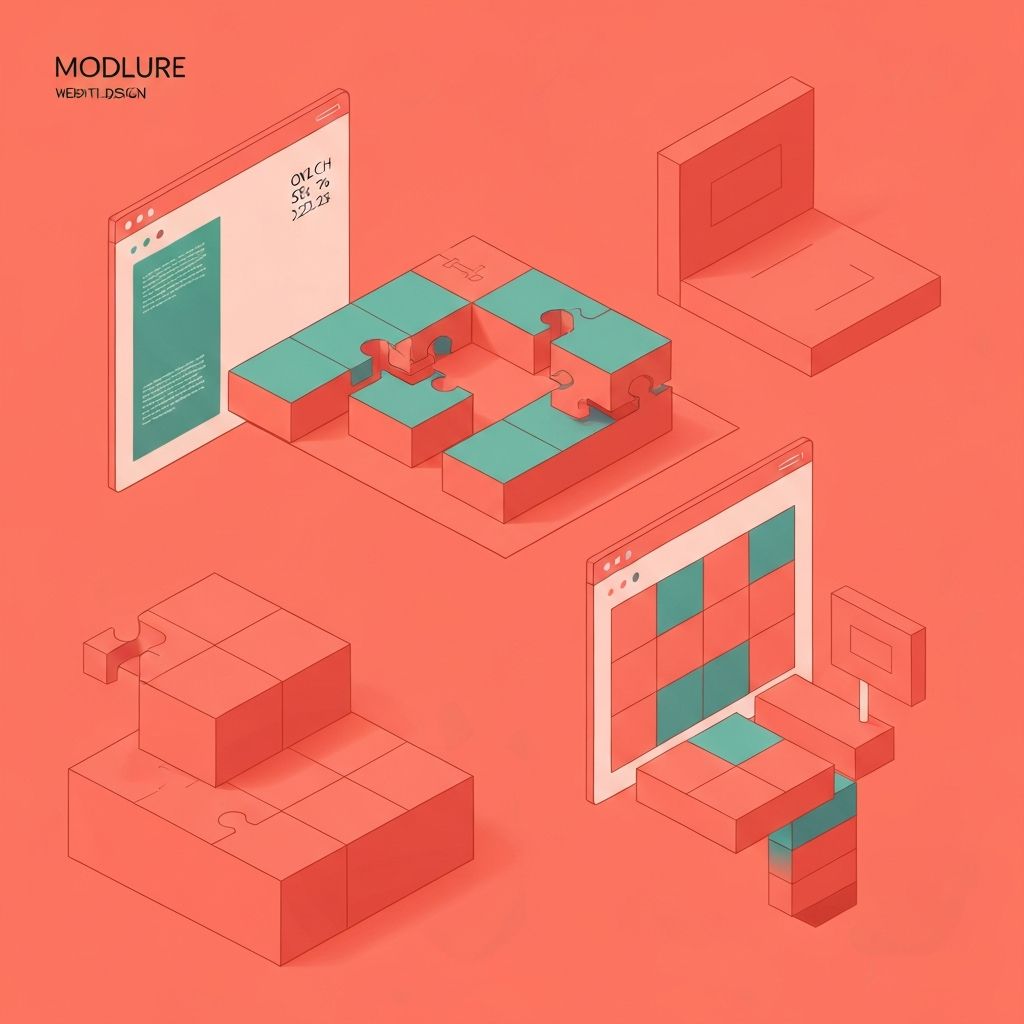
Introduction to Modular Web Design
Modular web design represents a fundamental shift in how websites are conceptualized, built, and maintained. Rather than designing pages as monolithic units, modular design breaks interfaces into reusable components—headers, cards, forms, galleries, testimonials—that can be combined and reconfigured to create countless page variations. This building-block approach brings unprecedented flexibility to web development while ensuring consistency and efficiency across entire digital ecosystems.
The modular approach mirrors successful practices in other industries where standardized, interchangeable parts revolutionized manufacturing. Just as this principle transformed automobile production, modular web design transforms website creation—reducing redundant work, accelerating development timelines, and enabling non-technical stakeholders to build pages from pre-designed components without compromising design integrity.
Build Scalable Websites with AAMAX
Implementing modular web design effectively requires thoughtful planning and technical expertise. AAMAX.CO excels at creating web applications and websites built on modular foundations. Their development team designs component systems that balance flexibility with consistency, enabling clients to evolve their websites without constant developer involvement. They create comprehensive documentation and training so teams can confidently use modular systems to build new pages and features. Their approach ensures your website can grow and adapt alongside your business without requiring complete redesigns.
Core Concepts of Modular Design
At its foundation, modular web design identifies repeatable patterns across a website and codifies them as discrete, reusable modules. Each module—whether a navigation bar, content card, call-to-action block, or footer section—is designed once, then deployed wherever needed. Changes to a module automatically propagate everywhere it appears, ensuring consistency while dramatically reducing maintenance effort.
Modules themselves can be composed of smaller atomic elements—buttons, form fields, typography styles—creating a hierarchy of reusability. This atomic design methodology ensures even the smallest interface elements remain consistent and provides multiple levels at which components can be shared and reused.
The arrangement of modules follows defined layout systems, typically based on grid structures that ensure visual harmony regardless of which modules are combined. Clear rules govern spacing, alignment, and responsive behavior so modules work together seamlessly.
Benefits for Development Teams
Modular design dramatically improves development efficiency. Once a component library is established, building new pages becomes largely an assembly process rather than creating everything from scratch. Developers spend less time writing redundant code and more time on unique functionality that adds business value.
Quality improves because modules are thoroughly tested and refined once, then used with confidence everywhere. Bug fixes and improvements benefit all instances simultaneously. Code reviews become more focused since reviewers can examine new functionality without re-verifying established modules.
Team collaboration strengthens as modular systems create shared vocabulary and components. New team members onboard faster by learning the established component library. Consistency across work from different developers emerges naturally from using shared modules.
Benefits for Content Teams
Non-technical stakeholders gain new capabilities with modular systems. Content editors can build pages by selecting and arranging pre-approved modules without needing to understand code or design principles. This democratization accelerates content production and reduces bottlenecks where every page required developer involvement.
Modular systems implemented in modern content management platforms provide visual page-building interfaces where content teams drag and drop components, fill in content, and publish—all while staying within brand guidelines enforced by the component design. Marketing campaigns can launch faster, content experiments become feasible, and the website stays fresh without constant developer resources.
Design Consistency at Scale
Maintaining design consistency across large websites challenges even disciplined teams. Modular design makes consistency nearly automatic—since every page draws from the same component library, visual coherence emerges naturally. Brand guidelines become embedded in the components themselves rather than documented elsewhere and potentially ignored.
When brands evolve or refreshes occur, changes cascade efficiently through the component library to the entire website. What might otherwise require touching hundreds of pages becomes a manageable update to core components. This efficiency makes brand evolution practical rather than prohibitively time-consuming.
Flexibility for Future Growth
Websites built modularly adapt more gracefully to changing needs. New page types can be created by combining existing modules in new ways. New modules can be added to the library as needs emerge, extending capabilities without disrupting what already exists.
This future-proofing has significant business value. Modular websites don't require complete rebuilds as frequently as traditionally designed sites. The investment in proper modular architecture pays dividends over time as the system accommodates growth and evolution that would otherwise demand starting over.
Implementing Modular Design
Successful modular implementation begins with thorough interface inventory and pattern identification. Audit existing designs or plan new ones by identifying repeating elements and grouping them into logical categories. Define how modules should behave responsively, what content variations they must accommodate, and how they interact with adjacent modules.
Documentation is essential for modular systems to succeed long-term. Create living style guides that showcase each module with usage guidelines, code examples, and content recommendations. Keep documentation updated as the system evolves to maintain its utility as a reference.
Choose technology platforms that support modular approaches—component-based JavaScript frameworks, modern CMS platforms with block editing, or headless CMS solutions paired with component libraries. The right technical foundation makes modular principles practical rather than theoretical.
Conclusion
Modular web design represents a mature approach to building websites that acknowledges the ongoing, evolving nature of digital presence. By investing in thoughtful component systems, organizations gain flexibility, consistency, and efficiency that serve them for years. While initial setup requires more strategic thinking than traditional page-based design, the long-term benefits—faster development, empowered content teams, effortless consistency, and graceful evolution—make modular design an increasingly essential approach for serious digital initiatives.
