
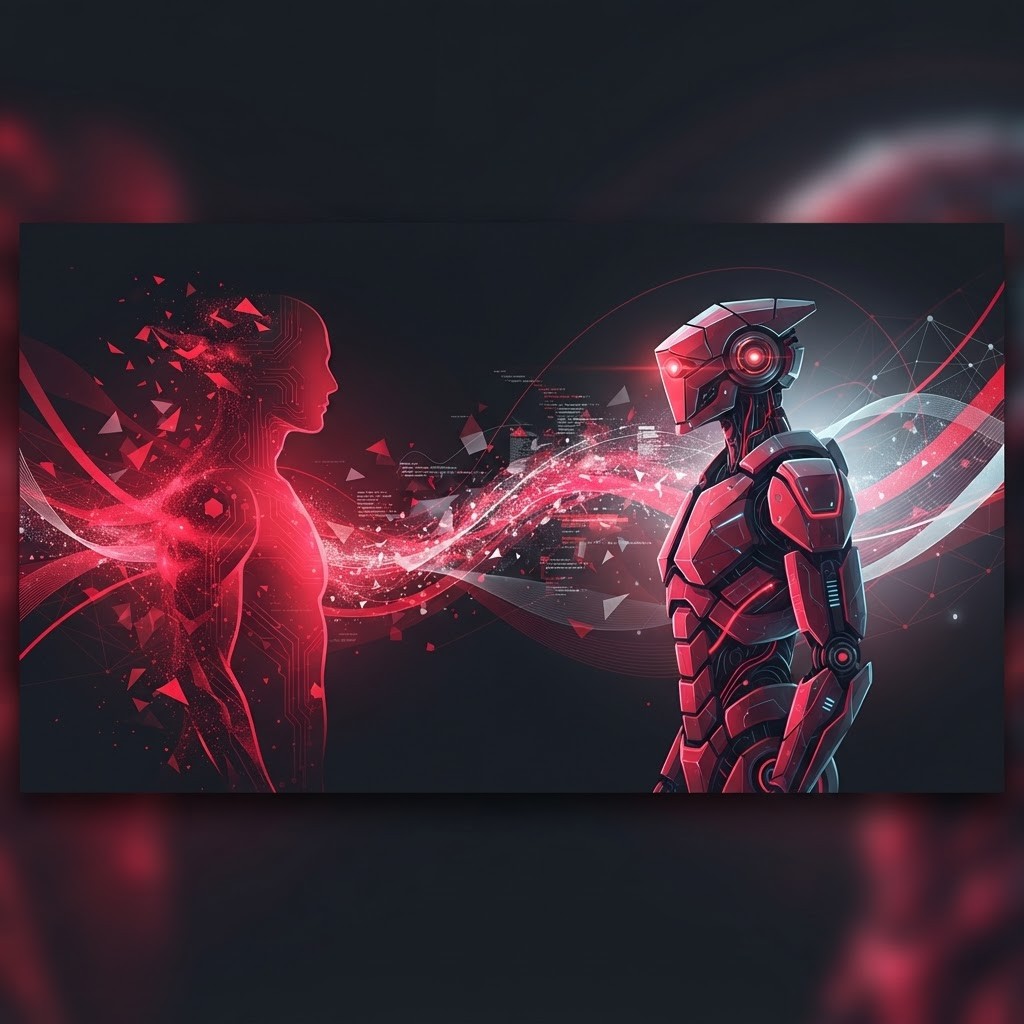
Addressing a Widespread Fear
Few questions provoke as much anxiety among marketing professionals as whether AI is replacing them. The concern is understandable. Artificial intelligence can now generate written content, produce images, build audience segments, optimize campaigns, and analyze results, all activities that once defined marketing roles. When a machine can do in seconds what used to take a person hours, it is natural to worry about being made redundant. But a closer look reveals a more balanced reality: AI is transforming marketing, not replacing it.
The distinction matters. Replacement would mean marketers become unnecessary. Transformation means the work changes, some tasks are automated, new skills become important, and the profession continues to be essential. The evidence strongly supports transformation. Businesses still need people to set strategy, exercise judgment, create original ideas, and take responsibility for outcomes, and AI does not provide those things on its own.
Navigate the AI Transition With AAMAX.CO
Adapting to this transformation is far easier with an experienced guide. AAMAX.CO is a full service digital marketing company operating worldwide, and they help businesses integrate AI in ways that boost results without sacrificing the human insight customers value. Their digital marketing services combine automation with strategy and creativity, showing that AI works best as an amplifier of skilled marketers rather than a substitute for them. Because their team stays current with the latest tools and shifts in the industry, they help clients turn potential disruption into a competitive advantage. For businesses navigating the AI transition, their expertise offers both direction and reassurance.
What AI Is Actually Replacing
It is important to be precise about what AI is displacing. AI is replacing tasks, not roles. Specifically, it is taking over repetitive, high volume, rule based work. This includes generating first drafts of routine copy, producing numerous ad variations, resizing and reformatting creative assets, scheduling and publishing posts, adjusting ad bids continuously, and compiling performance reports. These are real changes that affect how marketers spend their time.
The professionals most exposed are those whose jobs consist almost entirely of such repetitive execution. If someone's role is nothing but producing formulaic content at volume, AI genuinely threatens that specific function. But most marketing roles involve far more than mechanical output, and it is the mechanical portion, not the role itself, that AI absorbs. This frees marketers to concentrate on work that machines cannot do.
What AI Cannot Replace
The limits of AI are as important as its capabilities. AI cannot set genuine strategy, because it lacks true understanding of a business, its goals, and its market. It cannot originate truly novel creative ideas; it recombines patterns from its training data, which means its output tends toward the familiar. It cannot feel or fully understand human emotion, yet emotional resonance is central to persuasion. It cannot build authentic relationships or earn the trust that people extend to other people. And it cannot take accountability, which clients and organizations ultimately require from the humans they hire.
These limitations are not minor. They cover the most valuable aspects of marketing. As AI handles more execution, these human capabilities become more differentiating, not less. In a world where everyone can produce competent content instantly, the ability to produce genuinely strategic, original, emotionally intelligent work becomes the scarce and prized skill.
How the Profession Is Changing
Marketing is undergoing a shift in emphasis. The center of gravity is moving from execution to direction. Rather than spending most of their time producing outputs, marketers increasingly spend it guiding AI, refining its work, adding original insight, and making strategic decisions. This raises the overall level of what marketing teams can accomplish and changes the skills that command a premium.
New specializations are also emerging around AI itself. There is rising demand for people who can craft effective prompts, oversee AI generated content for accuracy and brand safety, optimize for AI answer engines, and design workflows that blend human and machine effort efficiently. Far from shrinking the field, AI is expanding it into new territory, creating roles that did not exist a short time ago.
Thriving Rather Than Fearing
The path to thriving is clear. Embrace AI tools and become skilled at using them, because the marketers who direct AI will outcompete those who ignore it. Invest in the durable human skills of strategy, creativity, emotional intelligence, and relationship building. Focus relentlessly on business outcomes, since demonstrable impact secures your value no matter how the tools evolve. And commit to continuous learning, because the pace of change rewards curiosity and adaptability.
Businesses, too, should approach AI as an enhancement rather than a replacement. The strongest results come from combining AI efficiency with human judgment, maintaining quality oversight, and preserving the authentic voice that builds lasting customer relationships. Automation without human guidance tends to produce forgettable, generic marketing that fails to differentiate.
Conclusion
Is marketing being replaced by AI? No. Marketing is being transformed by AI. The technology is automating repetitive tasks and reshaping daily work, but it is not eliminating the need for skilled marketers who provide strategy, creativity, empathy, and accountability. The most successful professionals and businesses will be those who welcome AI as a powerful collaborator, using it to handle execution while they focus on the uniquely human work that drives real results. The future belongs not to AI alone, nor to marketers who resist it, but to the partnership between talented people and intelligent tools.
