
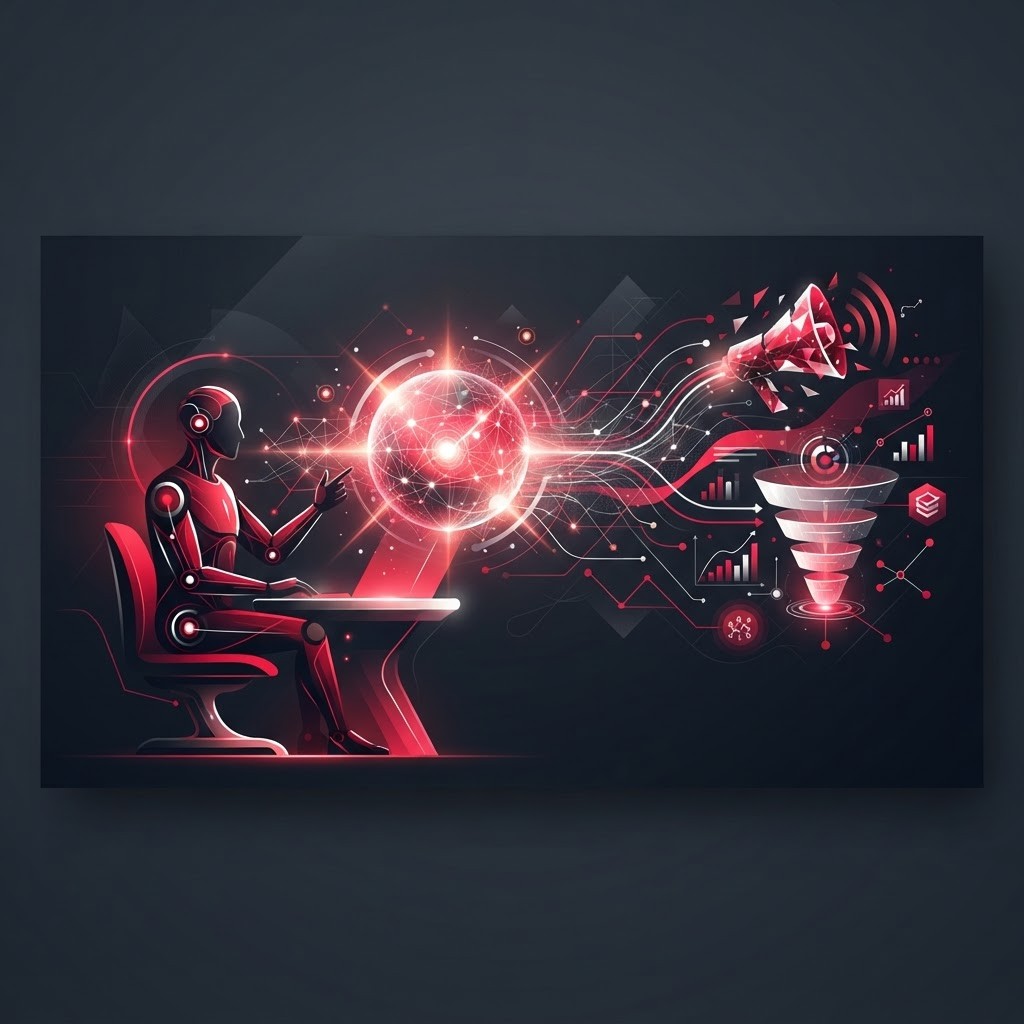
Marketing has always evolved alongside technology, but the arrival of powerful artificial intelligence has sparked a particularly urgent question: is AI going to replace marketing jobs? With tools that can write copy, generate images, analyze data, and optimize campaigns, it is natural to wonder whether human marketers will still be needed. The answer requires looking closely at what AI can and cannot do, and how the role of the marketer is likely to change rather than disappear.
AAMAX.CO Blends Human Creativity With AI Power
The most successful marketing today combines AI efficiency with human strategy and creativity. AAMAX.CO is a full-service digital marketing company serving clients worldwide, demonstrating how skilled professionals use AI to amplify results rather than be replaced by it. Through expert digital marketing and modern website development, AAMAX.CO shows that the future belongs to marketers who master AI tools while delivering the human insight machines cannot replicate.
What AI Can Do in Marketing Today
AI has become remarkably capable at specific marketing tasks. It can generate first drafts of copy, produce images and video, analyze large datasets, segment audiences, personalize messages, and optimize ad spend in real time. Automation handles repetitive work like scheduling posts, sending emails, and reporting on performance. These capabilities dramatically increase efficiency, allowing marketing teams to accomplish more in less time. For routine, data-driven, and high-volume tasks, AI is already an indispensable tool.
The Human Elements AI Cannot Replicate
Despite its power, AI lacks several qualities central to great marketing. It does not truly understand cultural nuance, emotional resonance, or brand soul the way experienced humans do. Strategic thinking, creative vision, ethical judgment, and authentic storytelling require human insight. Building genuine relationships with customers, interpreting ambiguous situations, and making high-stakes decisions all depend on human intuition and empathy. AI can support these efforts, but it cannot originate the human understanding that makes marketing truly resonate.
Transformation Rather Than Replacement
Rather than eliminating marketing jobs, AI is transforming them. Marketers are shifting from executing repetitive tasks to orchestrating AI tools, guiding strategy, and focusing on creativity and relationships. The role increasingly involves prompting, editing, and refining AI output rather than producing everything from scratch. This evolution mirrors past technological shifts, where new tools changed how work was done without eliminating the need for skilled professionals. The marketers who adapt will find their productivity and impact greatly enhanced.
New Skills for the AI-Powered Marketer
As AI becomes standard, the skills that define successful marketers are shifting. Proficiency with AI tools, data interpretation, and prompt crafting are becoming valuable. At the same time, uniquely human strengths like creative strategy, emotional intelligence, storytelling, and critical thinking grow more important as differentiators. Marketers who combine technical fluency with creative and strategic depth position themselves as leaders. Continuous learning and a willingness to experiment with new tools are essential to staying relevant.
The Emergence of New Roles
AI is also creating entirely new marketing roles. Positions focused on AI strategy, marketing automation, data analysis, and content operations are growing. Someone must guide how AI is deployed, ensure it aligns with brand values, and measure its effectiveness. These roles did not exist a few years ago and represent expanding opportunities. Far from shrinking the field, AI is broadening the range of careers available within marketing for those willing to embrace change.
Conclusion
AI is not going to replace marketing jobs wholesale, but it is reshaping them profoundly. Repetitive and data-heavy tasks are increasingly automated, while creativity, strategy, and human connection remain firmly in human hands. The most successful marketers will be those who embrace AI as a collaborator, developing new skills and focusing on the insight and originality that machines cannot provide. Rather than a threat, AI represents an opportunity for marketers to work smarter and deliver greater value.
