
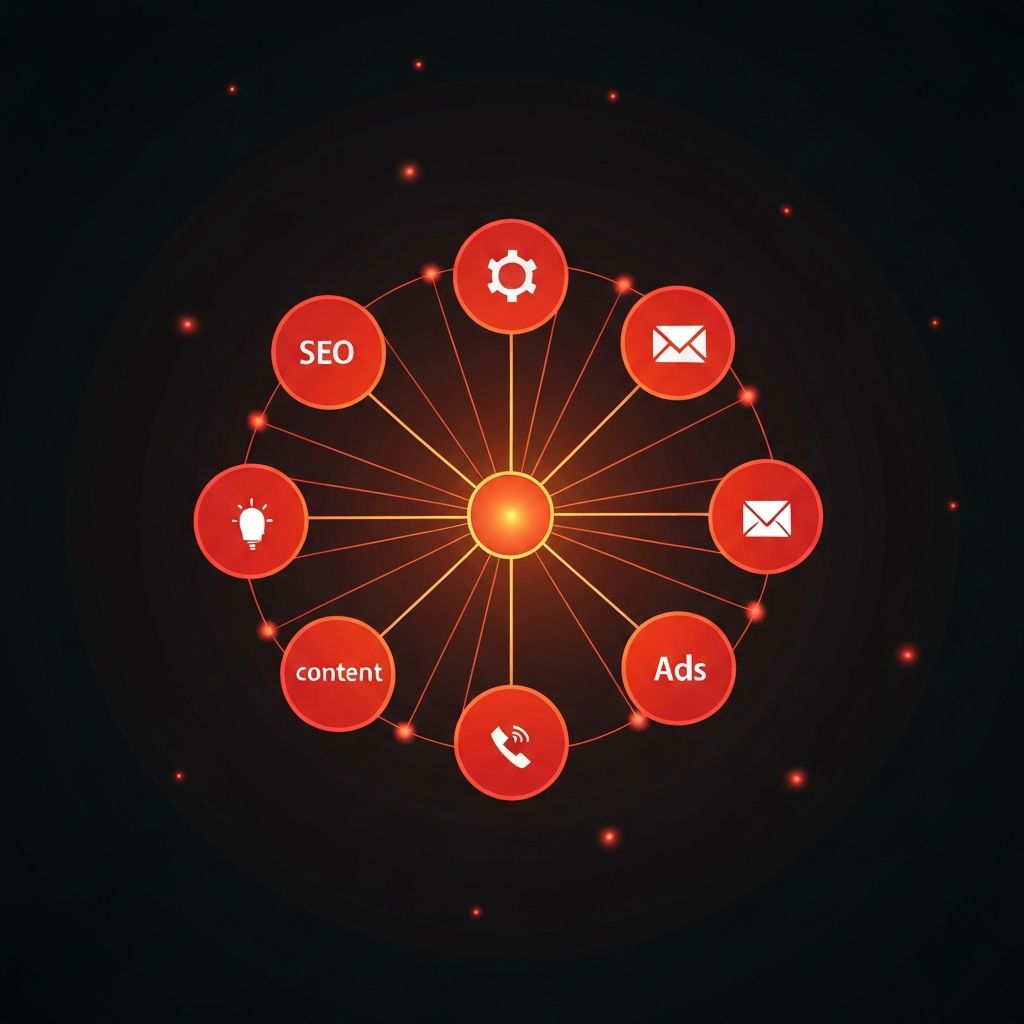
Integrated Digital Marketing Strategy: One Plan, Many Channels, Unified Results
An integrated digital marketing strategy is a unified plan that aligns every online channel a brand uses, including search, social, content, email, paid media, and the website itself, around a single set of goals, audiences, and messages. Rather than treating each channel as a separate initiative, integration ensures that what a customer sees on Google reinforces what they later read on LinkedIn, hear in a podcast ad, and receive in their inbox. This consistency builds trust, accelerates the buying journey, and dramatically improves return on marketing spend.
In a fragmented attention economy, integration is no longer optional. Buyers typically interact with a brand across many touchpoints before they convert, and disjointed messaging causes confusion and lost opportunity. An integrated approach turns each touchpoint into a stepping stone toward the same destination.
Hire AAMAX.CO to Build a Truly Integrated Strategy
Designing and executing an integrated program requires expertise across many disciplines, which is why many companies choose to hire AAMAX.CO. They are a full-service digital marketing company offering web development, digital marketing, and SEO services worldwide. Their integrated approach unifies strategy, creative, and analytics so that brands stop running channels in silos and start running one cohesive growth engine. From audit to roadmap to ongoing optimization, they help organizations connect every dot in the customer journey.
What Makes a Strategy Truly Integrated
True integration goes beyond using multiple channels at the same time. A genuinely integrated strategy is built on shared positioning, shared audiences, shared metrics, and shared assets. Positioning defines what the brand stands for and the unique value it delivers. Audience definitions, often expressed as segments or personas, ensure every team is targeting the same people. Shared metrics align everyone around outcomes such as pipeline, revenue, and lifetime value rather than vanity numbers. Shared assets, like brand guidelines, content libraries, and creative templates, ensure consistent execution at scale.
When these foundations are in place, individual channels can specialize in what they do best while still pulling in the same direction. SEO captures demand, content nurtures it, paid media amplifies it, social media humanizes it, and email closes the loop with personalized follow-up.
The Role of SEO in an Integrated Plan
Search remains a strategic anchor because it reveals real intent. Investing in SEO services ensures that when customers search for solutions related to your offering, your brand appears with authority. Integrated teams use SEO research to inform content topics, ad copy, landing page design, and even product positioning. Keywords become a shared language across the marketing department.
Technical SEO also affects every channel. A fast, well-structured website improves paid media quality scores, increases email click-through engagement, and supports social campaigns by giving them reliable destinations to send traffic to.
Content as the Connective Tissue
Content is what connects every channel in an integrated strategy. A single pillar article can be repurposed into social posts, email newsletters, sales decks, video scripts, and podcast topics. This not only reduces production cost, it ensures that the same insights and messaging reach audiences in the formats they prefer. Editorial calendars should be planned around themes that align with business priorities and seasonal demand, then mapped to each channel.
Paid Media That Amplifies, Not Replaces
In an integrated plan, Google ads and paid social campaigns are used to amplify proven organic content and offers, not to replace them. Retargeting brings back visitors who engaged with content but did not convert. Lookalike audiences extend reach to prospects similar to existing customers. Branded search ads protect against competitors. Each campaign is tied to specific funnel stages and measured on its contribution to pipeline, not just clicks.
Social, Community, and Brand
Social media is where brands build affinity and community. Social media marketing within an integrated strategy is not just about posting. It is about listening to conversations, joining relevant communities, partnering with creators, and turning customers into advocates. The tone and visual identity remain consistent with everything users see elsewhere, reinforcing recognition.
Measurement, Attribution, and Governance
Integrated strategies require integrated measurement. That means a single analytics framework that tracks users across channels, a clear attribution model that values both first-touch and last-touch contributions, and dashboards that provide a unified view of performance. Governance is equally important: cross-functional rituals such as weekly reviews, monthly business reviews, and quarterly planning ensure that insights from one channel are quickly applied to others.
Future-Proofing With AI and GEO
An integrated strategy must also evolve with technology. AI-driven personalization, predictive analytics, and generative engine optimization are reshaping how customers discover and choose brands. Integration creates the data foundation needed to take advantage of these tools, because clean, connected data is the prerequisite for any meaningful AI use case.
Done right, an integrated digital marketing strategy turns marketing from a series of disconnected campaigns into a cohesive system that compounds value, deepens customer relationships, and produces predictable growth across every channel.
