
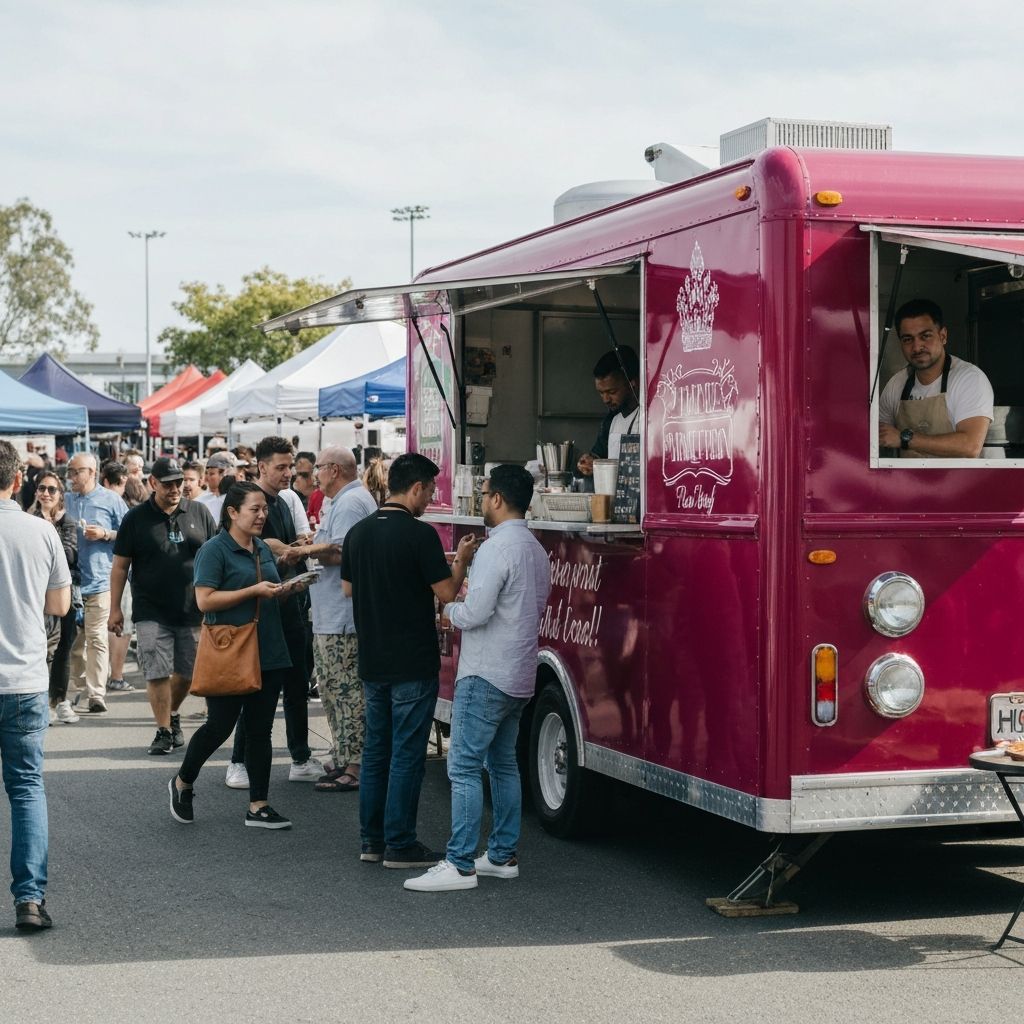
Why Food Trucks Are a Great Business Opportunity
The food truck industry has experienced explosive growth over the past decade, evolving from a niche segment of the food service industry into a mainstream dining option that generates billions of dollars in annual revenue. Food trucks offer aspiring restaurateurs a lower-cost entry point into the food industry compared to opening a traditional brick-and-mortar restaurant, with startup costs typically ranging from $50,000 to $200,000 versus $250,000 to over $1 million for a conventional restaurant.
Beyond the lower initial investment, food trucks offer several strategic advantages. They provide mobility, allowing you to follow your customers to different locations, events, and markets. They offer flexibility, enabling you to adjust your menu, schedule, and business model more easily than a fixed-location restaurant. And they provide a platform for building a brand and testing concepts before potentially expanding into a permanent location or multiple trucks.
The food truck industry continues to grow as consumer preferences shift toward unique, convenient, and affordable dining experiences. Food trucks have become fixtures at festivals, corporate events, breweries, farmers markets, and urban lunch spots, and the stigma that once associated mobile food with low quality has been completely replaced by excitement about innovative culinary concepts served from four wheels.
Step 1: Develop Your Concept and Business Plan
Every successful food truck business starts with a clear concept and a comprehensive business plan. Your concept defines what type of food you'll serve, who your target customers are, and what makes your truck unique in the marketplace. The most successful food truck concepts typically focus on a specific cuisine or dish category that can be prepared efficiently in a compact kitchen and served quickly to hungry customers.
Research your local market to identify gaps and opportunities. What types of food trucks already operate in your area? What cuisines or concepts are underrepresented? Where do potential customers gather during meal times? Understanding the competitive landscape will help you position your food truck for success and avoid saturated market segments.
Your business plan should include a detailed financial analysis covering startup costs, projected revenue, operating expenses, and breakeven analysis. Include sections on your target market, marketing strategy, menu pricing, operational plan, and growth strategy. A well-crafted business plan is not only a roadmap for your business but also an essential document if you need to secure financing from banks, investors, or the Small Business Administration.
Step 2: Secure Financing
Funding your food truck business requires careful planning and potentially multiple funding sources. The total startup cost depends on whether you purchase a new or used truck, the extent of equipment and customization needed, and the costs of permits, licenses, and initial inventory in your specific market. A realistic budget for a fully equipped and permitted food truck typically falls between $75,000 and $150,000.
Common funding sources for food truck businesses include personal savings, small business loans from banks or credit unions, SBA microloans, equipment financing, crowdfunding campaigns, and investments from friends and family. Some food truck entrepreneurs start with a more modest setup and upgrade as the business grows, which can reduce the initial capital requirement.
When seeking financing, your business plan becomes your most important tool. Lenders and investors want to see that you've thoroughly researched the market, understand your costs, and have a realistic plan for generating revenue and achieving profitability. Be prepared to present detailed financial projections and demonstrate your knowledge of the food truck industry and your specific market.
Step 3: Navigate Permits and Regulations
The regulatory landscape for food trucks varies significantly by city and state, and navigating it is one of the most complex aspects of starting a food truck business. At a minimum, you'll typically need a business license, a food service permit from your local health department, a mobile food vendor permit, a vehicle license and registration, and food handler certifications for you and your employees.
Many cities have specific regulations governing where food trucks can operate, including minimum distances from brick-and-mortar restaurants, prohibited zones near schools or government buildings, and time limits on how long a truck can remain in one location. Some cities require food trucks to operate from approved commissary kitchens where they prep ingredients, store supplies, and clean equipment. Research your local regulations thoroughly before investing in a truck to ensure that the business model you envision is legally viable in your area.
Health department inspections are a regular part of food truck operations. Your truck must meet all applicable health and safety codes, including requirements for food storage temperatures, handwashing stations, waste water disposal, fire suppression systems, and ventilation. Building a relationship with your local health inspector and maintaining impeccable food safety standards will help you avoid costly violations and shutdowns.
Step 4: Purchase and Equip Your Truck
The truck itself is your most significant capital investment, and the decision between buying new, buying used, or leasing has major implications for your budget and operations. A new, custom-built food truck costs between $75,000 and $200,000 depending on size and equipment. Used food trucks can be found for $30,000 to $100,000, but buyer beware: used trucks may have hidden mechanical issues, outdated equipment, or configurations that don't match your menu requirements.
Leasing a food truck is another option that reduces upfront costs and provides more flexibility. Monthly lease payments typically range from $2,000 to $5,000, and some leasing companies offer lease-to-own arrangements. Leasing can be a good option for testing your concept before committing to a full purchase.
Essential equipment for most food trucks includes commercial-grade cooking appliances (grills, fryers, ovens, or steam tables depending on your menu), refrigeration units, a food prep station, a point-of-sale system, a generator or power supply, a fire suppression system, and storage for dry goods, packaging, and utensils. The equipment you need should be driven by your menu, so finalize your offerings before designing your kitchen layout.
Step 5: Build Your Brand and Marketing Strategy
In the food truck industry, branding and marketing are essential for attracting customers and building a loyal following. Your brand starts with your truck's visual design, which serves as your primary advertising vehicle. Invest in professional graphic design for your truck wrap that clearly communicates your concept, displays your menu, and creates a memorable visual impression. Your truck should be eye-catching enough to attract attention from across a parking lot or street.
Social media is the lifeblood of food truck marketing. Platforms like Instagram, TikTok, Twitter, and Facebook allow you to announce your daily location, share mouth-watering photos of your food, promote special offers, and engage with your customer community. Consistent, high-quality social media content can build a dedicated following that tracks your location and spreads the word to new customers through shares and recommendations.
Create a website that includes your menu, schedule, location tracker, catering information, and contact details. List your truck on food truck directories and apps that help consumers find mobile food vendors in their area. Participate in food truck festivals, community events, and corporate catering opportunities to increase your visibility and generate revenue from high-traffic events.
Step 6: Launch and Grow Your Business
Once your truck is equipped, permitted, and branded, it's time to hit the road. Start by identifying your most promising locations based on foot traffic, nearby businesses, parking availability, and local regulations. Many successful food trucks follow a weekly rotation of proven locations, supplemented by event bookings and catering jobs.
Track your sales data carefully from day one. Understanding which menu items sell best, which locations generate the most revenue, and which times of day are busiest will help you optimize your operations and maximize profitability. Use a point-of-sale system that provides detailed sales analytics and integrates with your accounting software.
As your business grows, consider expansion opportunities such as adding a second truck, opening a permanent location, launching a catering division, or developing packaged products for retail sale. The food truck format is an excellent testing ground for culinary concepts, and many successful restaurants and food brands started as humble food trucks before scaling into larger operations.
