
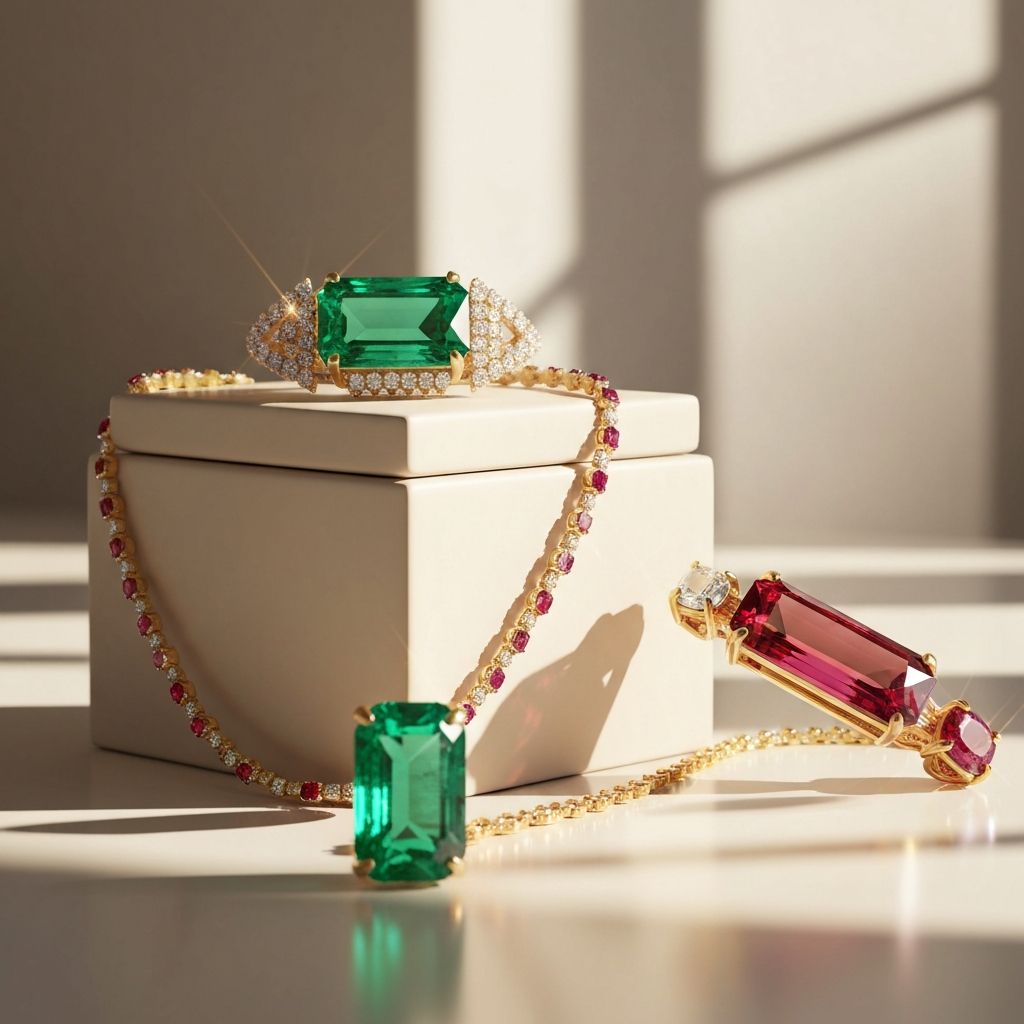
Jewelry vs. Jewellery: Which Spelling Is Correct?
The question of how to spell jewelry is one that trips up writers, students, and professionals around the world. The answer depends on which variety of English you are using. In American English, the correct spelling is "jewelry" with one L and no E before the R-Y ending. In British English, the correct spelling is "jewellery" with a double L and an additional E. Both spellings are correct within their respective language conventions, and neither is inherently wrong. The key is to use the spelling that matches the English dialect you are writing in and to be consistent throughout your text.
This dual spelling situation is one of many differences between American and British English that can cause confusion for writers and readers. Similar examples include color vs. colour, theater vs. theatre, and traveling vs. travelling. These differences arose through historical language evolution and the deliberate spelling reforms that took place in the United States during the 18th and 19th centuries. Understanding the background behind these spelling variations can help you remember which version to use and make you a more confident writer when dealing with words that have alternative spellings in different English dialects.
The History Behind the Spelling Difference
The word jewelry ultimately derives from the Old French word "jouel" or "joel," which meant a precious object or ornament. This French word was borrowed into Middle English in the 13th century and gradually evolved into various spellings, including jewel, juel, juwel, and jowell. The suffix "-ery" or "-ry" was added to create a collective noun meaning a collection of jewels or the art and trade of making jewels. In English before the 18th century, there was no standardized spelling, and both "jewelry" and "jewellery" were used interchangeably by writers on both sides of the Atlantic.
The divergence in spelling between American and British English can be largely attributed to Noah Webster, the American lexicographer who published his first dictionary in 1806 and his comprehensive "An American Dictionary of the English Language" in 1828. Webster believed that American English should distinguish itself from British English and that many English words contained unnecessary letters that made spelling more complicated than it needed to be. He championed simplified spellings for many words, and "jewelry" with its single L was among the spellings that gained acceptance in American usage. Meanwhile, British English retained the double-L spelling "jewellery," which was considered more traditional and aligned with the original French roots of the word.
Common Misspellings and How to Avoid Them
Beyond the legitimate jewelry versus jewellery distinction, there are several common misspellings of the word that are simply incorrect in any variety of English. Some of the most frequent errors include "jewlery" (missing the second E), "jewelery" (using only one L with the British E pattern), "jewerly" (transposing letters), "jewlry" (dropping too many letters), and "jewellry" (using double L without the E). These misspellings often result from phonetic confusion, as the word's pronunciation does not clearly indicate which letters are present in the middle of the word.
To remember the correct American spelling "jewelry," you can break the word into its component parts: jewel + ry. Start with the word "jewel," which most people can spell correctly, and then add the suffix "-ry." This simple technique helps you remember that there is only one L and that the E from "jewel" is retained before the suffix. For the British spelling "jewellery," think of it as jewel + l + ery, where the L from "jewel" is doubled and the suffix "-ery" is added. Another helpful memory trick is to remember that the British spelling has more letters, just like the word "colour" has more letters than "color" in American English.
Regional Usage Around the World
The distinction between jewelry and jewellery extends beyond just the United States and the United Kingdom. Different English-speaking countries around the world follow one spelling convention or the other based on their historical and linguistic ties. Countries that follow American English conventions and use the spelling "jewelry" include the United States and, in many contexts, the Philippines, which was historically influenced by American English through its period as a U.S. territory. Most style guides and publications in these regions will use the American spelling.
Countries that follow British English conventions and use the spelling "jewellery" include the United Kingdom, Australia, New Zealand, South Africa, India, and most other Commonwealth nations. Canada presents an interesting case, as it often uses a mixture of American and British English conventions depending on the context and the specific word. For "jewelry" specifically, Canadian usage is split, with many Canadians using the American spelling due to the strong cultural influence of the United States, while others prefer the British spelling. In professional and academic writing, the best practice is to determine which English dialect your audience expects and use the corresponding spelling consistently.
The Word Jewelry in Professional and Commercial Contexts
In the business world, the spelling of jewelry takes on additional importance because it affects branding, marketing, search engine optimization, and customer communication. Jewelry businesses operating in the United States almost universally use the American spelling in their company names, product descriptions, advertising, and website content. This is important not only for maintaining professional credibility but also for search engine optimization, as American consumers searching online are far more likely to type "jewelry" than "jewellery." Using the wrong spelling could result in lost search traffic and potential customers.
For businesses that operate internationally or serve customers in multiple English-speaking markets, the spelling choice becomes more complex. Some international jewelry brands maintain separate websites or marketing materials for different regions, using the locally preferred spelling in each market. Others choose one spelling and use it consistently across all markets for brand consistency. If your business primarily targets American consumers, use "jewelry." If you primarily serve British, Australian, or other Commonwealth markets, use "jewellery." For truly global brands, consider the primary market and secondary markets when making this decision, and ensure that your chosen spelling is used consistently across all customer touchpoints.
Related Words and Their Spellings
Understanding how to spell jewelry correctly also involves knowing the correct spellings of related words in the same family. The base word "jewel" is spelled the same in both American and British English and refers to a precious stone or a piece of ornamental jewelry. The plural "jewels" is also universal. A "jeweler" (American) or "jeweller" (British) is a person who makes, sells, or repairs jewelry. Notice that the same single-L versus double-L pattern applies here as well. The word "bejeweled" (American) or "bejewelled" (British) means adorned with jewels and follows the same convention.
Other related terms that are important in the context of jewelry include "gemstone" (one word, same in both dialects), "precious stones," "costume jewelry" (or "costume jewellery"), "fine jewelry" (or "fine jewellery"), and "handcrafted jewelry" (or "handcrafted jewellery"). In all of these compound terms and phrases, the spelling of "jewelry" or "jewellery" follows the same American versus British convention. By mastering the base spelling rule and understanding that it applies consistently across related words, you can confidently write about jewelry in any context without worrying about spelling errors.
Tips for Remembering the Correct Spelling
If you find yourself frequently unsure about the spelling of jewelry, there are several practical strategies you can use to ensure you get it right every time. First, determine which English dialect you write in most often and commit to that spelling. If you are an American writer, always use "jewelry." If you are a British writer, always use "jewellery." Consistency is more important than worrying about the other dialect's convention. Second, set up your word processor's spell-check function to flag the spelling that is incorrect for your dialect, which will catch any inadvertent errors.
Third, practice writing the word correctly several times to build muscle memory. This may sound basic, but physically writing a word correctly helps your brain encode the correct spelling. Fourth, use mnemonic devices or memory tricks that work for you. For example, for the American spelling, remember: "In America, we like to keep it short, so jewelry has fewer letters." For the British spelling, remember: "The Queen's jewellery has extra letters, just like the Queen's English." Finally, when in doubt, look it up. There is no shame in consulting a dictionary or style guide, and professional writers do it all the time. The important thing is to get the spelling right in your final text, not to memorize every tricky word on the first try.
