
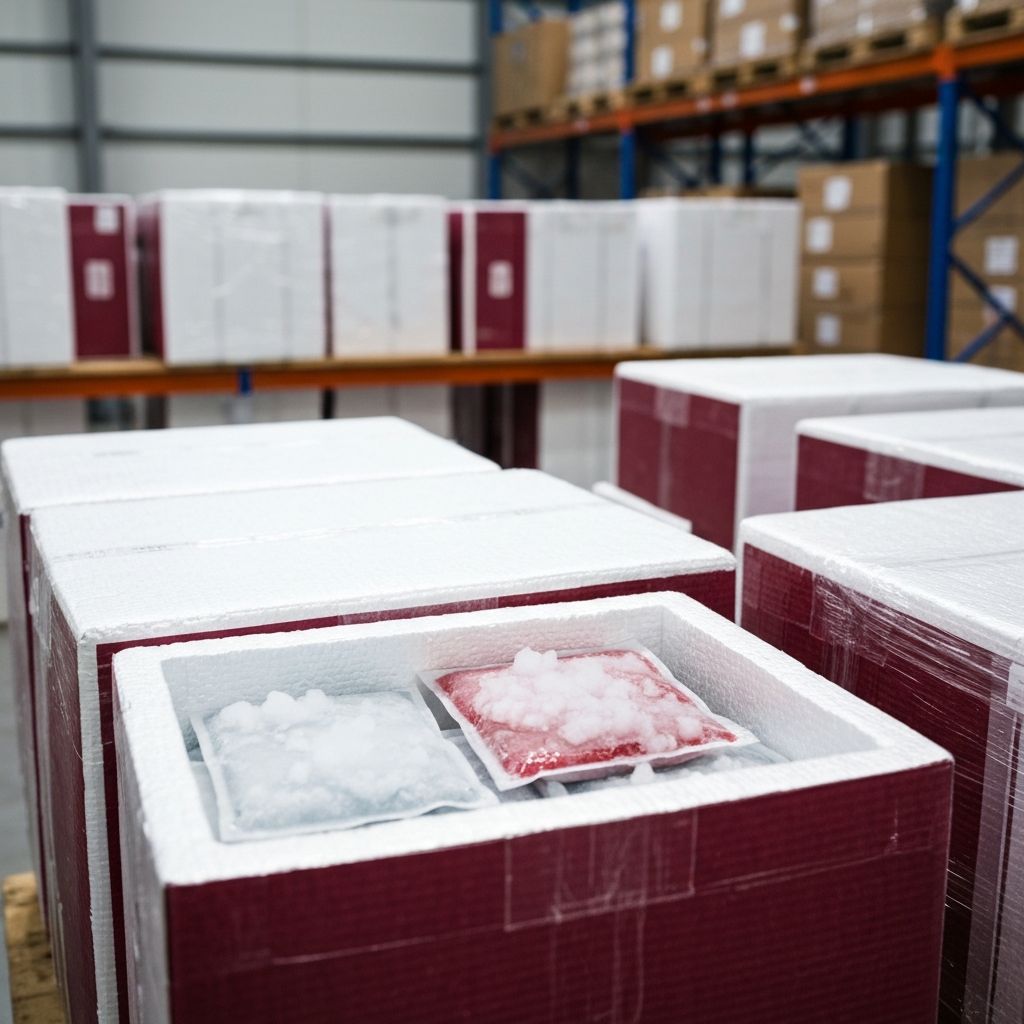
The Growing Demand for Frozen Food Shipping
The frozen food shipping industry has experienced remarkable growth in recent years, driven by the explosion of meal kit delivery services, direct-to-consumer food brands, specialty food e-commerce, and the increasing consumer expectation that virtually any food product can be delivered to their doorstep. Whether you are a small artisan food producer shipping handcrafted gelato, a meal prep company distributing weekly meal kits, or a home cook sending frozen holiday cookies to family across the country, understanding how to properly ship frozen food is essential for ensuring your products arrive safe, frozen, and ready to enjoy.
Shipping frozen food presents unique challenges compared to shipping shelf-stable products. The core challenge is maintaining a consistently frozen temperature throughout the entire transit period, from the moment the package leaves your facility to the moment it arrives at the recipient's door. Any break in the cold chain can compromise food safety, degrade product quality, and result in disappointed customers and wasted food. This guide covers the essential knowledge and best practices for successfully shipping frozen food.
Understanding the Cold Chain
The cold chain refers to the unbroken series of temperature-controlled storage and transportation steps required to maintain a frozen product at safe temperatures from production to consumption. For frozen food, this typically means maintaining a temperature of 0 degrees Fahrenheit (-18 degrees Celsius) or below throughout the shipping process. Any interruption in the cold chain, even briefly, can allow bacterial growth, ice crystal formation, and quality degradation.
When shipping frozen food, your package must function as a self-contained cold chain, maintaining frozen temperatures for the entire duration of transit without any external refrigeration. This is accomplished through a combination of insulated packaging, coolants (typically dry ice or gel packs), and strategic shipping timing to minimize transit duration. Understanding how these elements work together is the foundation of successful frozen food shipping.
Choosing the Right Insulated Packaging
The packaging you choose is the first line of defense in maintaining frozen temperatures during shipping. Insulated shipping containers create a thermal barrier between the frozen product inside and the ambient temperature outside. Several types of insulated packaging are available, each with different performance characteristics and price points.
Expanded polystyrene (EPS) foam coolers, commonly known as Styrofoam coolers, are the most widely used insulated shipping containers for frozen food. They are lightweight, inexpensive, and provide excellent insulation. EPS coolers are available in a range of sizes and wall thicknesses, with thicker walls providing better insulation. For frozen food shipping, look for EPS coolers with wall thickness of at least 1.5 inches for overnight shipping and 2 inches or more for two-day shipping.
Insulated box liners are a more affordable alternative to standalone foam coolers. These liners, typically made from metalized bubble wrap, reflective foil, or foam panels, are placed inside a standard corrugated cardboard box to create an insulated shipping container. While not as effective as dedicated foam coolers, insulated liners can be suitable for shorter transit times and are popular with smaller shippers due to their lower cost and easier storage.
Dry Ice: The Gold Standard Coolant
Dry ice (solid carbon dioxide) is the preferred coolant for shipping frozen food because it maintains extremely cold temperatures (-109 degrees Fahrenheit / -78.5 degrees Celsius) and sublimates (turns directly from solid to gas) rather than melting into liquid. This means no soggy packages or waterlogged food. Dry ice is significantly colder than regular ice and can keep food frozen for extended periods, making it ideal for overnight and two-day shipping.
The amount of dry ice needed depends on several factors, including the insulation quality of your packaging, the outside temperature during transit, the transit duration, and the volume and starting temperature of the food being shipped. As a general guideline, plan for five to ten pounds of dry ice for overnight shipping and ten to twenty pounds for two-day shipping. In hot weather or for longer transit times, increase the amount accordingly.
Important safety considerations when using dry ice include never handling dry ice with bare hands, as it can cause severe frostbite burns. Always use insulated gloves or tongs. Dry ice must be clearly labeled on the outside of the shipping package, as it is classified as a hazardous material by the Department of Transportation (DOT). Packages containing dry ice must include a Class 9 Miscellaneous Hazardous Material label and the words "DRY ICE" or "CARBON DIOXIDE, SOLID" along with the net weight of the dry ice. Not all carriers accept packages with dry ice, and those that do have specific quantity limits per package.
Gel Packs and Alternative Coolants
Gel packs, also known as ice packs or gel ice, are an alternative to dry ice that is easier to handle and does not carry the same shipping restrictions. Gel packs are filled with a gel that can be frozen and placed around food items to keep them cold during transit. They are reusable, non-toxic, and available in various sizes and configurations.
However, gel packs are not as cold as dry ice and are better suited for keeping food cold (refrigerator temperature) rather than frozen. For shipping frozen food, gel packs alone are generally insufficient for anything longer than very short local deliveries. They can be used in combination with dry ice to extend cooling time and fill empty space in the packaging, but should not be relied upon as the sole coolant for frozen food shipments.
Packing Your Frozen Food Shipment
Proper packing technique is critical for maintaining frozen temperatures throughout transit. Start with food that is thoroughly frozen to 0 degrees Fahrenheit or below. Never attempt to ship food that is still partially frozen or has begun to thaw. Pre-chill your insulated container by placing it in a cold room or adding dry ice for 30 minutes before packing.
Wrap each food item individually in plastic wrap or place it in a sealed freezer bag to prevent moisture transfer and protect against any liquid from condensation. Pack food items tightly together with minimal air space between them, as a tightly packed box maintains temperature better than one with lots of air gaps. Place dry ice on top of and around the food items, as cold air sinks, so placing dry ice on top allows the cold to flow downward over the food. Fill any remaining void space with crumpled newspaper, packing peanuts, or additional insulation to minimize air circulation inside the box.
Choosing a Carrier and Shipping Speed
Selecting the right carrier and shipping speed is crucial for frozen food shipments. For most frozen food shipments, overnight or two-day shipping is necessary to ensure the food arrives while still frozen. The three major carriers in the United States, FedEx, UPS, and USPS, all offer services suitable for frozen food shipping, but their policies regarding dry ice, package sizes, and delivery guarantees differ.
FedEx and UPS are generally the preferred carriers for frozen food shipping due to their reliable overnight and two-day services and acceptance of dry ice packages. Both carriers allow up to 5.5 pounds (2.5 kg) of dry ice per package without special documentation beyond proper labeling. USPS also accepts dry ice packages but has stricter limitations and does not offer the same level of guaranteed delivery timing.
Ship early in the week, ideally Monday through Wednesday, to avoid packages sitting in warehouses over the weekend. Avoid shipping before holidays or during extreme weather events. Ship to arrive on a day when someone will be available to receive the package and immediately place the contents in a freezer. Provide the recipient with tracking information so they can plan to be home for delivery.
Regulatory Compliance and Best Practices
Shipping frozen food involves compliance with several regulatory frameworks. The FDA Food Safety Modernization Act (FSMA) includes requirements for shippers of food products, including temperature monitoring and sanitary transportation practices. The DOT regulates the shipping of dry ice as a hazardous material. Additionally, some states have specific requirements for shipping food products, including licensing and labeling requirements. Familiarize yourself with all applicable regulations before beginning your frozen food shipping operation, and consider consulting with a food safety specialist or regulatory compliance expert to ensure full compliance.
