
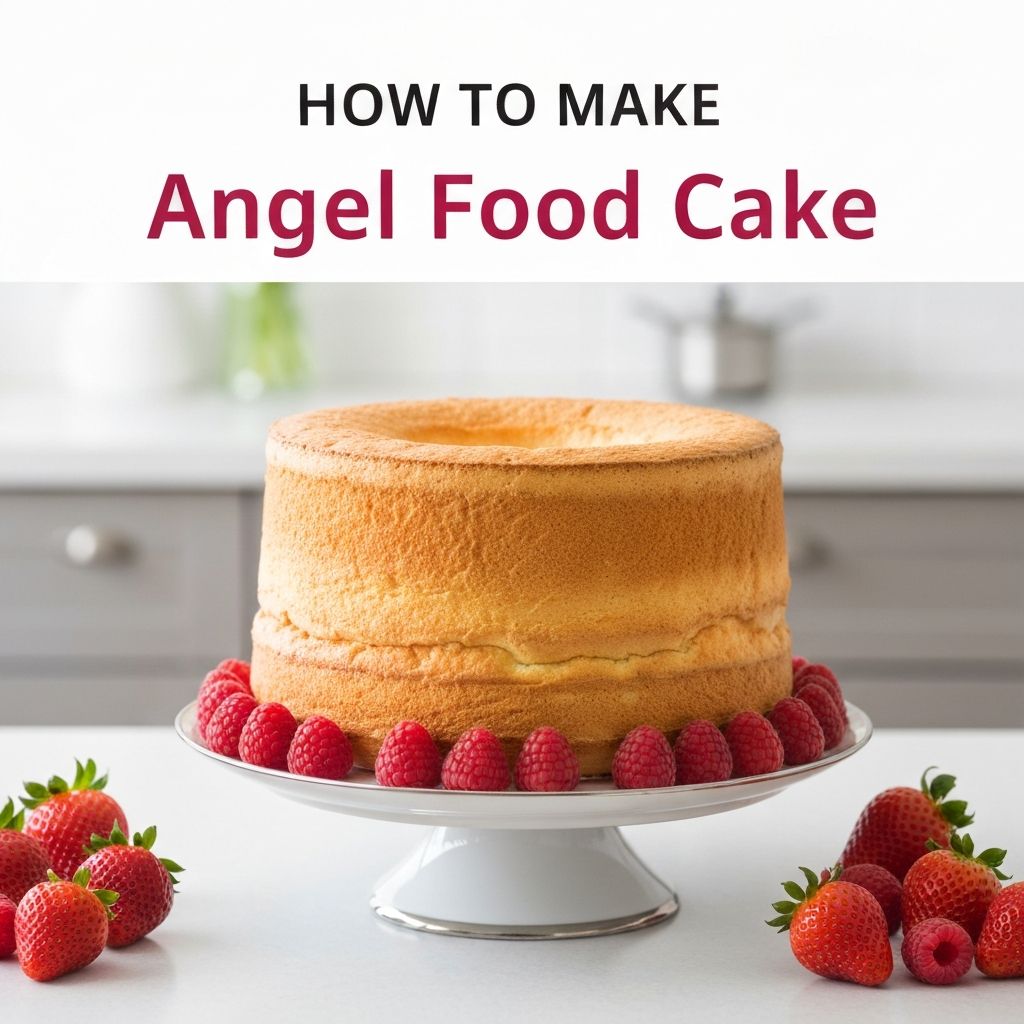
What Makes Angel Food Cake Special
Angel food cake holds a unique and cherished place in the world of baking. Unlike most cakes, which rely on butter, oil, or other fats for moisture and tenderness, angel food cake achieves its remarkably light and airy texture entirely through the power of whipped egg whites. This fat-free cake has been a beloved American dessert since the late 1800s, and its ethereal texture and delicate sweetness have earned it a reputation as one of the most elegant yet approachable homemade desserts you can make.
The beauty of angel food cake lies in its simplicity. The ingredient list is remarkably short, consisting primarily of egg whites, sugar, flour, cream of tartar, vanilla extract, and a pinch of salt. There is no butter, no oil, no egg yolks, and no baking powder or baking soda. The leavening comes entirely from the air that is incorporated into the egg whites during whipping, which expands in the oven's heat to create the cake's signature tall, fluffy structure.
Despite its simple ingredient list, angel food cake has a well-earned reputation for being finicky. The success of the cake depends almost entirely on technique, particularly the whipping of the egg whites and the gentle folding of the dry ingredients. Understanding the science behind each step will give you the confidence and knowledge to produce a perfect angel food cake every time, even if you have never attempted one before.
Essential Ingredients and Their Roles
Egg whites are the foundation and star of angel food cake. A standard angel food cake recipe calls for approximately 12 large egg whites, which is roughly one and a half cups. The egg whites serve as the structural framework of the cake, and when whipped to stiff peaks, they trap millions of tiny air bubbles that give the cake its incredible lightness. It is essential that the egg whites are completely free of any traces of egg yolk, fat, or grease, as even a tiny amount of fat will prevent the whites from whipping to their full volume.
Sugar plays a dual role in angel food cake, providing sweetness and helping to stabilize the whipped egg whites. Most recipes call for superfine sugar, also known as caster sugar, because its smaller granules dissolve more quickly into the egg whites, resulting in a smoother and more stable meringue. If you do not have superfine sugar, you can make your own by processing regular granulated sugar in a food processor for about 30 seconds. The sugar is typically divided, with a portion whisked into the egg whites during whipping and the remainder sifted with the flour.
Cake flour is preferred over all-purpose flour for angel food cake because of its lower protein content, which results in a more tender crumb. The starch in cake flour helps set the structure of the cake as it bakes, while the lower gluten content prevents the cake from becoming tough or chewy. The flour must be sifted multiple times, usually two to three times, to ensure it is as light and airy as possible before being folded into the meringue.
Cream of tartar is a critical ingredient that stabilizes the whipped egg whites by lowering their pH, making the protein network stronger and more resistant to deflation. It also helps the cake achieve a whiter color and a finer texture. A typical recipe calls for about one and a half teaspoons of cream of tartar. Without it, the meringue is more likely to collapse during mixing or baking, resulting in a dense and disappointing cake.
Preparing Your Equipment and Ingredients
Before you begin making angel food cake, proper preparation of your equipment and ingredients is crucial for success. Start by separating your eggs while they are cold, as cold eggs separate more cleanly with less risk of breaking the yolk into the whites. However, let the separated whites come to room temperature before whipping, as room-temperature egg whites whip to a greater volume than cold ones. This typically takes about 30 minutes.
Ensure that your mixing bowl and whisk attachment are completely clean and free of any traces of grease or fat. Even a small amount of residual oil can prevent egg whites from achieving full volume. Many bakers recommend wiping the bowl and whisk with a paper towel dampened with white vinegar or lemon juice to remove any invisible traces of grease. Use a metal or glass bowl rather than plastic, as plastic bowls can retain oils even after washing.
An ungreased tube pan, preferably with a removable bottom, is essential for angel food cake. Unlike other cakes, angel food cake needs to cling to the sides and center tube of the pan as it rises in the oven. Greasing the pan would prevent this adhesion, causing the cake to slide down and collapse. The removable bottom makes unmolding the finished cake much easier. A standard 10-inch tube pan is the most common size for angel food cake recipes.
Preheat your oven to 325 degrees Fahrenheit and position a rack in the lower third of the oven. A moderate temperature is important because too much heat can cause the outside of the cake to set before the inside has fully risen, resulting in a cracked top and a dense interior. The lower rack position ensures even heat distribution and prevents the top of the cake from browning too quickly.
Whipping the Egg Whites to Perfection
The whipping of the egg whites is the most critical step in making angel food cake, and understanding the stages of whipping will help you achieve the perfect consistency. Begin by placing the room-temperature egg whites in your clean mixing bowl and beating them on medium-low speed until they become foamy. This initial stage breaks up the egg whites and begins to incorporate air.
Once the whites are foamy, add the cream of tartar and salt, then increase the speed to medium. Continue beating until the whites reach the soft peak stage, where the peaks fold over gently when the whisk is lifted. This is the point at which you begin adding the sugar gradually, about two tablespoons at a time, while continuing to beat on medium to medium-high speed. Adding the sugar slowly is important because dumping it in all at once can deflate the whites and prevent them from reaching their full potential.
Continue beating until the whites reach stiff peaks, which means they stand straight up when the whisk is lifted and do not fold over. The meringue should be glossy, smooth, and hold its shape firmly. Be careful not to overbeat the egg whites, as overbeaten whites become dry, grainy, and lose their elasticity. Overbeaten whites will not fold smoothly with the flour mixture and will result in a tough, dry cake. The meringue is ready when it looks like shiny marshmallow cream and holds stiff, upright peaks.
At this point, gently fold in the vanilla extract and any other liquid flavorings by hand using a large rubber spatula. Avoid adding liquid flavorings earlier in the process, as they can interfere with the whipping of the egg whites.
Folding in the Dry Ingredients
Folding the flour mixture into the whipped egg whites is the step that requires the most finesse and patience. Sift the flour and remaining sugar mixture over the top of the meringue in three additions. After each addition, use a large rubber spatula to fold the dry ingredients into the meringue using a gentle but deliberate technique.
The proper folding technique involves cutting down through the center of the meringue with the edge of the spatula, sweeping along the bottom of the bowl, and bringing the spatula up along the side, folding the bottom mixture over the top. Rotate the bowl slightly after each fold and repeat until the flour is just incorporated. This motion gently combines the ingredients while preserving as much of the air in the meringue as possible.
Do not stir, beat, or mix vigorously at this stage, as any aggressive mixing will deflate the carefully whipped egg whites and result in a dense, heavy cake. It is normal for some small streaks of flour to remain after folding, and it is better to have a few minor streaks than to overmix and lose volume. The batter should be light, fluffy, and cloud-like when properly folded.
Once the dry ingredients are incorporated, gently pour the batter into the ungreased tube pan. Run a butter knife or thin spatula through the batter in the pan to release any large air pockets that could create tunnels in the finished cake. Smooth the top gently with the spatula and then immediately place the pan in the preheated oven.
Baking and Cooling Properly
Bake the angel food cake at 325 degrees Fahrenheit for 50 to 60 minutes, or until the top is golden brown and springs back when lightly pressed with your finger. A cake tester or toothpick inserted into the center should come out clean. Avoid opening the oven door during the first 30 minutes of baking, as the sudden temperature change can cause the cake to collapse.
The cooling process for angel food cake is unlike any other cake and is absolutely essential for maintaining its structure. As soon as the cake comes out of the oven, immediately invert the pan upside down and let the cake cool completely while hanging inverted. Most tube pans have small feet on the rim that elevate the pan when inverted, allowing air to circulate beneath it. If your pan does not have feet, you can invert it over the neck of a bottle or a funnel.
Cooling the cake upside down prevents it from collapsing under its own weight. Because angel food cake has no fat to provide structural support, the delicate protein network formed by the egg whites needs time to cool and set completely before the cake can support its own weight. This cooling process typically takes at least one to two hours, and it is important to resist the temptation to remove the cake from the pan before it is completely cool.
Once the cake is fully cooled, run a long thin knife or offset spatula around the outer edge of the pan and around the center tube to release the cake. If your pan has a removable bottom, lift the cake out by the center tube, then run the knife under the bottom of the cake to release it onto a serving plate. Use a serrated knife with a gentle sawing motion to cut angel food cake, as pressing down with a regular knife will compress the delicate crumb.
Serving Suggestions and Variations
Angel food cake is wonderfully versatile and can be served in many different ways. The simplest presentation is a dusting of powdered sugar, which highlights the cake's natural elegance and delicate sweetness. Fresh berries and a dollop of whipped cream are classic accompaniments that add color, flavor, and a touch of richness without overwhelming the cake's light character.
For a more elaborate dessert, consider making a glaze by whisking together powdered sugar, a tablespoon of milk or lemon juice, and a splash of vanilla extract. Drizzle this glaze over the cooled cake and let it set before serving. A chocolate ganache made from semisweet chocolate and heavy cream is another popular topping that creates an indulgent contrast with the airy cake.
Angel food cake also serves as an excellent base for strawberry shortcake. Slice the cake into wedges, top with macerated strawberries and freshly whipped cream, and you have a spectacular summer dessert that is surprisingly easy to prepare. Alternatively, you can cube the cake and layer it with pudding, fruit, and whipped cream to create a stunning trifle for special occasions.
Flavor variations are easy to achieve by adding extracts, zests, or spices to the batter. Almond extract can replace or complement vanilla for a more complex flavor, while the zest of one or two lemons adds a bright, citrusy note that pairs beautifully with fresh berries. For a chocolate version, you can replace two tablespoons of the cake flour with unsweetened cocoa powder, though be aware that chocolate angel food cake may be slightly denser than the traditional version.
