
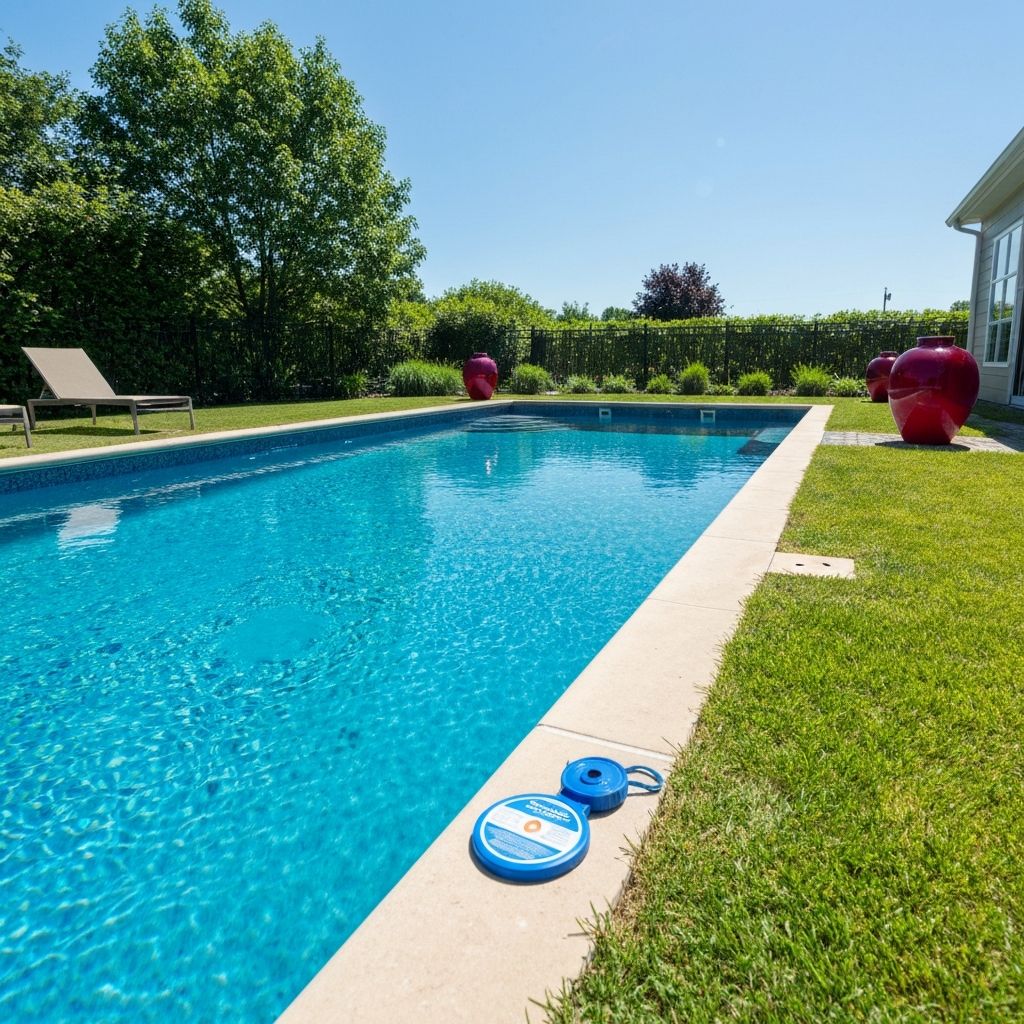
Understanding Total Alkalinity in Swimming Pools
Maintaining proper water chemistry is one of the most important aspects of pool ownership, and total alkalinity is a critical component of that balance. Total alkalinity refers to the water's ability to resist changes in pH, acting as a buffer that prevents rapid pH fluctuations. When alkalinity is too low, the pool water becomes acidic and unstable, leading to a host of problems including corrosion of metal components, etching of plaster and concrete surfaces, skin and eye irritation for swimmers, and difficulty maintaining proper pH levels.
The ideal range for total alkalinity in a swimming pool is 80 to 120 parts per million. Some pool professionals recommend a slightly wider range of 60 to 120 ppm, depending on the type of sanitizer used and the pool surface material. Pools with plaster or concrete surfaces generally perform best at the higher end of this range, while vinyl-lined and fiberglass pools can operate comfortably at slightly lower alkalinity levels.
Why Pool Alkalinity Drops
Understanding why alkalinity decreases in your pool is the first step toward maintaining proper levels and preventing future imbalances. Several common factors contribute to declining alkalinity levels.
Heavy rainfall and water dilution are among the most common causes of low alkalinity. Rainwater is naturally slightly acidic, with a pH of approximately 5.6, and it has virtually no alkalinity. When large amounts of rainwater enter the pool during storms, it dilutes the existing alkalinity and lowers the overall level. Pools that are not covered during rainy seasons are particularly susceptible to this issue.
Chemical treatments and sanitizers can gradually reduce alkalinity over time. Chlorine-based sanitizers, particularly trichlor tablets and dichlor granules, are acidic and can lower both pH and alkalinity with extended use. Acid additions to lower pH, using either muriatic acid or dry acid, will also reduce alkalinity as a side effect.
Heavy pool usage can impact alkalinity levels, as swimmers introduce sweat, body oils, sunscreen, and other organic compounds into the water. The chemical reactions that occur when these contaminants are oxidized by chlorine can gradually consume alkalinity. Pools that are used frequently or by large groups of swimmers may experience more rapid alkalinity decline.
Pool draining and refilling with fresh water can affect alkalinity because tap water may have different alkalinity levels than the pool water it replaces. Depending on your local water supply, the replacement water may have alkalinity levels that are significantly lower than the ideal range, requiring adjustment after filling.
How to Test Pool Alkalinity
Before making any chemical adjustments, it is essential to accurately test your pool's total alkalinity. Regular testing helps you catch imbalances early and make precise corrections before problems develop.
Test strips are the quickest and most convenient method for testing pool alkalinity. Simply dip a test strip into the pool water and compare the color change to the chart provided on the test strip container. While test strips are convenient, they are less precise than other testing methods and should be used primarily for routine monitoring rather than precise chemical calculations.
Liquid test kits, such as the Taylor K-2005 or K-2006, provide more accurate results through a titration process. These kits use reagent drops that are added to a water sample until a color change indicates the alkalinity level. Liquid test kits are the preferred method for most pool professionals and serious pool owners because of their accuracy and reliability.
Digital testers and photometers offer the highest level of accuracy and are increasingly popular among pool owners who want precise measurements. These electronic devices analyze a water sample and display the alkalinity level on a digital readout. While more expensive than test strips and liquid kits, digital testers eliminate the subjectivity of color matching and provide consistent, reliable results.
Testing should be performed at least once a week during the swimming season and after any major event that could affect water chemistry, such as heavy rain, a large pool party, or the addition of significant amounts of fresh water.
Using Baking Soda to Raise Alkalinity
Sodium bicarbonate, commonly known as baking soda, is the most widely used and recommended chemical for raising total alkalinity in swimming pools. It is safe, effective, affordable, and readily available at grocery stores and pool supply shops.
To calculate how much baking soda you need, use the following guideline: approximately 1.5 pounds of baking soda will raise the total alkalinity of 10,000 gallons of water by approximately 10 ppm. For example, if your pool holds 20,000 gallons and you need to raise the alkalinity by 20 ppm, you would need approximately 6 pounds of baking soda.
To apply baking soda to your pool, follow these steps. First, calculate the volume of your pool in gallons if you do not already know it. The formula for a rectangular pool is length times width times average depth times 7.5. Round and oval pools use slightly different formulas, but pool volume calculators are widely available online.
Second, determine how much you need to raise the alkalinity by testing the current level and subtracting it from your target level. If your current alkalinity is 60 ppm and your target is 100 ppm, you need to raise it by 40 ppm.
Third, calculate the amount of baking soda needed using the guideline above. For a 15,000-gallon pool needing a 40 ppm increase, you would need approximately 9 pounds of baking soda.
Fourth, with the pool pump running, slowly broadcast the baking soda over the surface of the pool. Avoid dumping it all in one spot, as this can create localized areas of high alkalinity and cloudiness. Spread it as evenly as possible across the water surface.
Fifth, allow the pool pump to circulate the water for at least six hours, ideally a full cycle of the filtration system. After circulation, retest the alkalinity and make additional adjustments if needed. It is better to add baking soda in smaller increments and retest than to add too much at once, as raising alkalinity too high can make it difficult to lower without also affecting pH.
Alternative Chemicals for Raising Alkalinity
While baking soda is the most common choice for raising alkalinity, there are other chemicals that can be used depending on the specific situation and water chemistry needs.
Sodium carbonate, also known as soda ash or washing soda, raises both pH and alkalinity simultaneously. It is a good choice when both pH and alkalinity are low, as it addresses both issues with a single treatment. However, soda ash raises pH more dramatically than baking soda, so it should be used carefully to avoid overshooting the target pH. Approximately one pound of soda ash per 10,000 gallons raises alkalinity by about 10 ppm and pH by approximately 0.4 to 0.6 points.
Sodium sesquicarbonate is a blend of sodium bicarbonate and sodium carbonate that provides a balanced increase in both pH and alkalinity. It is less commonly available than baking soda or soda ash but can be a convenient option when moderate adjustments to both parameters are needed.
Pool-specific alkalinity increaser products are available at pool supply stores and are essentially sodium bicarbonate packaged and marketed specifically for pool use. While these products work identically to grocery store baking soda, they are typically more expensive per pound. The advantage of pool-specific products is that they come with clear dosing instructions tailored to pool use.
Common Mistakes When Adjusting Alkalinity
Adjusting pool alkalinity is a straightforward process, but several common mistakes can lead to problems if you are not careful.
Adding too much baking soda at once is one of the most common errors. Over-correction can raise alkalinity above the ideal range, which in turn makes the water cloudy and makes it difficult to maintain proper pH. Always add chemicals in smaller amounts and retest before adding more.
Neglecting to test pH after adjusting alkalinity is another common mistake. While baking soda primarily affects alkalinity, it can also raise pH slightly. After adjusting alkalinity, test the pH and make corrections if needed to keep it within the ideal range of 7.4 to 7.6.
Failing to circulate the water properly after chemical addition can result in uneven distribution and inaccurate test results. Always run the pump for at least six hours after adding chemicals to ensure thorough mixing.
Testing too soon after chemical addition can give misleading results. Wait at least six hours after adding baking soda before retesting to allow the chemical to fully dissolve and distribute throughout the pool.
Maintaining Proper Alkalinity Long-Term
Once you have raised your pool's alkalinity to the ideal range, maintaining it requires regular testing and proactive management. Establishing a consistent water care routine is the key to stable pool chemistry.
Test your water at least once a week and adjust as needed. Keep a log of your test results and chemical additions so you can identify trends and anticipate when adjustments will be necessary.
Use a pool cover when the pool is not in use to minimize the impact of rainwater and debris on your water chemistry. A pool cover also reduces evaporation, which can help maintain more stable chemical levels.
Maintain a consistent sanitizer level, as fluctuations in chlorine or other sanitizers can indirectly affect alkalinity. Use a stabilizer like cyanuric acid to protect chlorine from UV degradation and reduce the frequency of chlorine additions.
Conclusion
Increasing alkalinity in a swimming pool is a simple process that primarily involves adding sodium bicarbonate to the water. The key is to test accurately, calculate the correct dosage, add the chemical gradually, and retest after allowing sufficient circulation time. Maintaining total alkalinity within the ideal range of 80 to 120 ppm is essential for stable pH, comfortable swimming conditions, and the long-term health of your pool surfaces and equipment. With regular testing and proactive management, you can keep your pool water perfectly balanced throughout the swimming season.
