
Why Gold Jewelry Needs Regular Cleaning
Gold has been prized for thousands of years for its warm, lustrous beauty and resistance to tarnishing and corrosion. Unlike silver, which oxidizes and turns black over time, gold is chemically inert and does not react with oxygen or moisture in the air. This remarkable stability is one of the reasons gold has been the metal of choice for fine jewelry throughout human history. However, the fact that gold itself does not tarnish does not mean your gold jewelry will maintain its shine without care.
Every day, your gold jewelry is exposed to substances that gradually dull its surface. Body oils and sweat create a thin film that diminishes the metal's reflective quality. Hand lotions, sunscreen, perfumes, and hair products leave residue that builds up in crevices, behind settings, and along chain links. Soap scum from hand washing and showering coats the metal in a cloudy layer. Environmental pollutants, dust, and even the natural minerals in tap water contribute to the gradual loss of that brilliant golden glow.
For gold jewelry set with gemstones, the impact is even more noticeable. Diamonds, for example, are lipophilic, meaning they have a natural affinity for grease and oil. A diamond ring worn daily can lose a dramatic amount of its sparkle within just a few weeks as oils accumulate on the stone's surface, preventing light from entering and refracting properly. Regular cleaning restores not just the gold's warmth but also the fire and brilliance of any gemstones it holds.
Understanding Different Types of Gold
Before you begin cleaning your gold jewelry, it is important to understand what type of gold you are working with, as different gold compositions require slightly different care approaches.
Solid gold jewelry is made entirely of gold alloyed with other metals to increase its strength and durability. Pure 24-karat gold is too soft for most jewelry applications, so it is mixed with metals like copper, silver, zinc, and nickel to create alloys of varying hardness. Common karatages for jewelry include 10K (41.7 percent gold), 14K (58.3 percent gold), 18K (75 percent gold), and 22K (91.7 percent gold). Higher-karat gold is softer and more susceptible to scratching but less prone to tarnishing, while lower-karat gold is harder but may show slight discoloration over time due to its higher proportion of reactive alloy metals.
Gold-plated jewelry consists of a base metal, usually brass or stainless steel, coated with a thin layer of gold through an electroplating process. The gold layer on plated jewelry is extremely thin, typically measured in microns, and can wear away with aggressive cleaning, abrasive materials, or even regular wear over time. Cleaning gold-plated jewelry requires a gentler approach than solid gold.
Gold-filled jewelry features a substantially thicker layer of gold that is mechanically bonded to a base metal core. By definition, gold-filled jewelry must contain at least 5 percent gold by weight, making the gold layer approximately 50 to 100 times thicker than gold plating. This makes gold-filled jewelry much more durable and longer-lasting than gold-plated pieces, and it can generally be cleaned using the same methods as solid gold.
Rose gold and white gold are alloy variations that require specific care considerations. Rose gold gets its pink hue from a higher proportion of copper in the alloy, and while copper can develop a patina over time, regular cleaning keeps rose gold looking vibrant. White gold is typically alloyed with palladium or nickel and is often coated with rhodium plating for extra whiteness and scratch resistance. Aggressive cleaning can wear away the rhodium plating, so white gold should be cleaned gently and may need periodic re-plating by a professional jeweler.
The Warm Soapy Water Method
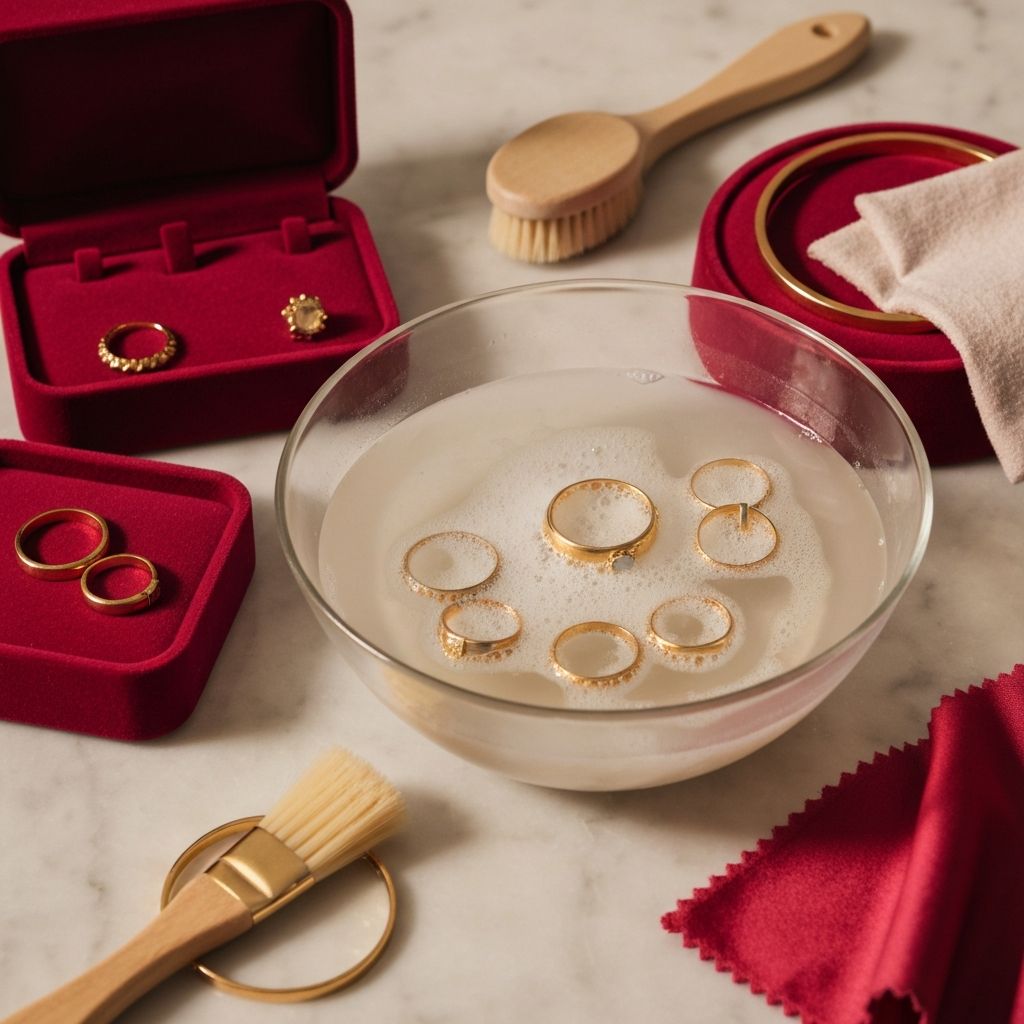
The simplest and most universally safe method for cleaning gold jewelry is the warm soapy water technique. This method works beautifully for solid gold, gold-filled, and most gold jewelry set with durable gemstones like diamonds, sapphires, and rubies.
Step 1: Fill a small bowl with warm water. The water should be comfortably warm to the touch but not hot, as extreme temperatures can cause thermal shock in certain gemstones and may loosen some adhesive settings. Add two to three drops of mild liquid dish soap to the water and stir gently to create a soapy solution. Avoid dish soaps that contain harsh chemicals, moisturizing additives, or antibacterial agents, as these can leave residue on your jewelry.
Step 2: Place your gold jewelry in the soapy water and let it soak for 15 to 30 minutes. This soaking period allows the soap to penetrate and loosen accumulated oils, lotions, and grime that have built up on the metal and around any gemstone settings. For heavily soiled pieces, you can soak for up to an hour.
Step 3: After soaking, use a very soft-bristled brush to gently scrub the jewelry. A soft toothbrush designated exclusively for jewelry cleaning is ideal. Pay special attention to the areas where dirt tends to accumulate: behind gemstone settings, along the inside of rings, between chain links, and in any decorative engravings or textured surfaces. Brush gently in small circular motions, applying minimal pressure to avoid scratching the gold.
Step 4: Rinse the jewelry thoroughly under warm running water to remove all soap residue. If you are cleaning small items like rings or earrings, place a mesh strainer or cheesecloth over the drain as a safety precaution against accidentally losing a piece down the sink. Ensure all soap is completely rinsed away, as dried soap residue can create a dull, cloudy film on the gold surface.
Step 5: Pat the jewelry dry with a soft, lint-free cloth. Microfiber cloths or jeweler's polishing cloths work best. Avoid paper towels, tissues, or rough fabrics that can leave fibers behind or scratch the surface. For chains and pieces with intricate details, you can use a hair dryer on its lowest, coolest setting to blow moisture out of hard-to-reach areas.
The Ammonia Solution Method for Deep Cleaning
For solid gold jewelry that has significant buildup or has not been cleaned in a long time, a diluted ammonia solution can provide a deeper clean than soap and water alone. This method is effective but should be used sparingly and only on solid gold without porous or delicate gemstones.
Mix one part clear household ammonia with six parts warm water in a small bowl. Place your gold jewelry in the solution and soak for no more than one minute. Remove the jewelry and gently brush with a soft toothbrush, then rinse thoroughly under warm water and dry with a soft cloth. Never soak gold jewelry in ammonia for extended periods, as the ammonia can damage certain alloy metals and may harm some gemstone settings over time.
This method should not be used on gold-plated jewelry, as the ammonia can accelerate the breakdown of the thin gold layer. It should also be avoided for jewelry containing pearls, opals, turquoise, coral, emeralds, or other porous or organic gemstones, which can be permanently damaged by ammonia exposure.
Cleaning Gold Jewelry with Gemstones
When your gold jewelry contains gemstones, the cleaning method must accommodate the most delicate element in the piece. While the gold itself is durable and resistant to most cleaning agents, many gemstones require special care.
Diamonds, sapphires, and rubies are among the hardest gemstones and can be safely cleaned using the warm soapy water method or even the diluted ammonia method. These stones are durable enough to withstand gentle brushing and are not harmed by mild cleaning solutions.
Emeralds require extra caution because they are often treated with oils or resins to fill natural inclusions and improve clarity. Ultrasonic cleaners, steam cleaners, ammonia, and even hot water can strip these treatments and damage the stone. Clean emerald jewelry only with lukewarm soapy water and a very soft cloth, and avoid any brushing near the stone.
Pearls, opals, and turquoise are porous and organic or semi-organic materials that can be damaged by chemicals, heat, and even prolonged water exposure. For gold jewelry containing these stones, wipe the gold portions with a damp cloth and clean the stones separately with a dry or barely damp soft cloth. Never submerge pearls, opals, or turquoise in cleaning solutions.
Soft stones like moonstone, labradorite, and tanzanite are more fragile than they appear and can scratch or fracture if handled roughly. Use only the gentle soapy water method with these stones and avoid any brushing directly on the stone surface.
Products and Methods to Avoid
Knowing what not to use on your gold jewelry is just as important as knowing the proper cleaning techniques. Several common household products and methods can damage gold, its alloy metals, or the gemstones in your jewelry.
Toothpaste is frequently recommended as a jewelry cleaner in online tips, but it is too abrasive for gold. Toothpaste contains microscopic particles designed to polish tooth enamel, which is much harder than gold. Using toothpaste on gold jewelry will create fine scratches that dull the surface over time.
Chlorine bleach and harsh chemicals can react with the alloy metals in gold jewelry, weakening the structure and potentially causing discoloration or pitting. This includes swimming pool chlorine, household bleach, and industrial cleaning products. Always remove gold jewelry before swimming in chlorinated pools or using harsh household cleaners.
Ultrasonic cleaners use high-frequency vibrations to remove dirt and are effective for some jewelry but can damage pieces with loose settings, glued components, or fragile gemstones. If you use an ultrasonic cleaner, ensure your jewelry is in good structural condition and does not contain stones that are sensitive to vibration.
By following these expert methods and caring for your gold jewelry regularly, you can maintain its beautiful warm luster for decades and even generations. A few minutes of gentle cleaning every few weeks is all it takes to keep your gold looking as brilliant as the day you first wore it.
