
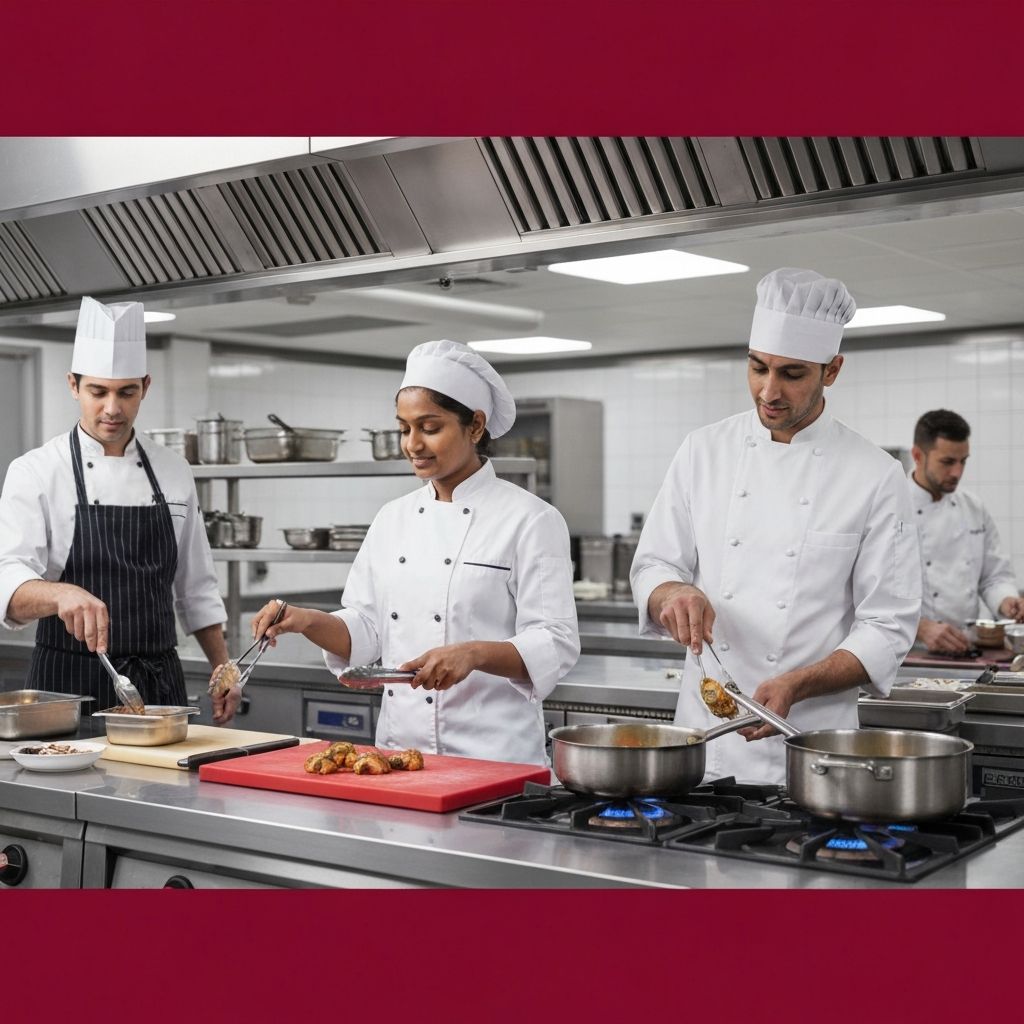
The Critical Importance of Post-Cooking Food Safety
Cooking food to the proper internal temperature is a crucial step in killing harmful bacteria and pathogens, but the food safety journey does not end when the cooking process is complete. In fact, the period after cooking is one of the most vulnerable times for food contamination. Cooked food that is improperly handled, stored, or served can become recontaminated with bacteria, viruses, or other pathogens in a process known as cross-contamination, potentially causing serious foodborne illness outbreaks.
For food workers in commercial kitchens, understanding and implementing proper post-cooking food safety practices is not just a best practice; it is a legal requirement. The FDA Food Code, state health department regulations, and local food safety ordinances all mandate specific procedures for handling cooked food. Violations of these requirements can result in health code violations, fines, business closure, and most importantly, harm to customers. This guide covers the essential practices every food worker should follow to protect cooked food from contamination.
Maintaining Proper Holding Temperatures
One of the most fundamental principles of post-cooking food safety is maintaining proper holding temperatures. The temperature danger zone, the range between 41 degrees Fahrenheit and 135 degrees Fahrenheit (5 to 57 degrees Celsius), is where bacteria multiply most rapidly. Cooked food must be kept out of this danger zone at all times. Hot foods should be held at 135 degrees Fahrenheit (57 degrees Celsius) or above using appropriate hot-holding equipment such as steam tables, heat lamps, warming drawers, or chafing dishes.
Food workers should monitor holding temperatures regularly using calibrated food thermometers, checking at least every two hours and ideally every hour. Temperature checks should be recorded in a temperature log as documentation of compliance. If hot food drops below 135 degrees Fahrenheit, it must be reheated to 165 degrees Fahrenheit (74 degrees Celsius) within two hours and then returned to proper hot-holding conditions. Food that has been in the temperature danger zone for more than four hours total (cumulative time, not continuous) must be discarded.
Proper Cooling Procedures
When cooked food needs to be cooled for later use, the cooling process must be done quickly and safely. The FDA Food Code requires that cooked food be cooled from 135 degrees Fahrenheit to 70 degrees Fahrenheit within the first two hours, and then from 70 degrees Fahrenheit to 41 degrees Fahrenheit within the next four hours, for a total cooling time of no more than six hours. This two-stage cooling requirement ensures that food passes through the most dangerous temperature range as quickly as possible.
Several methods can be used to cool food rapidly. An ice water bath, where the food container is placed in a larger container filled with ice water, is one of the most effective methods. Stirring the food frequently during cooling helps distribute the cold temperature evenly. Dividing large batches of food into smaller, shallow containers increases the surface area exposed to cooling, which accelerates the process. Blast chillers and commercial cooling equipment are available in many professional kitchens and can cool food much faster than traditional methods.
Personal Hygiene and Handwashing
Food workers' personal hygiene is one of the most important factors in preventing post-cooking contamination. Hands are the most common vehicle for transferring pathogens to food, and food workers must wash their hands thoroughly and frequently. The FDA Food Code requires handwashing for at least 20 seconds with soap and warm running water, followed by drying with a single-use paper towel or air dryer.
Food workers must wash their hands before handling any cooked or ready-to-eat food, after touching raw food, after using the restroom, after touching their face, hair, or body, after sneezing, coughing, or blowing their nose, after eating, drinking, or smoking, after touching dirty equipment, surfaces, or cleaning chemicals, and after handling money or taking out garbage. In addition to handwashing, food workers should wear clean gloves when handling ready-to-eat foods and change gloves whenever they become contaminated.
Preventing Cross-Contamination
Cross-contamination occurs when harmful microorganisms are transferred from one food item, surface, or person to another. After cooking, food is particularly vulnerable to cross-contamination because the cooking process has already eliminated the original microbial load, and any reintroduced bacteria will have a clean environment in which to multiply without competition.
To prevent cross-contamination with cooked food, food workers should use clean, sanitized utensils and equipment that have not been used for raw food. Cutting boards, knives, and other tools used for raw meat, poultry, or seafood must never be used for cooked food without first being thoroughly washed, rinsed, and sanitized. Color-coded cutting boards and utensils can help prevent accidental cross-use. Cooked food should be stored above raw food in refrigerators to prevent raw food drips from contaminating cooked products.
Proper Covering and Storage
Cooked food that is being held, cooled, or stored should be properly covered to protect it from airborne contaminants, including dust, debris, and microorganisms. Use tight-fitting lids, plastic wrap, aluminum foil, or other appropriate food covers to create a physical barrier between the food and potential contaminants. When food is on a buffet or serving line, sneeze guards should be in place to protect food from contamination by customers.
During storage, all cooked food should be labeled with the product name, the date and time it was prepared, and a use-by date. In commercial food service, ready-to-eat foods prepared in-house have a maximum shelf life of seven days when stored at 41 degrees Fahrenheit or below. Proper labeling and dating ensure that food is used within safe timeframes and helps with FIFO (First In, First Out) rotation practices.
Serving Practices and Utensil Management
When serving cooked food, food workers should use appropriate serving utensils rather than bare hands. Each food item should have its own dedicated serving utensil to prevent cross-contamination between dishes. Serving utensils should be stored with handles extending above the food container to prevent handles from becoming contaminated with food. Utensils should be replaced with clean ones regularly, typically at least every four hours during continuous service.
Self-service areas like buffets and salad bars require special attention. Food guards or sneeze guards must be in place to protect food from customer contamination. Serving utensils should be available for each item, and customers should not be allowed to use their own plates for refills. A food worker should be assigned to monitor self-service areas, replenishing food items, replacing utensils, and ensuring that food safety standards are maintained.
Training and Documentation
Effective food safety requires ongoing training and documentation. All food workers should receive initial food safety training that covers post-cooking contamination prevention as part of their onboarding process. Regular refresher training should be conducted to reinforce proper practices and update staff on any changes to regulations or procedures. Documentation of food safety practices, including temperature logs, cooling records, and employee training records, should be maintained and available for inspection by health department authorities. A culture of food safety, where every team member understands the importance of protecting cooked food from contamination and takes personal responsibility for following proper procedures, is the most effective defense against foodborne illness in any food service operation.
