
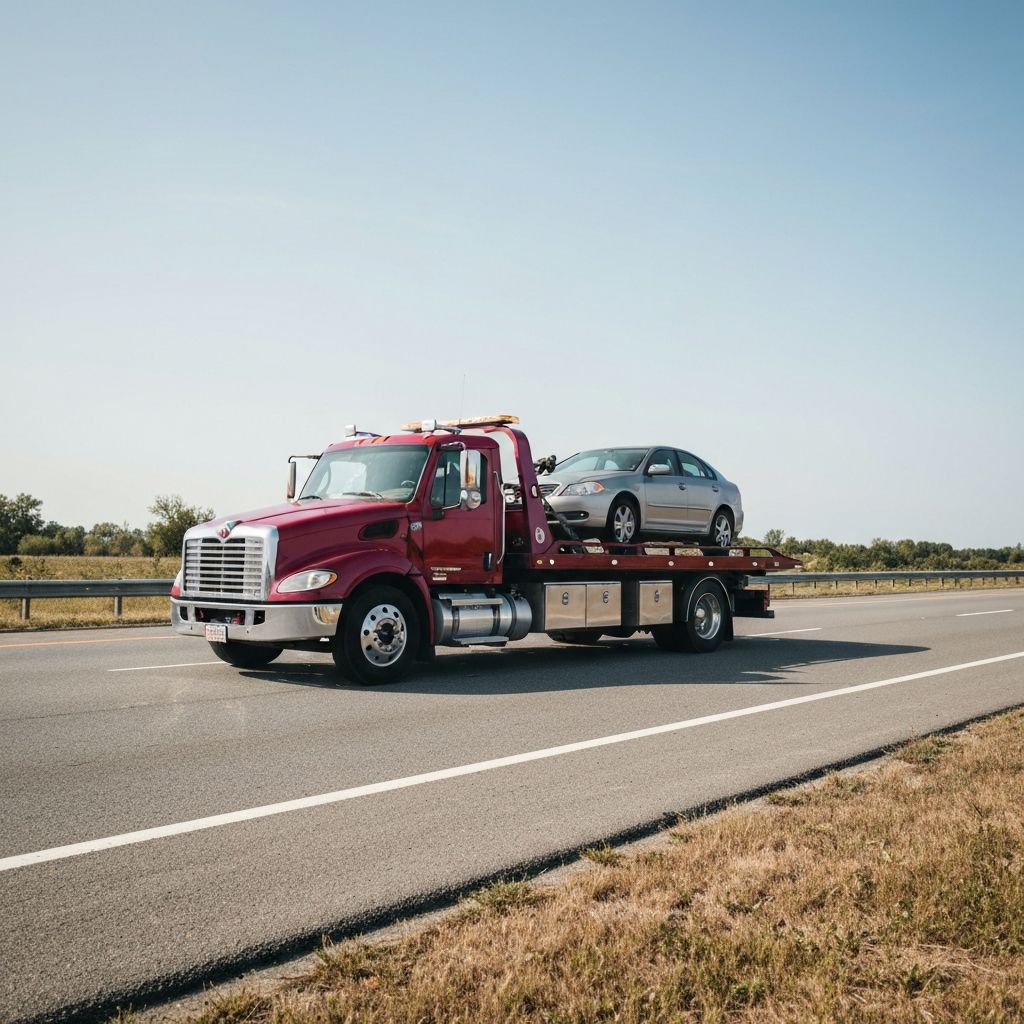
Average Car Towing Costs in 2026
Having your car break down or getting into an accident is stressful enough without worrying about how much it will cost to get your vehicle to a repair shop. Towing costs can vary significantly depending on a range of factors, including your location, the distance of the tow, the type of vehicle, the time of day, and the towing company you choose. Understanding these costs in advance can help you make informed decisions and avoid being overcharged during an already difficult situation.
On average, a standard local tow in the United States costs between $75 and $125 for the first five to ten miles. After the initial hookup fee, most towing companies charge an additional $2 to $4 per mile for the remaining distance. This means a 20-mile tow would typically cost between $100 and $175, while a 50-mile tow could range from $150 to $300. Long-distance tows of 100 miles or more can cost $300 to $600 or even higher, depending on the circumstances.
Breakdown of Towing Cost Components
To understand your towing bill, it helps to know the individual components that make up the total cost.
Base Hook-Up Fee: This is the flat fee charged for the tow truck to arrive at your location, hook up your vehicle, and prepare it for transport. The base fee typically ranges from $35 to $100 and covers the first few miles of the tow (usually 5 to 10 miles). This fee varies based on the type of tow truck required and the towing company's pricing structure.
Per-Mile Charge: After the distance covered by the base fee, you are charged a per-mile rate for the remaining distance. This rate typically ranges from $2 to $4 per mile for standard vehicles. Larger or heavier vehicles may incur higher per-mile rates of $4 to $7 per mile.
After-Hours and Weekend Surcharges: If your vehicle breaks down at night, on a weekend, or during a holiday, you can expect to pay a surcharge of $25 to $75 on top of the standard rates. Towing companies charge these premiums because they must pay drivers overtime wages and maintain 24/7 availability.
Specialty Equipment Fees: Certain situations require specialized towing equipment, which increases the cost. If your vehicle is stuck in a ditch, mud, snow, or water, the tow truck operator may need to use a winch or other recovery equipment. Winching fees typically range from $50 to $250 depending on the complexity of the recovery. If your vehicle is in an accident and needs to be loaded onto a flatbed rather than towed with a wheel-lift, the flatbed tow will generally cost $25 to $75 more than a standard tow.
Vehicle Size and Type: The size and weight of your vehicle significantly affect towing costs. Standard cars and small SUVs are the least expensive to tow. Mid-size trucks and larger SUVs may cost 20 to 40 percent more. Motorcycles can sometimes be towed for less than cars but may require a flatbed. Large vehicles like RVs, buses, and commercial trucks require heavy-duty tow trucks and can cost $200 to $500 or more for even short distances.
Towing Costs by Situation
Different scenarios come with different cost expectations. Here is a breakdown of what you might pay in common towing situations.
Flat Tire or Mechanical Breakdown (Local): If your car breaks down on a local road and needs to be towed to a nearby mechanic, expect to pay $75 to $150 for a standard tow of up to 10 miles. Many roadside assistance programs cover this type of tow entirely.
Highway Breakdown: Breaking down on a highway often costs more because tow trucks must travel further to reach you and may face additional safety requirements. Expect to pay $100 to $250 depending on your location on the highway and the distance to the nearest exit or repair facility.
Accident Towing: After an accident, towing costs can escalate quickly. The vehicle may need to be loaded onto a flatbed (especially if it is not drivable), and the tow truck operator may need to clean up debris or fluids from the roadway. Accident towing typically costs $150 to $400. In many cases, the at-fault driver's insurance will cover towing costs.
Long-Distance Towing: If you need your vehicle transported over a long distance — for example, from one city to another — the per-mile rate becomes the primary cost driver. Long-distance towing rates of $2 to $4 per mile mean a 200-mile tow could cost $400 to $800. For very long distances (500+ miles), it may be more economical to use an auto transport service rather than a tow truck.
Impound Towing: If your vehicle is towed by law enforcement or a property owner for parking violations, abandoned vehicle removal, or other reasons, you will need to pay towing and storage fees to retrieve it from the impound lot. Impound towing fees range from $100 to $500, and daily storage fees of $20 to $60 begin accumulating immediately. The total cost can add up quickly if you do not retrieve your vehicle promptly.
How to Save Money on Towing
Towing can be expensive, but there are several strategies you can use to reduce costs or avoid paying for towing altogether.
Roadside Assistance Programs: The best way to protect yourself from unexpected towing costs is to have a roadside assistance membership. Programs from AAA, your auto insurance provider, or your vehicle manufacturer typically cover towing for a set distance (usually 3 to 100 miles, depending on your plan) at no additional charge. AAA membership costs $56 to $164 per year, depending on the level of coverage, and includes towing, flat tire assistance, lockout service, and fuel delivery.
Check Your Insurance Policy: Many auto insurance policies include roadside assistance as an optional add-on for just $2 to $5 per month. If you do not already have this coverage, adding it is one of the most cost-effective ways to prepare for a towing emergency.
Credit Card Benefits: Some premium credit cards include roadside assistance as a cardholder benefit. Check your credit card terms to see if towing coverage is included before paying out of pocket.
Get Multiple Quotes: If you are not in an emergency and have time to shop around, call at least two or three towing companies to compare prices. Rates can vary significantly between providers, especially for longer tows.
Negotiate: In non-emergency situations, do not be afraid to negotiate with the towing company. Ask about discounts for cash payment, senior or military discounts, or price matching with competitors. Some companies may be willing to lower their rates to win your business.
Choose the Right Type of Tow: If your vehicle is drivable and the towing company offers both flatbed and wheel-lift towing, ask about the price difference. Wheel-lift towing is generally less expensive than flatbed towing, but flatbed is recommended for all-wheel-drive vehicles, luxury cars, and vehicles with very low ground clearance.
What to Do When You Need a Tow
If you find yourself in a situation where you need a tow, follow these steps to ensure your safety and minimize costs. First, move your vehicle to a safe location if possible — pull off the road, turn on your hazard lights, and set up flares or warning triangles if you have them. Second, call your roadside assistance provider or insurance company before calling a private towing service, as they may provide the tow for free or at a reduced rate. Third, ask the towing company for a clear, itemized estimate before authorizing the tow. Get the base fee, per-mile rate, and any applicable surcharges in writing. Fourth, document the condition of your vehicle with photos before it is loaded onto the tow truck. This protects you in case of any damage during transport.
Conclusion
The cost of towing a car ranges from $75 for a short local tow to $500 or more for long-distance transport or complex recovery situations. By understanding the factors that influence towing costs — distance, vehicle type, time of day, and equipment needed — you can make better decisions and potentially save hundreds of dollars. Investing in a roadside assistance program is the single best way to protect yourself from unexpected towing expenses, providing peace of mind every time you get behind the wheel.
