
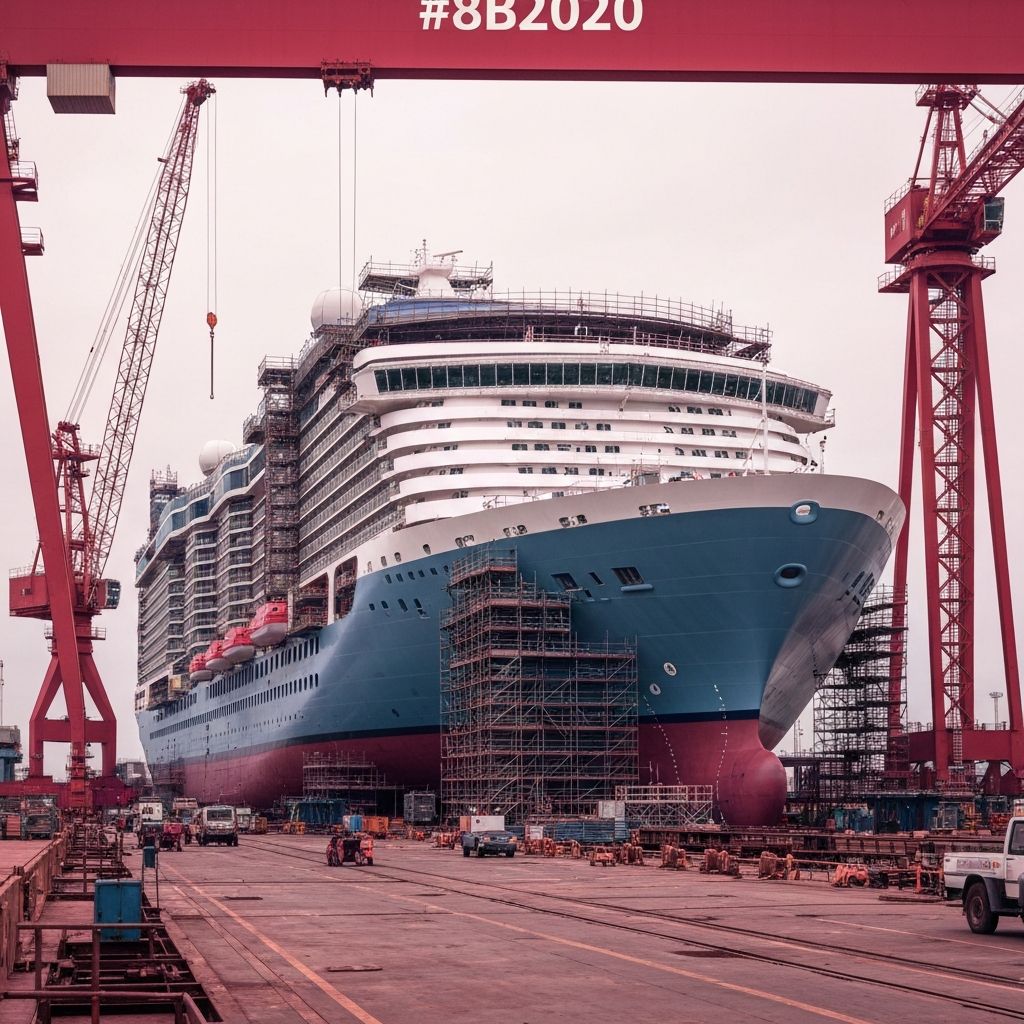
The Staggering Cost of Building a Cruise Ship
Cruise ships are among the most complex and expensive structures ever built by humans. The cost of building a modern cruise ship ranges from approximately $500 million to over $2 billion, depending on the size, class, and amenities included. The largest and most luxurious mega-ships, such as Royal Caribbean's Icon of the Seas, have construction costs that exceed $2 billion, making them some of the most expensive vessels ever constructed.
To put these numbers in perspective, the cost of building a single large cruise ship is comparable to building a small city. Every aspect of the ship, from the hull and engines to the restaurants, theaters, and guest cabins, must be designed, fabricated, and assembled with precision. The result is a floating resort that can accommodate thousands of passengers and crew members while navigating the open ocean.
Cost Breakdown: Where Does the Money Go?
The cost of building a cruise ship can be broken down into several major categories. The hull and structural steel account for approximately 15 to 20 percent of the total cost. This includes the raw materials, fabrication, welding, and assembly of the ship's external structure, which must be strong enough to withstand the forces of the ocean while remaining hydrodynamically efficient.
The propulsion system, including engines, propellers, and fuel systems, represents another 10 to 15 percent of the cost. Modern cruise ships use diesel-electric or liquefied natural gas (LNG) propulsion systems that are engineered for fuel efficiency and environmental compliance. A single large cruise ship engine can cost tens of millions of dollars.
Guest accommodations, including cabins, suites, and public spaces, account for roughly 25 to 30 percent of the total cost. Outfitting thousands of guest rooms with furniture, fixtures, plumbing, and electrical systems is an enormous undertaking. Luxury suites with private balconies, hot tubs, and premium finishes are significantly more expensive to build than standard interior cabins.
Entertainment and amenity areas, such as theaters, pools, water parks, casinos, spas, and dining venues, represent approximately 15 to 20 percent of the cost. Modern cruise ships feature increasingly elaborate attractions, including roller coasters, surf simulators, ice-skating rinks, and multi-story waterslides, all of which add to the construction budget.
Navigation, safety, and communication systems account for about 10 to 15 percent of the total cost. These include the bridge equipment, radar systems, satellite communications, lifeboats, firefighting systems, and all the technology required to operate the ship safely and comply with international maritime regulations.
Costs by Ship Size and Class
The cost of building a cruise ship is directly related to its size and the level of luxury it offers. Small expedition cruise ships with capacity for 100 to 300 passengers typically cost between $100 million and $300 million to build. These ships are designed for adventure travel and feature specialized equipment for navigating remote waters.
Mid-size cruise ships carrying 1,000 to 2,000 passengers generally cost between $400 million and $800 million. These ships offer a balance of amenities and intimacy and are popular with premium cruise lines such as Celebrity Cruises and Holland America Line.
Large mega-ships with capacity for 3,000 to 6,000 passengers cost between $800 million and $1.5 billion. These vessels are the workhorses of the mainstream cruise industry and are operated by lines such as Carnival, Royal Caribbean, and MSC Cruises.
Ultra-large cruise ships, such as Royal Caribbean's Oasis-class and Icon-class vessels, can carry over 6,000 passengers and cost $1.5 billion to $2 billion or more. These ships are essentially floating cities, with multiple neighborhoods, dozens of dining options, and hundreds of entertainment offerings.
The Shipbuilding Process
Building a cruise ship is a multi-year process that typically takes three to five years from initial design to delivery. The process begins with the design phase, where naval architects and engineers create detailed plans for every aspect of the ship. Computer-aided design (CAD) and advanced simulation software are used to optimize the ship's performance, stability, and efficiency.
Once the design is finalized, construction begins at a shipyard. The world's largest cruise ships are built at a handful of specialized shipyards, including Meyer Werft in Germany, Chantiers de l'Atlantique in France, and Fincantieri in Italy. These shipyards have the enormous dry docks, cranes, and skilled workforce required to build vessels of this scale.
The hull is constructed first using massive pre-fabricated steel blocks that are welded together in the dry dock. Once the hull is complete, the ship is floated out of the dry dock and moved to an outfitting pier, where the interior spaces are built out. This outfitting phase is the most time-consuming and expensive part of the construction process.
Operating Costs After Construction
The cost of building a cruise ship is just the beginning. Operating a cruise ship involves substantial ongoing expenses, including fuel, crew wages, maintenance, port fees, food and beverages, entertainment, and insurance. The annual operating cost of a large cruise ship can range from $150 million to $250 million or more.
Fuel is one of the largest operating expenses, often accounting for 15 to 20 percent of total operating costs. A large cruise ship can consume 250 to 400 tons of fuel per day, costing tens of thousands of dollars daily depending on fuel prices. The transition to LNG and other cleaner fuels is expected to increase fuel costs in the short term but reduce environmental compliance costs over time.
Crew wages and benefits for the 1,000 to 2,500 crew members on a large cruise ship represent another significant expense. Food and beverage costs are substantial as well, with a large ship serving an estimated 30,000 meals per day during a full sailing.
How Cruise Lines Finance New Ships
Given the enormous cost of building cruise ships, cruise lines rely on a combination of financing methods. Most new ship orders are financed through a combination of export credit agency loans, commercial bank loans, and internal cash flow. Some cruise lines issue bonds or equity to raise capital for new ship construction.
Export credit agencies, such as Germany's KfW and France's BPI, play a crucial role in cruise ship financing by providing government-backed loan guarantees to shipyards and cruise lines. These guarantees reduce the risk for lenders and make it possible for cruise lines to secure favorable financing terms for their multi-billion-dollar ship orders.
The return on investment for a new cruise ship depends on factors such as passenger demand, ticket pricing, onboard revenue, and operating efficiency. A well-managed cruise ship can generate significant profits over its 25 to 30-year lifespan, making the initial construction cost a worthwhile investment for major cruise lines.
The Future of Cruise Ship Construction
The cruise industry continues to push the boundaries of ship design and construction. Future trends include the development of hydrogen and fuel cell-powered cruise ships, the integration of artificial intelligence for ship operations and guest services, and the construction of even larger vessels with innovative amenities.
Sustainability is becoming a major focus in cruise ship construction. New ships are being designed with advanced wastewater treatment systems, energy-efficient lighting and HVAC systems, and shore power connectivity to reduce emissions while in port. These environmental technologies add to the construction cost but are essential for the industry's long-term viability.
As technology advances and passenger expectations continue to rise, the cost of building cruise ships will likely continue to increase. However, the revenue potential of these floating resorts ensures that cruise lines will keep investing in new and ever more spectacular vessels for years to come.
