
Breaking Down Food Truck Startup Costs
The food truck industry continues to grow as entrepreneurs seek alternatives to the high overhead costs of traditional brick-and-mortar restaurants. But while food trucks are generally more affordable to start than sit-down restaurants, the total investment required is often higher than many aspiring owners expect. A realistic budget for starting a food truck business in 2026 ranges from 40000 dollars for a bare-bones used setup to well over 250000 dollars for a premium new truck with all the bells and whistles.
The largest single expense is the truck itself, but many first-time owners underestimate the cumulative cost of equipment, permits, insurance, initial inventory, branding, and working capital needed to sustain the business until it becomes profitable. In this guide, we will break down every major cost category so you can create a realistic budget and avoid the common financial pitfalls that cause many food truck businesses to fail within their first two years.
The Truck: Your Biggest Investment
The vehicle is by far the most significant expense in starting a food truck business. You have three main options: buying new, buying used, or converting an existing vehicle. A brand-new, custom-built food truck from a reputable manufacturer costs between 80000 and 200000 dollars, with most buyers spending around 100000 to 150000 dollars for a mid-range truck with standard commercial kitchen equipment.
Used food trucks are available for 25000 to 100000 dollars depending on age, condition, and included equipment. This is the most popular route for first-time owners, as it significantly reduces the upfront investment. However, used trucks carry more risk of mechanical issues and may require expensive repairs or equipment upgrades. Always have a used food truck inspected by both a mechanic and a food truck specialist before purchasing.
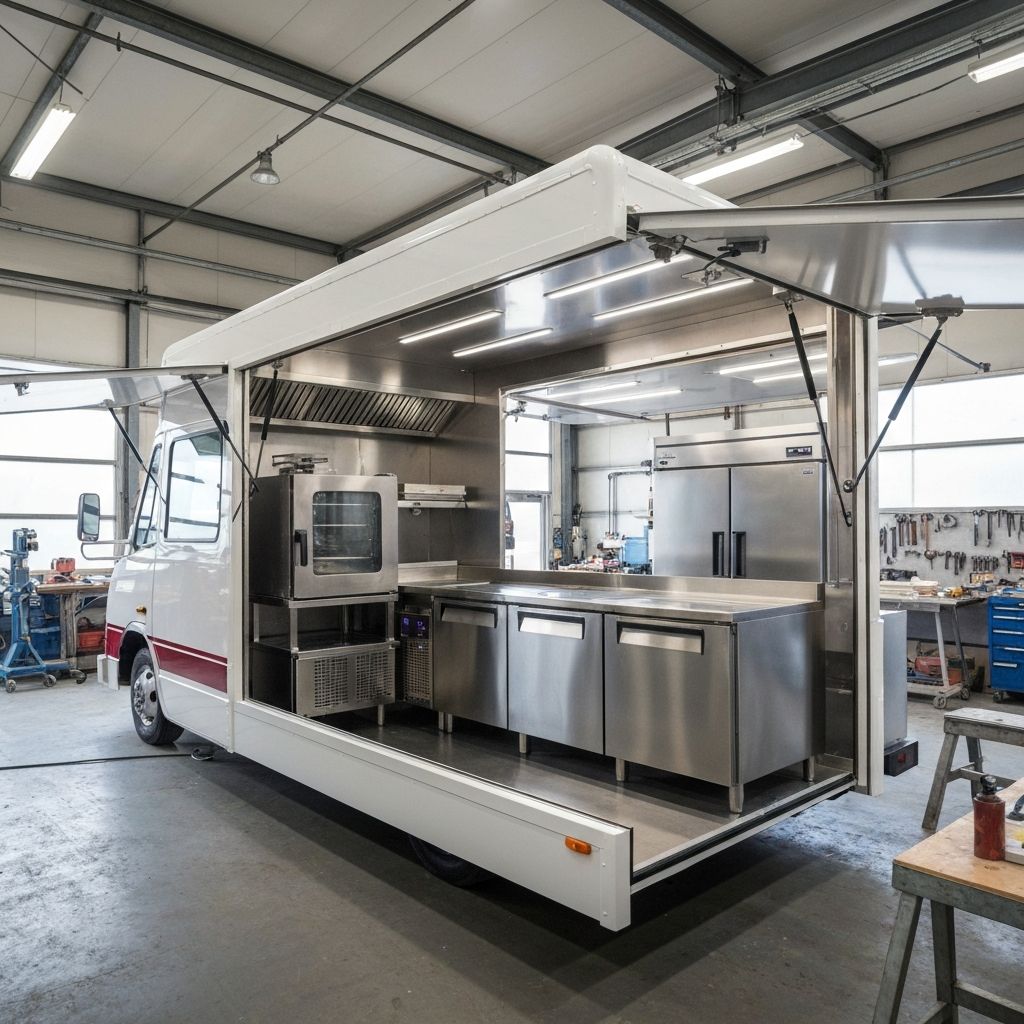
The conversion route involves purchasing a used step van, box truck, or trailer for 5000 to 20000 dollars and having it professionally converted into a food truck. The conversion itself typically costs 30000 to 80000 dollars, bringing the total to 35000 to 100000 dollars. This option offers the most flexibility in terms of kitchen layout and equipment selection, but the conversion process takes 8 to 16 weeks and requires working with experienced food truck builders to ensure compliance with health and safety codes.
Kitchen Equipment Costs
Outfitting your food truck with commercial kitchen equipment is a major expense that varies significantly based on your menu. A basic kitchen setup for a simple menu like burgers or tacos might cost 15000 to 25000 dollars, while a complex menu requiring multiple cooking methods could run 40000 to 60000 dollars or more in equipment costs.
Essential equipment includes a commercial range or cooktop at 2000 to 6000 dollars, a deep fryer at 1500 to 4000 dollars, a flat-top griddle at 1000 to 3500 dollars, and a commercial ventilation hood with fire suppression at 3000 to 10000 dollars. Refrigeration units cost 2000 to 5000 dollars each, and most trucks need at least one refrigerator and one freezer. A commercial generator to power everything costs 3000 to 8000 dollars, and a point-of-sale system with card reader runs 500 to 2000 dollars for hardware plus monthly software fees.
Smaller but essential items include food prep tables, cutting boards, cookware, utensils, food storage containers, serving supplies, a hand washing station, water tanks for fresh and waste water, and a fire extinguisher. These items collectively cost 2000 to 5000 dollars. Do not forget about disposable supplies like napkins, plates, cups, and utensils, which represent an ongoing cost of 200 to 500 dollars per month.
Licensing, Permits, and Insurance
The regulatory requirements for operating a food truck vary dramatically by location, and the associated costs can add up quickly. At a minimum, you will need a business license at 50 to 500 dollars, a food service permit at 100 to 1000 dollars, a mobile food vendor permit at 100 to 2000 dollars, a health department permit with inspection at 200 to 1000 dollars, and a fire department permit at 50 to 300 dollars. Some cities require additional permits for specific locations, events, or operating hours.
Insurance is a non-negotiable expense that protects your business from financial devastation. Commercial auto insurance for a food truck costs 2000 to 4000 dollars annually. General liability insurance costs 1000 to 3000 dollars per year. Product liability insurance, which covers claims related to food-borne illness, adds 500 to 1500 dollars annually. If you hire employees, workers compensation insurance is required and costs vary based on payroll and state requirements.
Monthly Operating Expenses
Beyond startup costs, food truck owners face significant monthly operating expenses. Food costs typically represent 28 to 35 percent of revenue. Labor costs, including your own compensation, account for 25 to 35 percent. Fuel and propane run 200 to 600 dollars monthly. Commissary kitchen fees, required in many cities, cost 400 to 1200 dollars per month. Vehicle maintenance averages 200 to 500 dollars monthly when amortized over the year. Event and parking fees range from 100 to 2000 dollars per month depending on your market.
Marketing expenses should be budgeted at 3 to 5 percent of revenue, covering social media advertising, website maintenance, and promotional materials. A professional truck wrap, which serves as your most visible marketing asset, is a one-time cost of 2500 to 5000 dollars. Many food truck owners recommend having 3 to 6 months of operating expenses saved as working capital before launching, which typically means 15000 to 30000 dollars in reserve to cover expenses while the business builds its customer base.
