
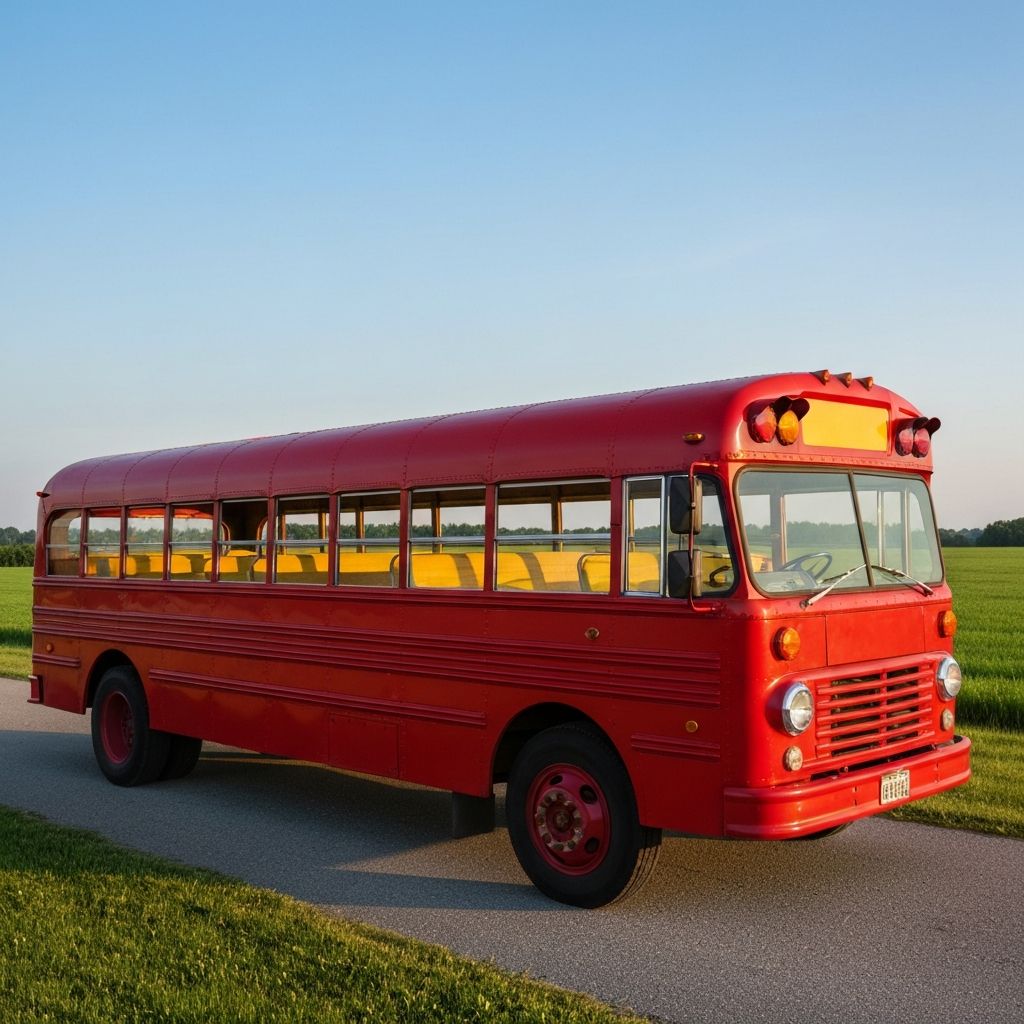
School Bus Seating Capacity Explained
School buses are one of the most recognizable vehicles on American roads, with their distinctive yellow color and flashing red lights. They transport approximately 26 million students to and from school every day across the United States, making them the largest mass transit system in the country. But have you ever wondered exactly how many seats are on a school bus? The answer depends on several factors, including the type and size of the bus, the age of the passengers, and applicable federal and state regulations.
A standard full-size school bus, commonly known as a Type C or Type D bus, typically has between 23 and 26 rows of seats, providing seating capacity for 72 to 90 passengers. However, this number assumes three students per seat, which is the standard for elementary school children. When transporting older, larger students such as middle and high schoolers, the practical capacity drops to about 48 to 54 passengers with two students per seat. Let's dive deeper into the specifics of school bus seating.
Types of School Buses and Their Capacities
School buses come in four main types, classified by the National Highway Traffic Safety Administration (NHTSA) as Type A, Type B, Type C, and Type D. Each type has different seating capacities based on its size and design. Understanding these classifications helps explain the wide range of seating numbers you might encounter.
Type A school buses are the smallest category and are built on a van or cutaway front-section vehicle chassis. They come in two subcategories: Type A-1, with a Gross Vehicle Weight Rating (GVWR) of 10,000 pounds or less, and Type A-2, with a GVWR greater than 10,000 pounds but not more than 14,500 pounds. Type A buses typically seat between 10 and 30 passengers, making them ideal for special needs transportation, small rural routes, and activity trips. Their compact size makes them easier to maneuver in tight spaces and residential areas with narrow streets.
Type B school buses are built on a stripped chassis with the body installed by a bus manufacturer. The entrance door is behind the front wheels, and the engine may be in front of, beside, or behind the driver. These buses have a GVWR of more than 10,000 pounds and typically seat 25 to 45 passengers. Type B buses offer a good balance between maneuverability and capacity, making them popular for medium-sized routes.
Type C school buses are the most common type found on American roads. Often called conventional school buses, they're built on a chassis with a hood and front fender assembly. The engine is in front of the windshield, and the entrance door is behind the front wheels. Type C buses typically have a GVWR exceeding 10,000 pounds and seat 54 to 78 passengers. Their familiar design with the long hood is what most people picture when they think of a school bus.
Type D school buses are the largest type, built on a transit-style chassis where the engine can be mounted in the front, mid-ship, or rear. The entrance door is ahead of the front wheels, giving the bus a flat-front appearance. These buses have the highest passenger capacity, seating 72 to 90 students, and are commonly used in urban school districts with high-density routes. Their flat-front design provides the driver with excellent forward and side visibility.
How Seating Capacity Is Calculated
The seating capacity of a school bus isn't simply determined by counting seats. Several factors influence how many passengers a bus can safely and legally carry. The primary consideration is the size of the passengers, as school bus seats are designed to accommodate different body sizes based on age groups.
Federal Motor Vehicle Safety Standards (FMVSS) specify that school bus seats must be at least 39 inches wide for buses with a GVWR over 10,000 pounds. This width is designed to accommodate three elementary-aged students (ages 5-10) or two middle and high school-aged students (ages 11-18) per seat. The distinction is important because it means the same bus can have different listed capacities depending on who's riding.
Seat spacing, known as pitch, also affects capacity. Standard school bus seats have a pitch of approximately 24 inches from the back of one seat to the back of the seat in front of it. This spacing provides adequate legroom while maximizing the number of rows that can fit in the bus body. Some buses designed for older students or long-distance trips may have increased pitch for additional comfort, which reduces the overall number of rows and thus the seating capacity.
The bus body length is another crucial factor. Full-size school bus bodies range from about 35 to 40 feet in length, with the most common lengths being 35 and 38 feet. A 35-foot bus body typically accommodates 23 rows of seats, while a 40-foot body can fit up to 26 rows. Each additional row adds either two or three seats to the total capacity, depending on the passenger size designation.
Safety Features and Seating Design
School bus seats are specifically engineered for safety using a concept called compartmentalization. This passive safety system uses closely spaced seats with high, energy-absorbing seat backs to create a protective compartment for each passenger. In the event of a crash, passengers are cushioned between the seats, which absorb the impact energy and reduce the risk of injury.
The seat construction includes high-density foam padding covered in a durable vinyl material rated for fire resistance. The seat frames are made of heavy-gauge steel and are securely bolted to the bus floor. Each seat back is designed to flex under impact, absorbing energy gradually rather than transmitting it directly to the passenger behind. This is why school buses in many states don't require seat belts for passengers, as the compartmentalization system provides effective crash protection for the majority of collision types.
However, the debate over seat belts on school buses has evolved in recent years. As of now, several states have passed laws requiring lap-shoulder belts on new school buses. When three-point seat belts are installed, the seating capacity of the bus typically decreases because the belt hardware takes up additional space and each belt position is sized for one passenger. A bus rated for 72 passengers without belts might only seat 48 passengers with three-point seat belts installed.
Special Considerations for Different Passengers
School buses must accommodate a diverse range of passengers, which affects seating configurations. Wheelchair-accessible buses include positions where traditional seats can be folded up or removed to make room for wheelchair tie-down stations. Each wheelchair position typically replaces 4 to 6 standard seating positions, reducing the overall capacity of the bus. Federal law requires that school districts provide accessible transportation for students with disabilities.
Car seats and child safety restraints for the youngest passengers also affect capacity. Preschool and kindergarten students who require car seats take up more space per passenger than older students. A standard car seat installed on a school bus seat typically means that only one additional child can sit in the remaining space on that bench, reducing the three-per-seat capacity to two.
Activity buses used for field trips, sports events, and other extracurricular activities may have different seating configurations than regular route buses. Some activity buses feature higher-back seats with additional padding, individual armrests, and more generous legroom. While more comfortable, these configurations typically result in fewer total seats compared to standard school bus configurations.
State and Local Regulations
While federal standards set minimum requirements for school bus seating, individual states may impose additional regulations that affect seating capacity. Some states specify maximum passenger loads based on the bus's GVWR rather than the number of seat positions. Others mandate specific seating configurations for different age groups or require additional space for safety equipment such as fire extinguishers and first aid kits.
Local school district policies can further affect how many students ride on each bus. Many districts establish their own occupancy guidelines that may be more conservative than state requirements. For example, a district might mandate a maximum of two students per seat for all age groups, even though federal standards allow three elementary students per seat. These policies are often driven by concerns about student comfort, behavior management, and safety margins.
Bus drivers are responsible for managing seating on their routes and ensuring that the bus is not overloaded. Drivers conduct regular passenger counts and report any routes that consistently exceed comfortable capacity. When routes become overcrowded, school districts may adjust boundaries, add additional buses, or stagger pickup times to distribute the load more evenly.
The Bottom Line on School Bus Seats
The number of seats on a school bus ranges from as few as 10 on a small Type A bus to as many as 26 rows (90 passengers) on a full-size Type D bus. The most common school bus you'll see on the road, the Type C conventional bus, typically has 23 to 24 rows of seats and can carry between 48 and 72 passengers, depending on whether you're counting by two or three students per seat. The exact number for any specific bus depends on its body length, seat configuration, the presence of wheelchair positions or seat belts, and the age group of the students being transported.
Understanding school bus seating capacity is more than just a trivia question. It has real implications for school district transportation planning, student safety, and the efficient use of resources. As regulations continue to evolve and new safety features are introduced, the seating configurations of school buses will continue to adapt to meet the changing needs of the students they serve.
