
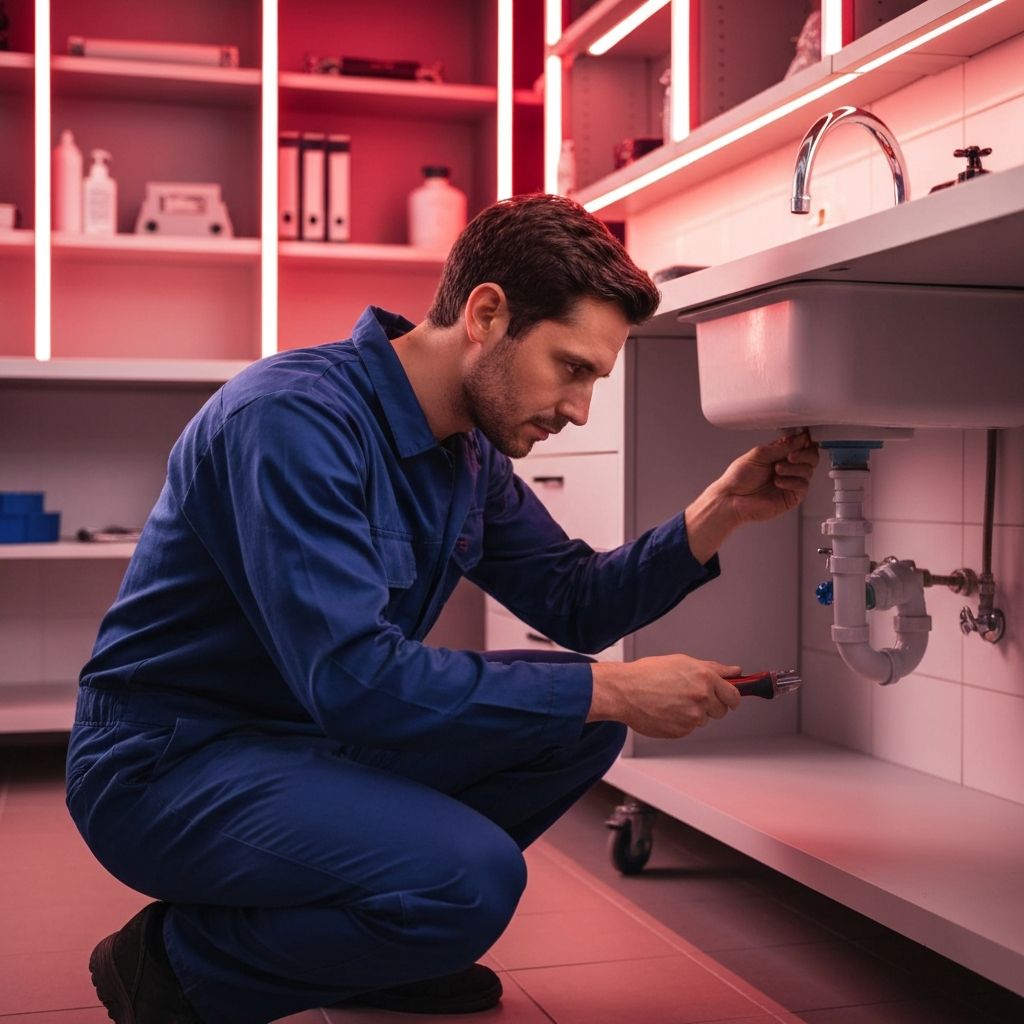
Overview of the Plumbing Career Path
Becoming a plumber is one of the most practical and rewarding career choices available today. Plumbers install, repair, and maintain water systems, drainage pipes, gas lines, and fixtures in residential, commercial, and industrial buildings. The profession offers strong job security, competitive salaries, and the satisfaction of performing essential work that keeps communities safe and functional.
However, becoming a fully licensed plumber is not an overnight process. It requires a combination of education, hands-on training, and examination. The total time investment depends on your location, the specific licensing requirements in your state or country, and the career level you want to achieve. Generally, you can expect the journey from complete beginner to licensed journeyman plumber to take between four and six years, with additional time required if you want to become a master plumber.
Step 1: High School Education and Prerequisites
The first step toward becoming a plumber is completing your high school education or obtaining a GED equivalent. While no specific college degree is required, certain high school courses can give you a significant advantage. Mathematics, physics, and shop classes provide foundational knowledge that will be useful throughout your plumbing career.
Most apprenticeship programs require applicants to be at least 18 years old and hold a high school diploma or GED. Some programs may also require a valid driver's license, as plumbers frequently travel to different job sites. Physical fitness is another important consideration, as the job involves lifting heavy equipment, working in confined spaces, and spending long hours on your feet.
Time investment for this step: Typically completed by age 18 as part of your regular education.
Step 2: Pre-Apprenticeship Training (Optional but Recommended)
Before entering a formal apprenticeship, many aspiring plumbers choose to complete a pre-apprenticeship or vocational training program at a trade school or community college. These programs typically last between six months and one year and cover the fundamentals of plumbing, including pipe fitting, blueprint reading, plumbing codes, water supply systems, and drainage systems.
Attending a trade school is not mandatory in most states, but it offers several advantages. First, it provides a structured learning environment where you can gain foundational knowledge before entering the workforce. Second, completing a trade school program can sometimes shorten the length of your apprenticeship, as some programs give credit for classroom hours completed at an accredited institution. Third, having formal training on your resume can make you a more competitive applicant for apprenticeship programs.
The cost of trade school programs varies widely, ranging from $1,000 to $15,000 depending on the institution and program length. Financial aid, scholarships, and grants may be available to help offset these costs.
Time investment: 6 months to 1 year.
Step 3: Plumbing Apprenticeship
The apprenticeship is the core of your plumbing education and the most time-intensive step in the process. A plumbing apprenticeship combines on-the-job training with classroom instruction, allowing you to earn money while learning the trade under the supervision of experienced journeyman and master plumbers.
Most plumbing apprenticeship programs last four to five years and require a minimum of 1,500 to 2,000 hours of on-the-job training per year, along with approximately 200 to 250 hours of related classroom instruction annually. Over the course of the apprenticeship, you will accumulate between 8,000 and 10,000 hours of practical experience.
During your apprenticeship, you will learn a wide range of skills, including installing and repairing water supply lines and drainage systems, reading and interpreting blueprints and building codes, soldering, brazing, and welding pipes, installing fixtures such as sinks, toilets, bathtubs, and water heaters, troubleshooting and diagnosing plumbing problems, working with various pipe materials including copper, PVC, PEX, and cast iron, and understanding gas line installation and safety protocols.
Apprentices are paid for their work, starting at approximately 40 to 50 percent of a journeyman plumber's wage. As you progress through the program and gain more skills, your pay increases incrementally. By the final year of your apprenticeship, you may earn 80 to 90 percent of a journeyman's rate.
Apprenticeship programs are offered by plumbers' unions (such as the United Association of Journeymen and Apprentices), independent plumbing contractors, and joint apprenticeship training committees. Union apprenticeships tend to offer higher pay, better benefits, and more comprehensive training but may be more competitive to enter.
Time investment: 4 to 5 years.
Step 4: Journeyman Plumber Licensure
After completing your apprenticeship, you are eligible to apply for a journeyman plumber license. This license allows you to work independently, without the direct supervision of a master plumber, although you may still need a master plumber to pull permits for certain jobs depending on your state's regulations.
To obtain your journeyman license, you must pass a comprehensive examination that tests your knowledge of plumbing codes, installation techniques, safety regulations, and problem-solving skills. The exam typically consists of both written and practical components. Preparation materials, practice exams, and review courses are available to help you study.
Licensing requirements vary by state and municipality. Some states have statewide licensing, while others delegate licensing authority to individual cities or counties. Exam fees typically range from $50 to $300, and you may also need to provide proof of your apprenticeship hours, pass a background check, and obtain liability insurance.
Time investment: Typically included within the apprenticeship timeline; the licensing exam itself takes a few hours, but preparation may take several weeks to months.
Step 5: Becoming a Master Plumber (Optional but Valuable)
A master plumber license represents the highest level of professional certification in the plumbing trade. Master plumbers can work without supervision, pull permits, design plumbing systems for new construction, supervise journeymen and apprentices, and start their own plumbing businesses.
To become a master plumber, you typically need to hold a journeyman license and accumulate an additional one to four years of work experience as a licensed journeyman. The exact requirements vary by state. After meeting the experience requirement, you must pass a rigorous master plumber examination that covers advanced plumbing design, complex code scenarios, business management, and project supervision.
Earning a master plumber license significantly increases your earning potential and career opportunities. Master plumbers often earn 20 to 30 percent more than journeymen, and having this credential is essential if you plan to start your own plumbing company.
Time investment: 1 to 4 additional years beyond journeyman licensure.
Total Timeline Summary
Here is a summary of the total time required to reach each level of the plumbing profession. To become an apprentice plumber, you need a high school diploma, making the starting age approximately 18. Completing a trade school program adds six months to one year. The apprenticeship itself takes four to five years. To become a licensed journeyman plumber, the total timeline from starting the apprenticeship is four to five years. To become a master plumber, you need an additional one to four years of experience beyond journeyman status, bringing the total career timeline to approximately six to ten years from the start of your apprenticeship.
Plumber Salary and Job Outlook
The plumbing profession offers competitive compensation and strong job growth. According to the U.S. Bureau of Labor Statistics, the median annual wage for plumbers, pipefitters, and steamfitters is approximately $60,090, with the top 10 percent earning more than $99,920 per year. Master plumbers and those who own their own businesses can earn significantly more.
Job growth for plumbers is projected at approximately 2 percent over the next decade, which is in line with the average for all occupations. However, the ongoing need for infrastructure maintenance, new construction, and green plumbing technologies ensures steady demand for skilled plumbers. Additionally, as many experienced plumbers approach retirement age, opportunities for new entrants to the field are expected to remain strong.
Is a Plumbing Career Right for You?
A career in plumbing is an excellent choice for individuals who enjoy working with their hands, solving practical problems, and providing an essential service. The path to becoming a licensed plumber requires patience and dedication — typically four to six years for journeyman status — but it offers the reward of a stable, well-paying career without the burden of a four-year college degree and student loan debt. If you are willing to invest the time and effort, plumbing can provide a fulfilling and financially secure future.
