
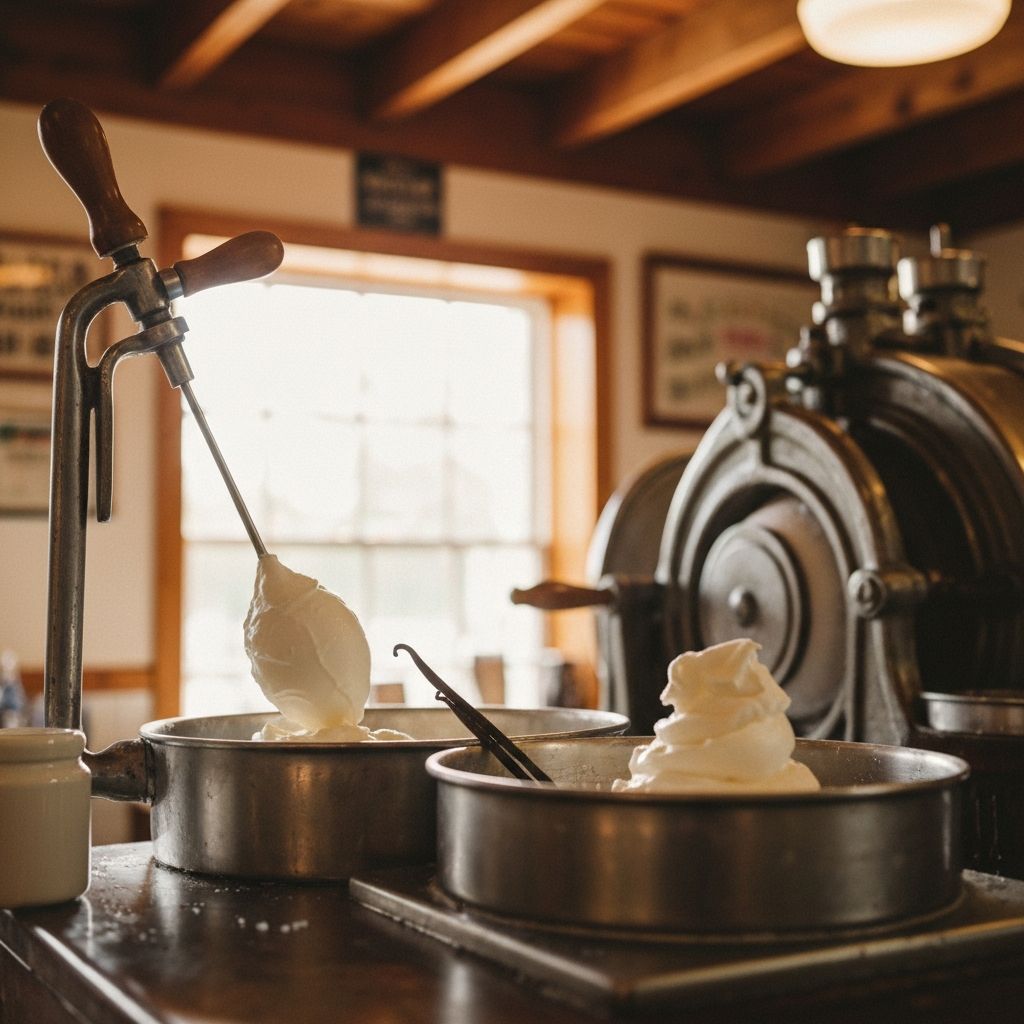
The Basic Ingredients of Ice Cream
At its core, ice cream is a deceptively simple creation made from just a handful of basic ingredients: cream, milk, sugar, and sometimes eggs. However, the magic of ice cream lies not in the simplicity of its ingredients but in the precise way these components are combined, processed, and frozen to create the smooth, creamy texture that we all know and love. The cream and milk provide the fat and protein that give ice cream its rich body and creamy mouthfeel. The higher the fat content, the richer and more luxurious the ice cream will taste. Premium ice cream brands typically use a higher ratio of cream to milk, resulting in a denser, more flavorful product.
Sugar serves a dual purpose in ice cream making. It provides sweetness, of course, but it also plays a critical role in the freezing process by lowering the freezing point of the mixture. This means that the ice cream base does not freeze into a solid block but instead remains soft and scoopable even at freezer temperatures. Without sugar, ice cream would freeze into a hard, icy mass that would be difficult to eat and unpleasant in texture. The type of sugar used can also affect the final product. Regular granulated sugar is most common, but some recipes use corn syrup, honey, or other sweeteners to achieve different flavor profiles and textures.
The Role of Eggs and Emulsifiers
Many traditional ice cream recipes call for egg yolks, which serve as natural emulsifiers and contribute to the rich, custard-like flavor of classic French-style ice cream. Emulsifiers are substances that help blend ingredients that would normally separate, such as fat and water. In ice cream, egg yolks help create a smooth, uniform mixture by keeping the fat droplets from the cream evenly distributed throughout the base. This results in a creamier texture and a more stable product that resists the formation of ice crystals during storage.
In commercial ice cream production, synthetic emulsifiers like mono- and diglycerides and polysorbate 80 are often used in addition to or instead of egg yolks. These emulsifiers serve the same basic function as egg yolks but provide more consistent results at scale. Stabilizers like guar gum, carrageenan, and locust bean gum are also commonly added to commercial ice cream to help maintain a smooth texture and prevent ice crystal formation during distribution and storage. While some ice cream purists prefer all-natural recipes without these additives, they play an important role in ensuring that commercially produced ice cream maintains its quality throughout its shelf life.
Making the Ice Cream Base
The first step in making ice cream is creating the base, also known as the ice cream mix. In a home kitchen, this typically involves heating milk and cream together in a saucepan until the mixture is warm but not boiling. If the recipe calls for egg yolks, they are whisked together with sugar in a separate bowl until light and fluffy. A small amount of the warm milk mixture is then slowly added to the egg mixture to temper it, gradually raising the temperature of the eggs without scrambling them. The tempered egg mixture is then added back to the saucepan with the remaining milk and cream.
The combined mixture is cooked over medium heat, stirring constantly, until it thickens enough to coat the back of a spoon, typically reaching a temperature of about 170 to 175 degrees Fahrenheit. This cooking process, known as making a custard, pasteurizes the eggs and develops the rich, smooth flavor that characterizes premium ice cream. Once the custard has reached the desired thickness, it is removed from heat and strained through a fine-mesh sieve to remove any lumps or cooked egg bits. Flavorings such as vanilla extract, cocoa powder, or fruit purees are added at this stage, and the mixture is then cooled to room temperature before being refrigerated for several hours or overnight in a process called aging.
The Science of Churning and Freezing
The churning process is where the real transformation from liquid base to frozen ice cream occurs, and it involves some fascinating science. When the chilled ice cream base is placed in an ice cream maker, the machine simultaneously freezes the mixture while constantly stirring or scraping it. This dual action serves two critical purposes. First, the constant motion prevents large ice crystals from forming by breaking them up as they begin to develop. Smaller ice crystals result in a smoother, creamier texture, which is why the churning process is so important to the final quality of the ice cream.
Second, the churning process incorporates air into the ice cream, a factor known as overrun. Overrun refers to the percentage increase in volume that the ice cream gains from the incorporation of air. For example, ice cream with 50 percent overrun has increased in volume by half compared to the original liquid base. The amount of overrun significantly affects the texture and density of the final product. Premium ice cream brands typically have lower overrun, around 25 to 50 percent, resulting in a denser, richer product. Less expensive brands may have overrun of 100 percent or more, which makes the ice cream lighter and fluffier but also less flavorful per scoop because there is more air and less actual ice cream.
Commercial Ice Cream Production
While the basic principles of ice cream making are the same whether you are making it at home or in a factory, commercial ice cream production involves specialized equipment and processes that allow for large-scale manufacturing while maintaining consistent quality. In a commercial setting, the ice cream base is first mixed in large vats where the ingredients are combined according to precise formulations. The mixture is then pasteurized by heating it to at least 155 degrees Fahrenheit for 30 minutes or 175 degrees Fahrenheit for 25 seconds to kill any harmful bacteria.
After pasteurization, the mixture goes through a homogenization process, where it is forced through tiny nozzles at high pressure. This breaks the fat globules in the cream into much smaller, more uniform sizes, which results in a smoother texture and prevents the cream from separating. The homogenized mixture is then rapidly cooled and aged in large tanks for four to twenty-four hours. During the aging process, the fat crystallizes, the proteins hydrate fully, and the stabilizers and emulsifiers have time to work their way throughout the mixture. This aging step is crucial for developing the optimal texture and body in the final product.
Adding Mix-Ins and Flavors
One of the most exciting aspects of ice cream making is the addition of flavors and mix-ins that transform a basic vanilla or chocolate base into an endless variety of creative and delicious flavors. In commercial production, flavors and colors are typically added to the base before or during the churning process, while solid mix-ins like chocolate chips, cookie dough, nuts, and candy pieces are added after churning but before the ice cream is fully hardened. This timing ensures that the mix-ins are evenly distributed throughout the ice cream without being crushed or dissolved by the churning mechanism.
The addition of swirls, ribbons, and variegates like caramel, fudge, or fruit sauces requires precise timing and technique. These components are typically injected into the ice cream stream as it exits the freezer and is being packaged. The viscosity of the sauce must be carefully calibrated so that it maintains its identity as a distinct ribbon within the ice cream rather than blending completely into the base. This is why the caramel swirl in your ice cream maintains its shape and concentration even after weeks in the freezer. The interplay between the creamy base and the contrasting textures and flavors of mix-ins and swirls is what makes many favorite ice cream flavors so irresistible.
Hardening, Packaging, and Enjoying
After churning, ice cream is typically at a soft-serve consistency, with a temperature of about 21 to 23 degrees Fahrenheit. To achieve the firm, scoopable texture that we expect from a pint or carton of ice cream, the product must go through a hardening process. In commercial production, ice cream is quickly transferred from the churning machine to a blast freezer, where temperatures can drop as low as minus 30 to minus 40 degrees Fahrenheit. This rapid freezing process is important because it creates very small ice crystals, resulting in the smoothest possible texture in the final product.
Once hardened, the ice cream is packaged into containers of various sizes, from single-serve cups to multi-gallon tubs for food service use. The packaging is designed to protect the ice cream from temperature fluctuations and the absorption of off-flavors from the freezer environment. At home, storing ice cream at a consistent temperature of zero degrees Fahrenheit or below is ideal for maintaining its quality. When serving, let the ice cream sit at room temperature for five to ten minutes before scooping to allow it to soften slightly for easier serving and a better eating experience. From the humble combination of cream, sugar, and cold air to the infinite variety of flavors and combinations available today, the journey of how ice cream is made is a testament to the beautiful intersection of culinary art and food science.
